Which Bike Repair App Should You Choose?
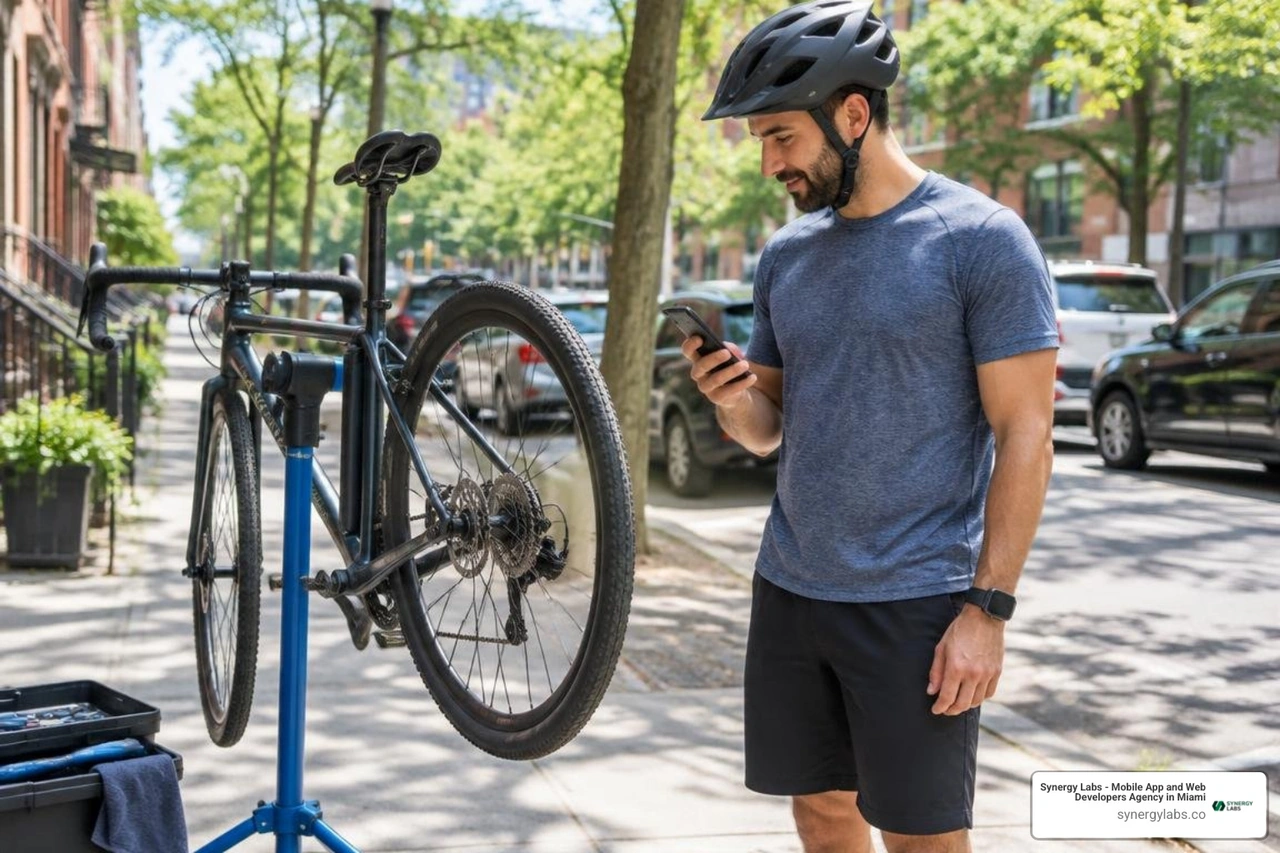
The best bike repair app depends on what you need to do. Choose ProBikeGarage to track component mileage and get service reminders from Strava rides. Try Gear AI or Fourth Hand for photo-based help with a problem you can see. Use J-K Bike for free, open-source pre-ride checks, or Drais to manage several bikes, parts, and service records in one place.
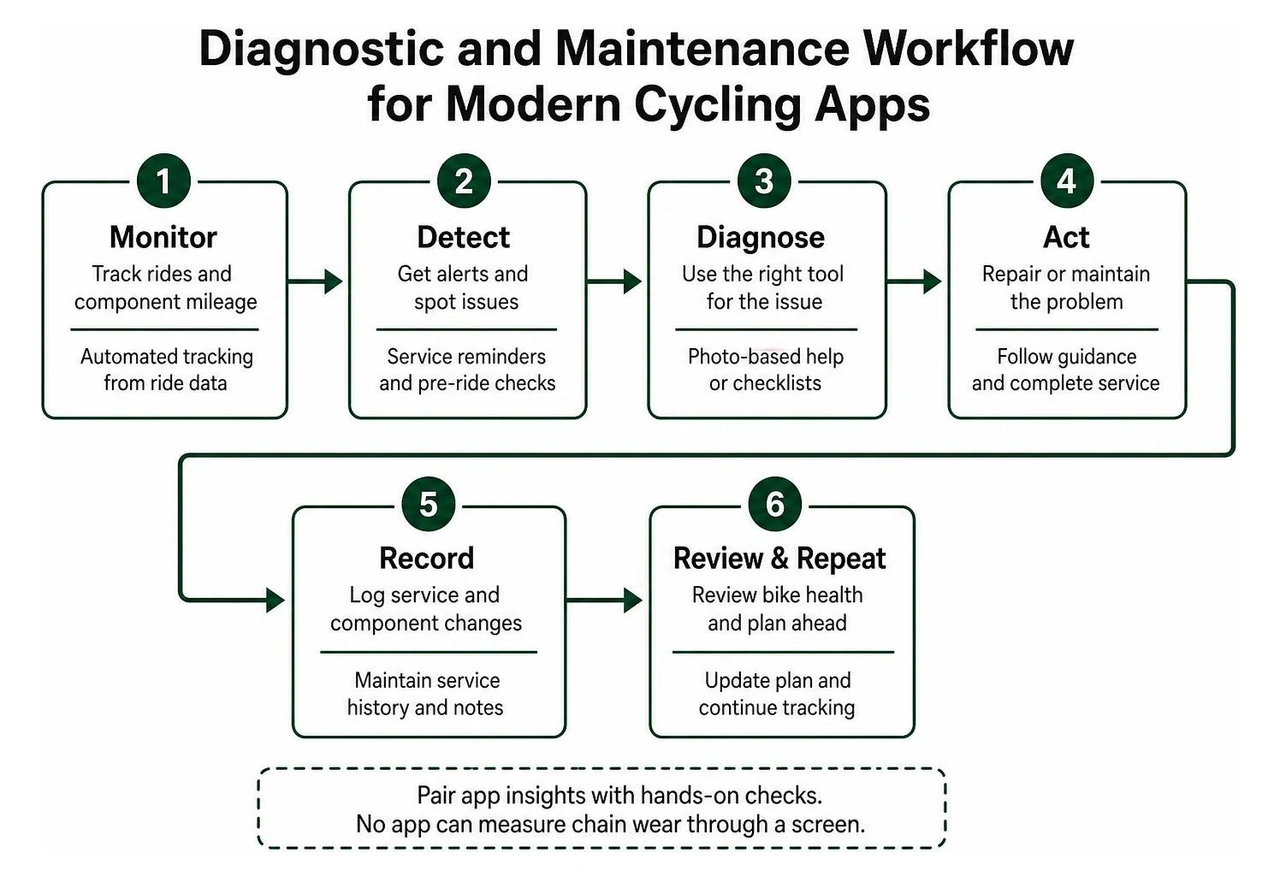
No app can measure chain wear through a screen, so pair reminders with hands-on checks. I’m the director of product at Synergy Labs, and this guide will help you find a tool you’ll use before a small problem ends a ride.
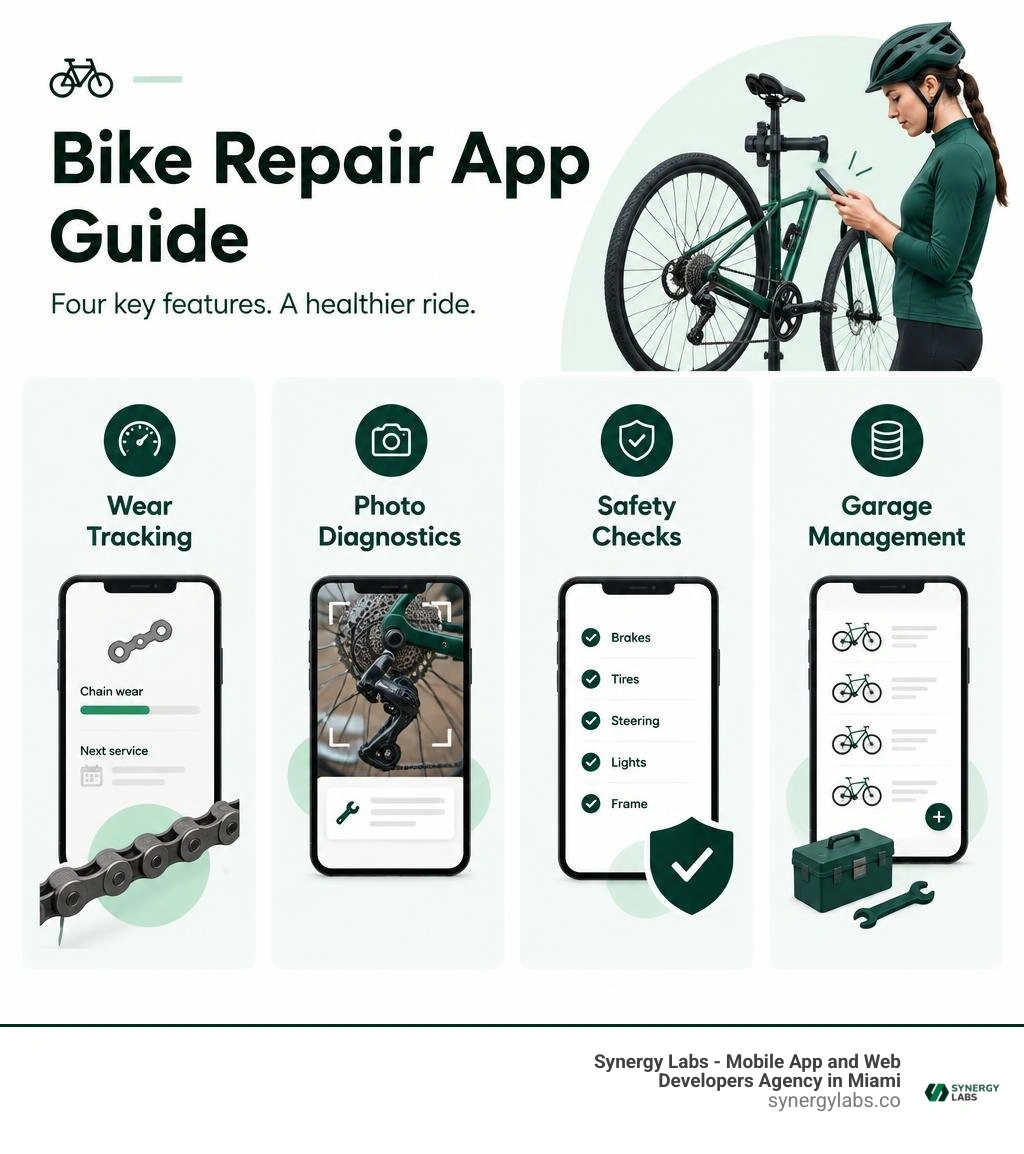
Simple bike repair apps glossary:
Core Categories of Modern Bike Repair Apps
Every cyclist has stood by the side of the road, staring at a dangling chain or a seized brake caliper, wondering why bicycles seem to pick the most inconvenient moments to fail. In the past, keeping your bike in pristine condition meant maintaining grease-stained paper logs, consulting hefty technical manuals, or hoping your local shop mechanic could squeeze you in before the weekend group ride.
Today, mobile technology has reshaped preventative cycling maintenance. Whether you ride the tarmac of Miami, tackle steep climbs around San Francisco, or commute through London and Chicago, the ecosystem of digital cycling tools offers targeted software to keep you spinning smoothly. Exploring these solutions reveals major innovations aligned with top trends in mobile app development. Modern applications fall into three core categories: visual diagnostic tools, automated wear-tracking platforms, and open-source checklist utilities.
AI-Powered Visual Diagnostic Bike Repair Apps
The newest frontier in bicycle care combines mobile device cameras with machine learning models. Instead of hunting through obscure forum threads or flipping through dense manuals, riders can now capture an image of a misbehaving component to receive immediate diagnostic insights.
Applications such as Gear AI and the Fourth Hand App illustrate how computer vision simplifies complex mechanical tasks:
- Gear AI: Acting as a digital mechanic in your pocket, Gear AI lets cyclists photograph a problem area, identify the specific component, assess damage severity, and view an estimated repair cost. It guides riders through interactive, step-by-step checklists where each stage is verified by the camera before unlocking the next fix. It also features a hands-free voice assistant, making it easy to troubleshoot while holding tools. Subscriptions run around $7.99 per month or $64.99 per year following a 3-day trial.
- Fourth Hand App: Boasting a 4.7 out of 5 rating on the Apple App Store, Fourth Hand utilizes a conversational chat interface paired with photo diagnostics. Riders create persistent profiles for their bicycles, allowing the app to tailor repair advice based on specific drivetrains, disc brake setups, and past service logs. Pro access is priced at $4.99 monthly or $49.99 annually.
These computer vision systems mirror modern advancements in AI and predictive analytics in mobile apps, transforming complex mechanical troubleshooting into guided, accessible tasks for riders of all skill levels.
While visual diagnostics excel during sudden breakdowns, automated tracking platforms focus on preventing failures before they happen. These tools calculate real-time wear by syncing directly with GPS ride data from platforms like Strava.
- ProBikeGarage: A community favorite with a 4.8-star rating across more than 2,020 reviews on Google Play, ProBikeGarage integrates seamlessly with Strava activities. Cyclists can configure granular tracking for individual components—such as logging 120 operating hours on a mountain bike suspension fork, swapping a road chain every 2,000 to 3,000 kilometers, or cycling through multiple wheelsets. Users can purchase lifetime access for a single fee of around $4.00.
- Drais: Positioned as an all-in-one digital workshop, Drais combines ride tracking, component wear forecasting, and total cost-of-ownership analytics. It organizes your gear into five pillars: Garage, Workshop, Rides, Insights, and Community. Cyclists can monitor metrics like maintenance cost per kilometer and track recurring consumable updates, such as topping up tubeless sealant every 2 to 6 months.
By monitoring ride time and distance, these platforms ensure you catch chain stretch before it wears down an expensive cassette.
Open-Source and Free Bike Repair Apps for Privacy-Conscious Cyclists
For riders who prioritize data privacy, zero subscription fees, and complete offline capability, open-source utilities provide a reliable alternative to commercial cloud platforms:
- J-K Bike: Distributed freely through repositories like F-Droid and requiring Android 10 or newer, J-K Bike is an open-source utility designed to prevent mechanical disasters. At a lightweight 5 MB, it helps riders build positive pre-ride inspection habits. Rather than estimating micro-wear algorithms, it uses downloadable task templates to guide torque checks on thru-axles, disc rotor bolts, and headset bearings. It connects to Strava to pull mileage while processing data locally on your device.
When choosing between open-source tools, commercial trackers, or a manual spreadsheet, consider how you prefer to manage your data:
- Dedicated Tracking Apps: Automate mileage calculations and component health alerts via cloud sync, but require app permissions and account setups.
- Open-Source Checklist Tools: Offer absolute privacy, zero tracking costs, and offline functionality, though they rely on manual inspections.
- Spreadsheets and Manual Logs: Completely customizable and platform-agnostic, yet prone to human error and lacking automated alerts.
Protecting your ride data and device permissions requires following proven mobile app security practices, particularly when linking fitness profiles across third-party platforms.
In-Depth Comparison: Matching Apps to Cycling Disciplines and Needs
Different cycling styles place distinct demands on bicycle components. A gravel grinder battling wet grit in Austin or New York faces different maintenance cycles than a commuter navigating traffic in London or Dubai.
- Road Cycling: Drivetrain efficiency and tire longevity are essential. Road cyclists benefit most from mileage-tracking tools like ProBikeGarage to catch chain wear at 0.5% on 11- and 12-speed setups (or 0.75% on 10-speed systems) before damaging delicate chainrings.
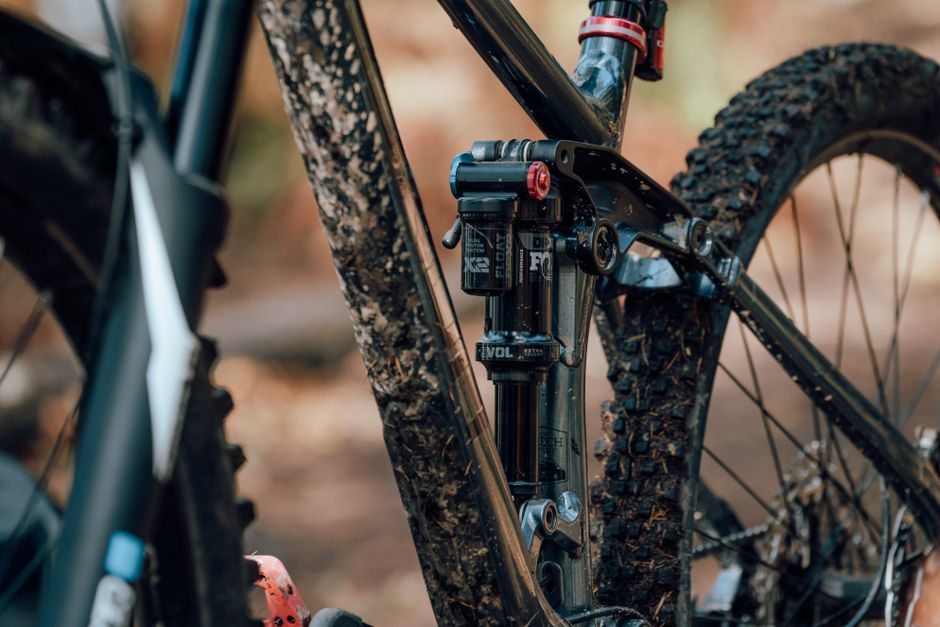
- Mountain and Downhill Biking: Suspension forks, rear shocks, and pivot bearings require hour-based service tracking rather than pure distance metrics. Apps that log elapsed trail time ensure 50-hour wiper seal cleans and 200-hour damper rebuilds happen on schedule.
- Gravel and Cyclocross: Mixed terrain exposes bottom brackets and tubeless setups to mud and water. Apps with custom calendar intervals help riders remember sealant top-ups every 2 to 4 months.
- Urban Commuting and Cargo Bikes: Commuters need rapid roadside guidance for puncture repairs and bolt safety checks. Fast reference guides and visual diagnostic tools keep daily riders rolling without shop delays.
- E-Bikes: Higher motor torque accelerates chain and cassette wear, while heavier frames increase brake pad consumption. Dynamic wear-tracking apps help manage these rapid maintenance intervals safely.
Mechanical Disaster Prevention vs. Comprehensive Garage Management
Understanding whether you need habit-based safety routines or comprehensive asset management will determine your ideal software setup:
- Disaster Prevention (Focus on Habit Building): Tools like J-K Bike emphasize active pre-ride routines. They prompt users to test caliper torque, confirm quick-release tension, and check headsets for play before rolling out. This approach catches loose bolts and alignment issues that lead to sudden breakdowns.
- Garage and Workshop Management (Focus on Lifecycle & Budget): Platforms like Drais track long-term maintenance costs, component swaps, purchase receipts, and service notes across multiple bikes. They provide a high-level view of your fleet's operating budget and historical service milestones.
Understanding the boundary between bicycle and motorized maintenance clarifies why bike diagnostic apps rely primarily on computer vision and manual checks rather than electronic hardware scanners.
Motorcycles and modern automobiles utilize standardized internal combustion and electric Engine Control Units (ECUs). Riders can plug specialized hardware into standard OBD-II ports to extract exact error codes and sensor readings. For instance:
- Biketune: Connects via Bluetooth OBD-II adapters to diagnose fault codes, stream live engine telemetry, reset service reminders, and perform guided adaptations on standard OBD-II and BMW motorcycles without dealer tools.
- FixioMoto: Provides AI-driven troubleshooting for major motorcycle brands, combining symptom checkers with maintenance schedules for road, motocross, and street bikes.
Bicycles, in contrast, remain largely mechanical machines. While electronic shifting systems like Shimano Di2 and SRAM AXS feature diagnostic battery logs, most bicycle components—such as bottom brackets, spoke nipples, headset bearings, and hydraulic pads—do not carry digital sensors. As a result, bicycle maintenance apps rely on visual machine learning, algorithmic distance tracking, and guided physical inspections rather than electronic fault scanning.
Key Features, Privacy, and UX Considerations for Cyclists
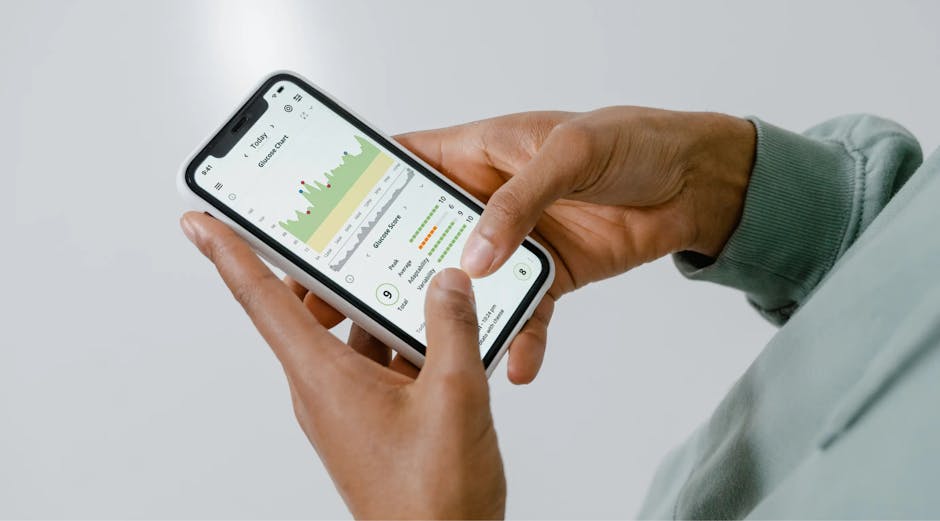
When selecting a maintenance app, evaluate whether its interface and privacy policies match your riding routine. Well-designed applications balance timely maintenance alerts with streamlined data entry, drawing on established mobile UX design principles to prevent alert fatigue.
Look for the following core capabilities:
- Intelligent Alerting: Customizable thresholds based on distance, riding hours, or calendar dates so you receive notifications only when service is truly due.
- Offline Functionality: Full access to downloaded repair guides, torque specs, and service logs even when servicing your bike in remote areas or basements with no mobile reception.
- Data Export and Portability: The ability to export your complete service history in open formats like CSV or JSON, ensuring your records stay with you if you switch devices.
- Transparent Privacy Standards: Clear data practices, including GDPR-compliant cloud servers, biometric access security, and transparent privacy disclosures that protect your ride routes and location data.
Frequently Asked Questions About Bike Repair Apps
Can a bike repair app replace a professional mechanic?
No software can replace the expertise, specialized tooling, and tactile precision of an experienced professional bike mechanic. Diagnostic apps and repair guides excel at routine upkeep—such as chain lubrication, brake pad replacements, derailleur index adjustments, and roadside flat fixes. However, complex jobs like damper rebuilds, frame alignment checks, and wheel truing are best handled by certified bike shops.
How do maintenance tracking apps calculate component wear accurately?
Tracking apps calculate wear by integrating with GPS cycling platforms like Strava to pull elapsed distance and riding duration after every ride. Components are assigned recommended lifespan baselines—such as 2,500 kilometers for a 12-speed chain or 100 hours for a suspension service. The app updates component health percentages automatically and notifies you as wear thresholds approach.
Are my ride data and maintenance records private when syncing to the cloud?
Privacy depends entirely on the app's architecture. Commercial platforms often host data on encrypted cloud servers and sync with Strava's API under strict permissions. Open-source solutions like J-K Bike store service records locally on your device storage. To safeguard your privacy, review each app's policy to ensure they do not sell riding telemetry to third-party data brokers.
Building the Future of Connected Cycling Software
Keeping your bicycle running smoothly comes down to proactive care. Whether you choose AI-powered diagnostics like Gear AI, automated mileage tracking through ProBikeGarage, comprehensive workshop management with Drais, or open-source habit builders like J-K Bike, the right mobile tool helps you catch wear early and avoid mechanical failures on the road.
As connected fitness hardware and smart mobility continue to evolve throughout 2026, building feature-rich, high-performance cycling applications requires expert design and engineering. At Synergy Labs, we specialize in end-to-end mobile and web development for cutting-edge digital products. Our proven delivery model pairs in-shore CTO leadership with a skilled offshore development team, utilizing milestone-based payments and fixed-budget structures to ensure your project launches efficiently and securely.
Ready to bring your mobile vision to life? Explore our custom mobile app development services and partner with Synergy Labs to build your next platform.


.avif)

.avif)


