"They empower designers to build production-ready applications using visual interfaces, AI assistance, and integrated workflows that eliminate the traditional handoff."
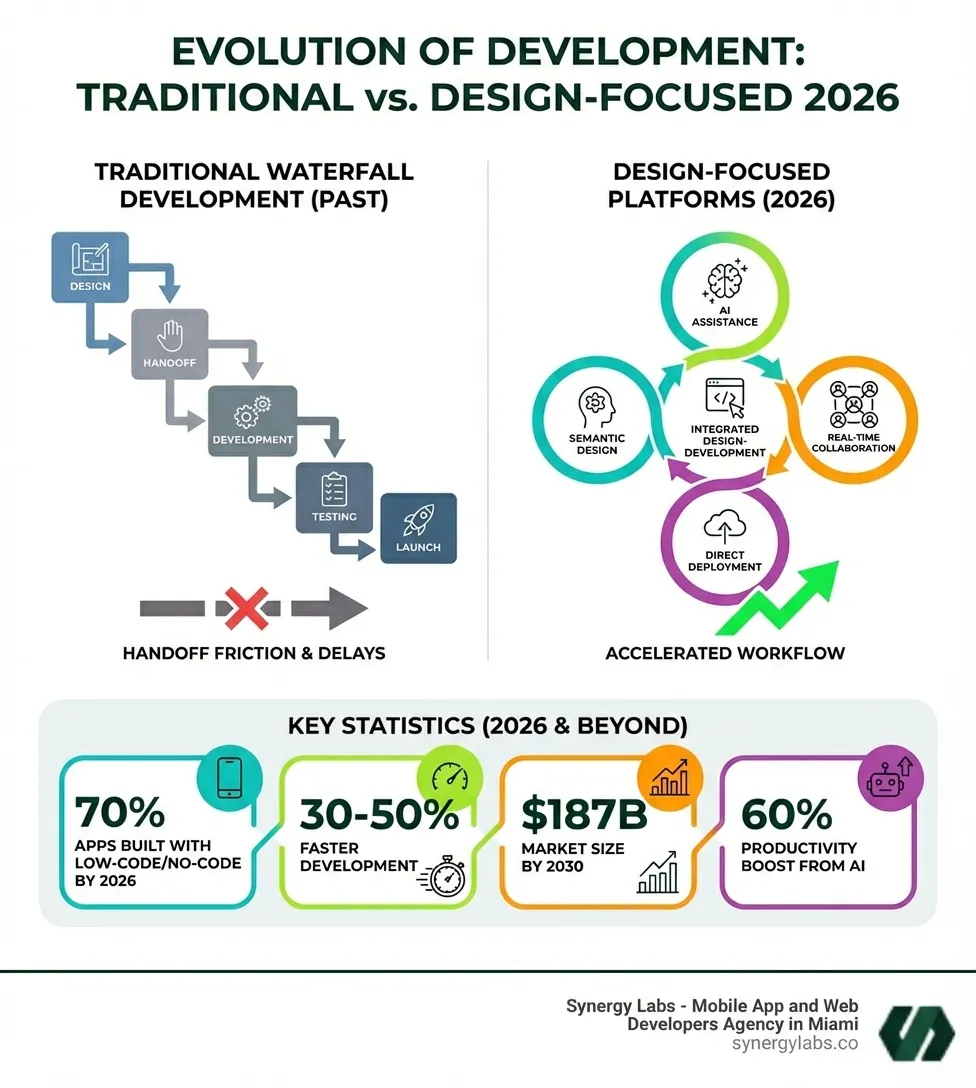
Design-Focused Development Platforms in 2026 represent a fundamental shift in product creation. They empower designers to build production-ready applications using visual interfaces, AI assistance, and integrated workflows that eliminate the traditional handoff. These tools merge visual design with code generation, real-time collaboration, and built-in deployment.
What defines design-focused development platforms in 2026:
Visual-first development - Build UIs by dragging, dropping, and configuring components rather than writing code from scratch.
AI-powered assistance - Generate layouts, components, and logic from natural language prompts or design files.
Design-to-production workflows - Publish functional applications directly from design tools without traditional development cycles.
Real-time collaboration - Designers, developers, and stakeholders work in the same environment simultaneously.
Component-driven architecture - Reusable design systems and tokens ensure consistency across applications.
The numbers tell a compelling story. The low-code/no-code market is projected to reach $187 billion by 2030, growing at 29.4% annually. By 2026, 70% of new business applications will be developed using these technologies. Companies report 30-50% reductions in development time, and AI integration is expected to boost developer productivity by up to 60%.
This isn't just about speed—it's about who can build. These platforms are empowering designers to become developers, product managers to prototype faster, and small teams to compete with enterprise resources. The line between design and development is disappearing.
But here's what matters most: these platforms don't replace developers. They augment teams. They handle repetitive work—boilerplate code, responsive layouts, accessibility checks—so human talent can focus on solving harder problems. The result? Faster launches, lower costs, and better user experiences.
The shift is real. Traditional workflows are being challenged. Security and compliance (HIPAA, CCPA) remain critical, especially in the US market. While AI can generate impressive prototypes in minutes, human oversight is still essential for quality, security, and long-term maintainability.
At Synergy Labs, we've witnessed this change firsthand, helping startups and established businesses leverage Design-Focused Development Platforms in 2026 to accelerate their product launches while maintaining the quality and scalability that only experienced technical leadership can deliver. Our approach combines the speed of modern platforms with the strategic oversight of an in-shore CTO and a dedicated offshore development team.
Design-Focused Development Platforms in 2026 helpful reading:
At their core, Design-Focused Development Platforms in 2026 prioritize visual creation and seamless integration, empowering designers to build, not just conceptualize. This shift to visual-first development means the UI is an active part of the process, built by dragging and dropping components rather than coding from scratch.
These platforms accept a component-driven architecture, where everything is built from reusable blocks like buttons and navigation bars. This modularity ensures consistency, simplifies updates, and speeds up development. Imagine updating a design element once and seeing it change everywhere—that's the power of component-driven design.
Real-time collaboration is another cornerstone, ending the era of endless email threads. These platforms allow designers, developers, and stakeholders to work in the same environment simultaneously. This synchronous workflow fosters clarity, reduces miscommunication, and keeps everyone aligned.
Finally, direct-to-production workflows are a key goal. They bridge the gap between design and deployment, allowing functional apps to be published directly from design tools. This dramatically cuts time-to-market and enables rapid iteration. As design translates directly to a live product, the importance of user experience (UX) becomes paramount, a topic we've explored in depth. For a deeper dive into why UX is critical, check out our insights on The Importance of User Experience (UX) in Mobile App Design.
From Handoff to Integration
The traditional design-to-development handoff is a known source of friction. Design-Focused Development Platforms in 2026 transform this into a seamless integration. Instead of static mockups being translated into code, these platforms create a single source of truth where the design itself is the starting point for the code.
This approach eliminates much of the friction that historically plagued design and development teams. Designers are empowered with tools that understand code constraints and generate clean assets. Developers, in turn, receive structured code, freeing them from tedious pixel-pushing to focus on complex logic, backend integrations, and performance. This boosts developer efficiency significantly, making them happier campers (and who doesn't want that?). The result is a smoother, faster workflow for everyone.
The Power of Design Systems
If components are the building blocks, design systems are the blueprints. These platforms champion robust design systems—a comprehensive set of standards, components, and guidelines ensuring brand consistency. It's an organized library for everything from typography and colors to interactive elements, ensuring a cohesive look and feel.
The benefits are immense. Brand consistency is maintained effortlessly, as all teams draw from the same approved elements. Reusable components mean less work for designers and developers, as they don't have to reinvent the wheel. This leads to scalable design, where products can grow without losing their visual identity. A crucial element is the use of design tokens—named entities that store visual attributes. These tokens, like a variable for "primary color," allow for global changes with a single update, bridging the gap between design decisions and their implementation in code.
For founders, leveraging design systems is a strategic move. A strong design system contributes directly to a better user experience, which in turn acts as a powerful growth lever. As we've highlighted, treating UX as an early-stage growth lever can significantly impact a product's success. Learn more about this crucial aspect in our article Why Founders Should Treat UX as an Early-Stage Growth Lever in 2026.
The AI Revolution: Bridging the Design-Dev Divide
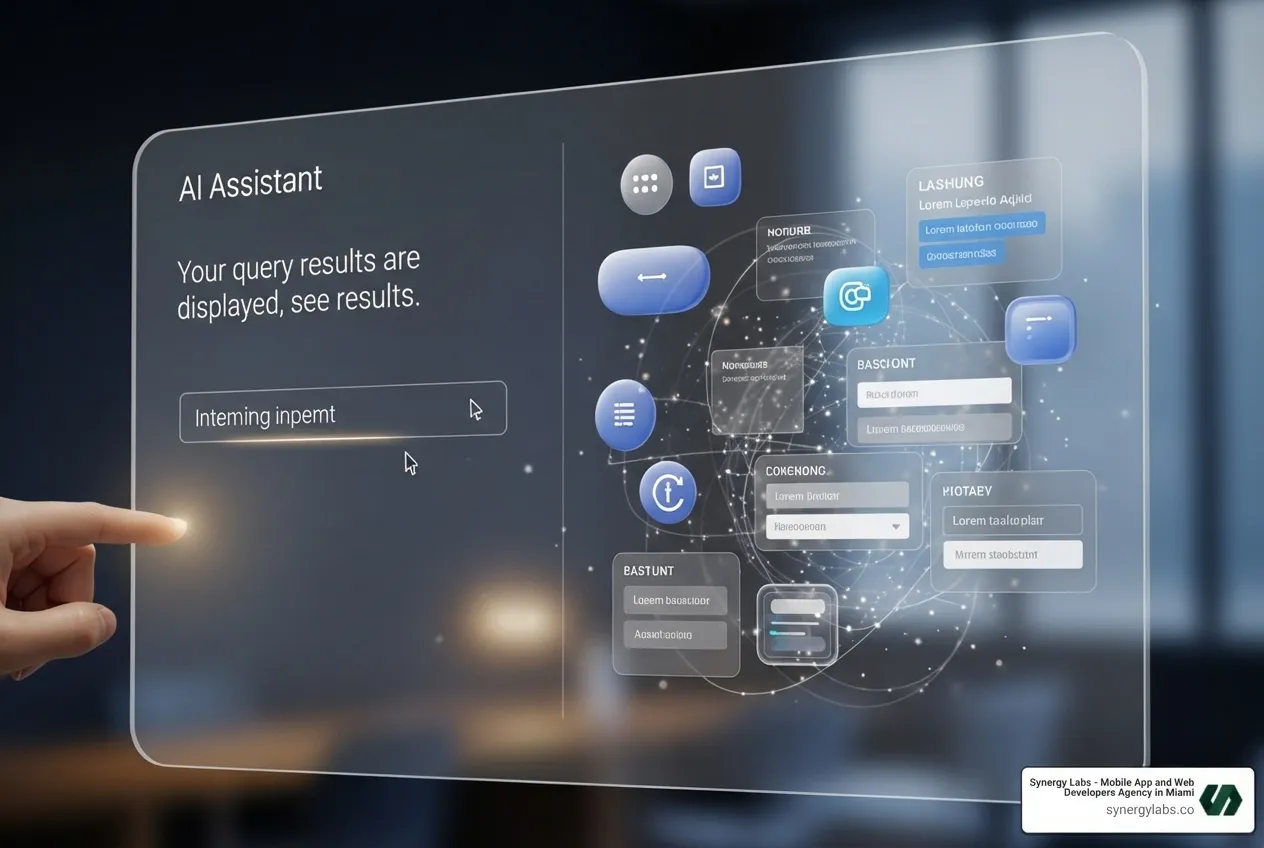
AI's role in bridging the design-dev gap in 2026 is revolutionary. No longer a novelty, AI is an indispensable co-pilot in the creation process, enabling generative UI where interfaces are intelligently created. For example, a natural language prompt like "create a responsive e-commerce product page" can instantly generate a functional UI. This prompt-to-code capability is a game-changer, dramatically accelerating initial development.
Beyond generation, AI improves productivity through AI-powered testing. It can identify potential bugs, suggest optimizations, and even write unit tests, freeing up developers for more complex challenges. This productivity boost is significant, with some estimates suggesting AI could increase developer productivity by up to 60% by 2026. This means faster development cycles and more time for innovation. At Synergy Labs, we're keenly aware of how elevating UX with AI can lead to emotionally intelligent apps. Find more in our piece on Elevating UX with AI: How to Build Emotionally Intelligent Apps.
AI as a Creative Co-Pilot
AI's role extends beyond generating code; it acts as a creative co-pilot for designers and developers. We're seeing automated layout optimization, where AI suggests the most effective arrangement of elements for different screen sizes. It can assist with content generation, drafting placeholder text or suggesting copy variations to improve engagement. Accessibility checks, once a tedious manual process, are now often automated, with AI flagging potential WCAG violations and suggesting fixes. AI can also provide A/B testing suggestions, analyzing user data to recommend design variations that are likely to perform better.
Leading platforms exemplify this, allowing users to prompt AI to generate functional prototypes and websites directly from designs. They can even connect to backend services to build apps with real data, streamlining the entire process from concept to live application. Some platforms position AI as a "frontend engineer," handling the "busy work" of UI development by writing code from design files or descriptions. Similarly, many web design platforms are leveraging AI to build logic into design, automate content updates, and generate designs at scale. This truly embodies the spirit of AI-first app development, where modern products are built with AI woven into their very fabric. Explore how this paradigm shift is happening in AI-First App Development: How Modern Products Are Built in 2026.
Navigating AI's Limitations
While AI offers incredible advantages, we must also acknowledge its current limitations. The quality of AI-generated code can vary. While it's getting impressively good, it might not always meet the exacting standards of a seasoned developer. There's a risk of hallucinations and breaking code during editing. This means that while AI can rapidly generate prototypes, refining them might still require a good understanding of the underlying code.
This necessitates human oversight. AI is a powerful tool, but it's not a replacement for human expertise, especially for critical thinking, debugging, and ensuring long-term maintainability. Security concerns also loom large; unaudited AI-generated code could introduce vulnerabilities. Our approach at Synergy Labs emphasizes that AI augments our teams, allowing them to focus on the strategic, complex aspects of development that require human ingenuity and rigorous quality control. We ensure that any AI-generated code is thoroughly reviewed, tested, and integrated into our robust development pipelines.
Key Features of Design-Focused Development Platforms in 2026
Design-Focused Development Platforms in 2026 stand apart from traditional tools by blending sophisticated design features with development capabilities. Unlike platforms that focus only on functionality, these tools prioritize the visual experience and integrate it seamlessly with the underlying logic.
Key distinguishing features include:
Interactive Prototyping: These platforms allow designers to create fully interactive prototypes that behave like the final product, complete with animations and user flows. This is crucial for user testing and feedback before manual coding begins.
Visual Logic Builders: These platforms offer intuitive visual interfaces for building conditional logic or manipulating data. Users can drag-and-drop actions and connect data sources, empowering non-coders to build sophisticated functionality.
Deep API Integration: Modern apps need to connect to other services. These platforms offer robust ways to integrate with external APIs, allowing apps to fetch and display real-time data, bringing designs to life with actual content.
Advanced Data Binding: These platforms offer advanced data binding, allowing designers to link UI components directly to data sources. Changes in data are automatically reflected in the UI, creating dynamic and responsive applications.
These features ensure the platforms don't feel clunky, offering a fluid experience that respects both design aesthetics and functional requirements. For insights into platforms that get this balance right, explore our article on No-Code Platforms That Don't Feel Clunky.
From Static Mockups to Live Applications
The transition from design to production-ready code is where Design-Focused Development Platforms in 2026 truly shine. They facilitate this journey by moving beyond static mockups to full-fledged, live applications. This involves:
High-Fidelity Prototyping: Designers can craft prototypes that are indistinguishable from the final product, enabling realistic user testing and validation of design choices.
Real-Time Data Connections: Prototypes and MVPs can be connected to real data sources for dynamic content and personalized experiences. For instance, leading platforms can connect to backend services to add features like user authentication and data storage for real-world applications.
User Testing Environments: Many platforms offer built-in or integrated environments for conducting user testing, gathering feedback, and iterating rapidly.
One-Click Publishing: Once a design is approved, these platforms often provide streamlined deployment options, allowing for one-click publishing or generating production-ready code for traditional deployment.
This capability to go from an idea to a deployable application with minimal friction is a massive benefit for prototyping, MVPs, and even full production apps. It allows businesses to validate ideas faster and iterate based on real-world usage. This rapid validation is critical for startups, as highlighted in our discussion on No-Code vs. AI-Generated Apps: What Businesses Should Choose in 2026.
Building for Everyone: Responsive and Accessible UI
In 2026, building applications means building for everyone. Design-Focused Development Platforms in 2026 are enabling the creation of responsive and accessible user interfaces as a default, not an afterthought.
Key features supporting this include:
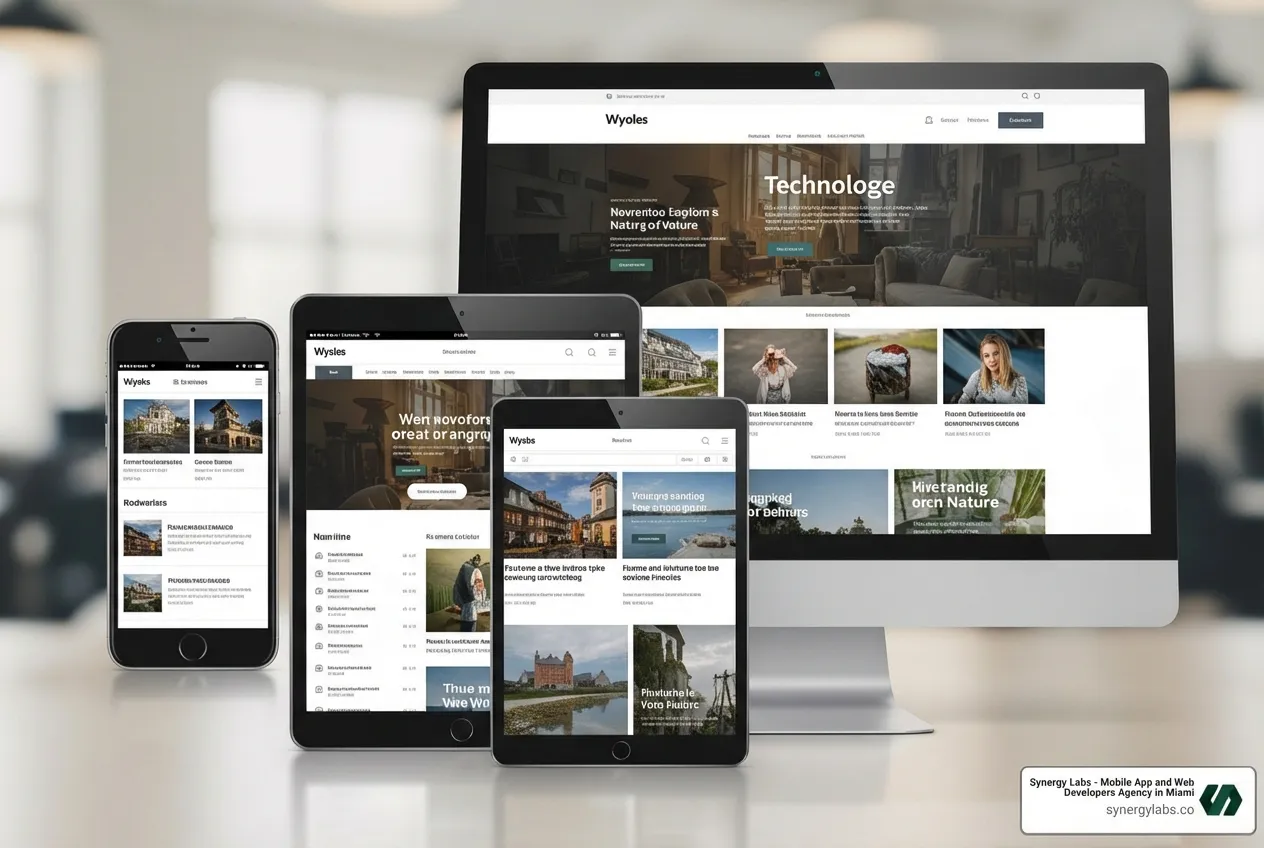
Responsive Design Controls: These platforms offer intuitive tools to design and preview layouts across multiple devices. You can define breakpoints and adjust components visually, ensuring your design adapts fluidly to any screen.
Cross-Device Previews: Real-time, interactive previews on various device types allow designers to catch responsive issues early in the design process.
Built-in Accessibility Checkers: Inclusive design is a legal and ethical imperative, with laws like the European Accessibility Act and WCAG compliance setting global standards. These platforms integrate tools that scan for accessibility issues and provide remediation suggestions.
ARIA Labels Integration: To improve accessibility, platforms are making it easier to incorporate ARIA labels and other semantic attributes directly into components, ensuring assistive technologies can accurately interpret UI elements.
Building inclusively expands audience reach, protects businesses from legal challenges, and strengthens brand trust. More importantly, it shows care for all users, which is just good design.
From MVP to Production: The Business Case
The business case for using a Design-Focused Development Platform in 2026 is compelling. For prototyping, MVPs, and even production apps, these tools help businesses innovate rapidly. The visual, component-driven nature of these platforms drastically accelerates creation, allowing teams to build and iterate at unprecedented speeds.
This speed translates directly into faster time-to-market and reduced development costs. By shortening development cycles, businesses can capture market opportunities and gather early feedback. Less time spent on manual coding and the ability for designers to contribute directly to the build make the entire process more cost-effective.
For prototyping, the advantages include quick idea validation and tangible mockups to secure buy-in. For MVPs, these platforms allow startups to launch a functional product quickly and affordably. For production, they are increasingly generating clean, performant, and scalable code. Many of these platforms are ideal for startups that want to scale fast, providing the tools needed to rapidly build and adapt. We dig deeper into this in our piece on Best No-Code Platforms for Startups That Want to Scale Fast.
Leading platforms are at the forefront of leveraging design-first approaches for web development. Some tools, often through plugins, can generate production-ready code directly from designs. Others have evolved into full website builders with a designer's sensibility, generating modern framework code. Many platforms now offer pixel-perfect control with interactions, animations, and CMS capabilities that would take ages to code traditionally. These tools empower designers to dictate the final output, ensuring the vision is maintained and facilitating a smooth transition from design to production-ready code.
Choosing the Right Platform for Your 2026 Project
Selecting the ideal Design-Focused Development Platform in 2026 is not a one-size-fits-all decision. The best platform depends on your specific project needs.
Here are the key considerations we guide our clients through:
Project Complexity: Simple sites may only need a platform with a gentle learning curve, while complex apps with custom logic require more power and flexibility, including code extensibility.
Scalability Needs: Will your app need to handle millions of users or integrate with enterprise systems? Some platforms excel at prototyping but hit scaling limits, while others are built for growth.
Team Skill Set: Evaluate your team's technical proficiency. The platform should empower your existing team, whether they are designers, product managers, or developers who can extend its capabilities.
Budget Considerations: Platforms have various pricing models. Understanding the total cost of ownership, including potential scaling costs, is crucial.
Integration Requirements: List all third-party services and APIs your app needs. Ensure the platform offers native integrations or robust API capabilities to connect them seamlessly.
Choosing the right platform is a strategic decision that impacts the entire project lifecycle. Partnering with an experienced agency like Synergy Labs is invaluable here. We help you steer these choices, ensuring your investment aligns with your long-term goals. For more guidance, refer to our comprehensive guide on The Ultimate Guide to Choosing a Custom Mobile App Development Agency.
The Evolution of Design-Focused Development Platforms in 2026
The landscape of Design-Focused Development Platforms in 2026 is rapidly evolving. Several emerging trends are defining the future of these platforms:
Agentic Web Experiences: Websites are becoming adaptive entities that learn from user behavior to anticipate needs and personalize content, acting like a personal assistant.
Hyper-Personalization: Beyond basic personalization, platforms are enabling user journeys that adapt in real-time based on individual behavior, creating a unique path for every visitor.
Deeper AI Integration: AI will become more ingrained, from generating entire application sections to optimizing code for performance and security, assisting in debugging, and suggesting design improvements.
Connected Business Hubs: Applications are evolving into interconnected business hubs that seamlessly integrate e-commerce, marketing automation, CRM, and analytics, creating a central nervous system for digital operations.
These trends, combined with the foundational principles discussed earlier, paint a picture of a future where design and development are more intertwined than ever, enabling unprecedented creativity and efficiency. This evolution aligns perfectly with the broader shifts we observe in mobile app development, as detailed in our analysis of Top 5 Trends in Mobile App Development.
Your Vision, Built: Navigating the Future of App Development
The implications of Design-Focused Development Platforms in 2026 for the future of web development roles are profound. We are not seeing the elimination of jobs, but rather an evolution and a merging of disciplines. The traditional roles of designer and developer are blurring, giving rise to hybrid roles that demand a broader skill set. Designers are becoming "designer-developers," capable of bringing their visions to life with functional code, while developers are becoming more design-aware, appreciating the impact of aesthetics and user experience on the final product.
This shift emphasizes strategic tool adoption. The best teams in 2026 will be pragmatists, leveraging the right tools—whether code or a platform—for each specific job. They will understand that these platforms handle the repetitive, boilerplate work, freeing up human talent for higher-order problem-solving, innovation, and creative strategy. The future of work in web development is one of collaboration, augmentation, and continuous learning.
At Synergy Labs, we understand that turning a visually stunning design into a scalable, secure, and successful application requires more than just tools; it requires expertise. The right expert partner is crucial for translating your vision into a robust digital product. We combine design-first principles with deep technical expertise, offering a fixed-budget model that provides cost predictability, an in-shore CTO with a dedicated offshore development team for optimal communication and efficiency, and milestone-based payments that ensure projects are completed efficiently and align with your strategic goals. Our commitment to user-centered design, robust security, and rapid app launches ensures that your project, whether in Miami FL, Dubai UAE, San Francisco CA, New York City NY, Austin TX, or any of our other locations, is in expert hands. We are here to ensure your journey through the exciting landscape of Design-Focused Development Platforms in 2026 is successful, innovative, and impactful. Explore our services to see how we can bring your project to life.
¡Uy! Algo ha ido mal al enviar el formulario. Inténtelo de nuevo, por favor.
Preguntas frecuentes
Tengo una idea, ¿por dónde empiezo?
¿Por qué utilizar SynergyLabs en lugar de otra agencia?
¿Cuánto tardaré en crear y lanzar mi aplicación?
¿Para qué plataformas desarrolla?
¿Qué lenguajes de programación y marcos de trabajo utiliza?
¿Cómo protegeré mi aplicación?
¿Proporcionan asistencia, mantenimiento y actualizaciones continuas?
Asóciese con una agencia TOP-TIER
¿Listo para empezar su proyecto?
Concierteuna reunión a través de este formulario y le pondremos en contacto directamente con nuestro director de producto, sin vendedores de por medio.
¿Prefiere hablar ahora?
Llámenos al + 1 (645) 444 - 1069
Cuéntenos un poco sobre su proyecto y nos pondremos en contacto con usted en breve.
You’re Booked! Here’s What Happens Next.
We’re excited to meet you and hear all about your app idea. Our team is already getting prepped to make the most of your call.
A quick hello from our founder and what to expect
Get our "Choose Your App Developer Agency" checklist to make sure you're asking the right questions and picking the perfect team for your project.



.avif)

.avif)


