95% of smartphone users expect health apps to sync with wearables — and with the market heading toward $186B by 2030, getting the architecture right from day one is no longer optional.
Why Wearables + IoT Are Reshaping Mobile Health Technology
Wearables + IoT: The Blueprint for Smarter, Health-Aware Mobile Apps represents the convergence of intelligent sensors, connected devices, and AI-driven analytics, all fundamentally changing how we monitor, manage, and improve human health. For any health-tech product in 2026, this integration is essential.
Quick Blueprint Overview:
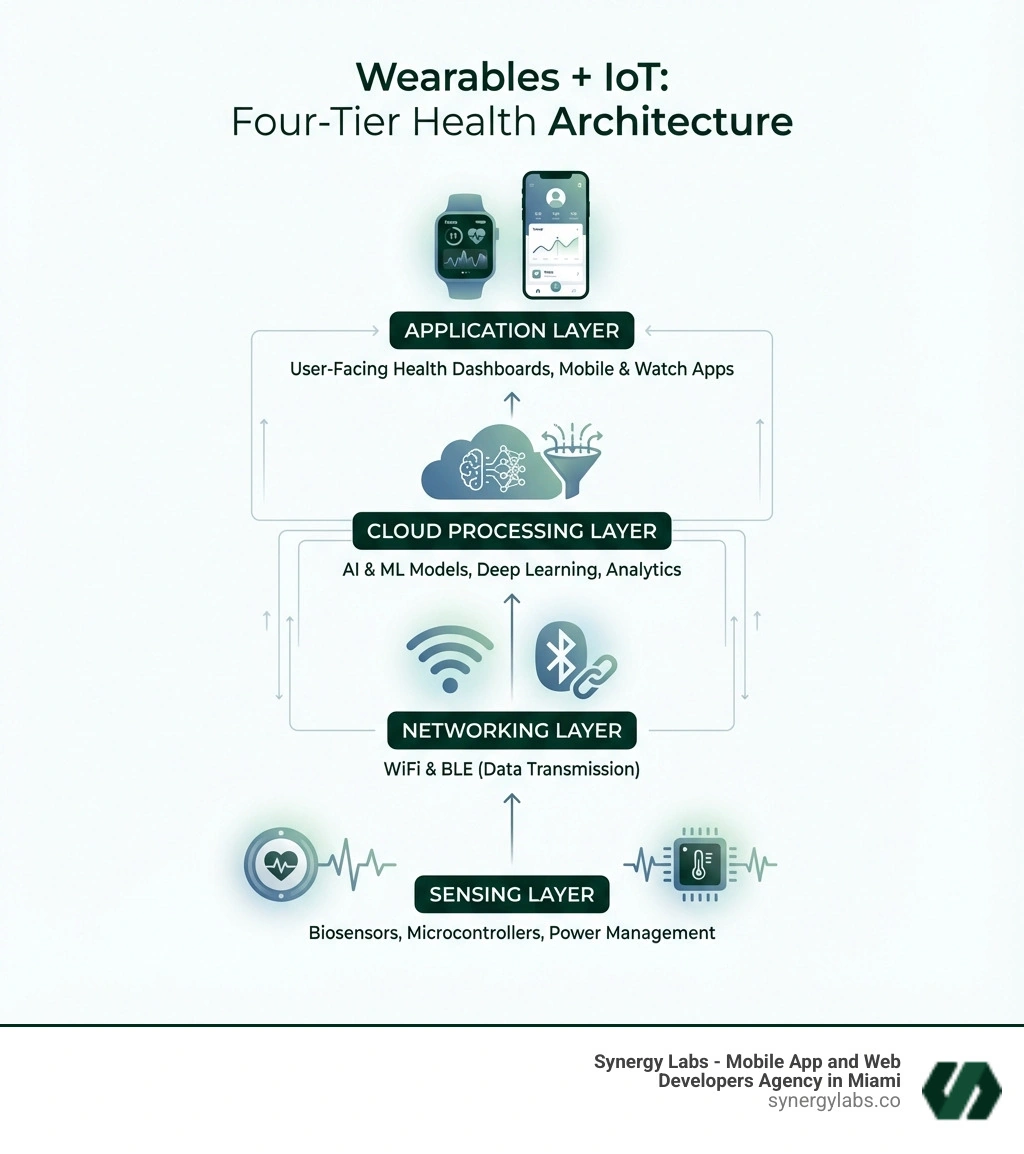
Core Components: Biosensors (PPG, ECG, SpO2), microcontrollers, and power management units that continuously collect physiological data
Data Transmission: Wi-Fi for low-latency applications vs. BLE for power-sensitive devices
AI Layer: Deep learning models (CNN, LSTM, Transformer) achieving 96.1% accuracy for health classification
Security Framework: Blockchain and federated learning reaching 98.9% tampering detection with 90% privacy risk reduction
Market Growth: Global wearable tech market projected to reach $186.14 billion by 2030 (13.6% CAGR)
Power Efficiency: Reinforcement learning-based adaptive sampling reducing consumption by 50%
The healthcare industry is in a digital gold rush. 95% of smartphone users expect health apps to integrate with wearables, creating unprecedented demand for intelligent monitoring. The challenge lies in mastering not just mobile development, but also sensor integration, real-time data processing, AI/ML, and strict security protocols like HIPAA compliance.
Having launched successful apps with over 1M downloads and guided health-tech startups, I've seen how crucial the right architecture is. At Synergy Labs, we've built numerous solutions connecting devices from glucose monitors to fitness trackers, changing raw data into actionable health insights. This guide distills our lessons into a practical blueprint.
Simple Wearables + IoT: The Blueprint for Smarter, Health-Aware Mobile Apps glossary:
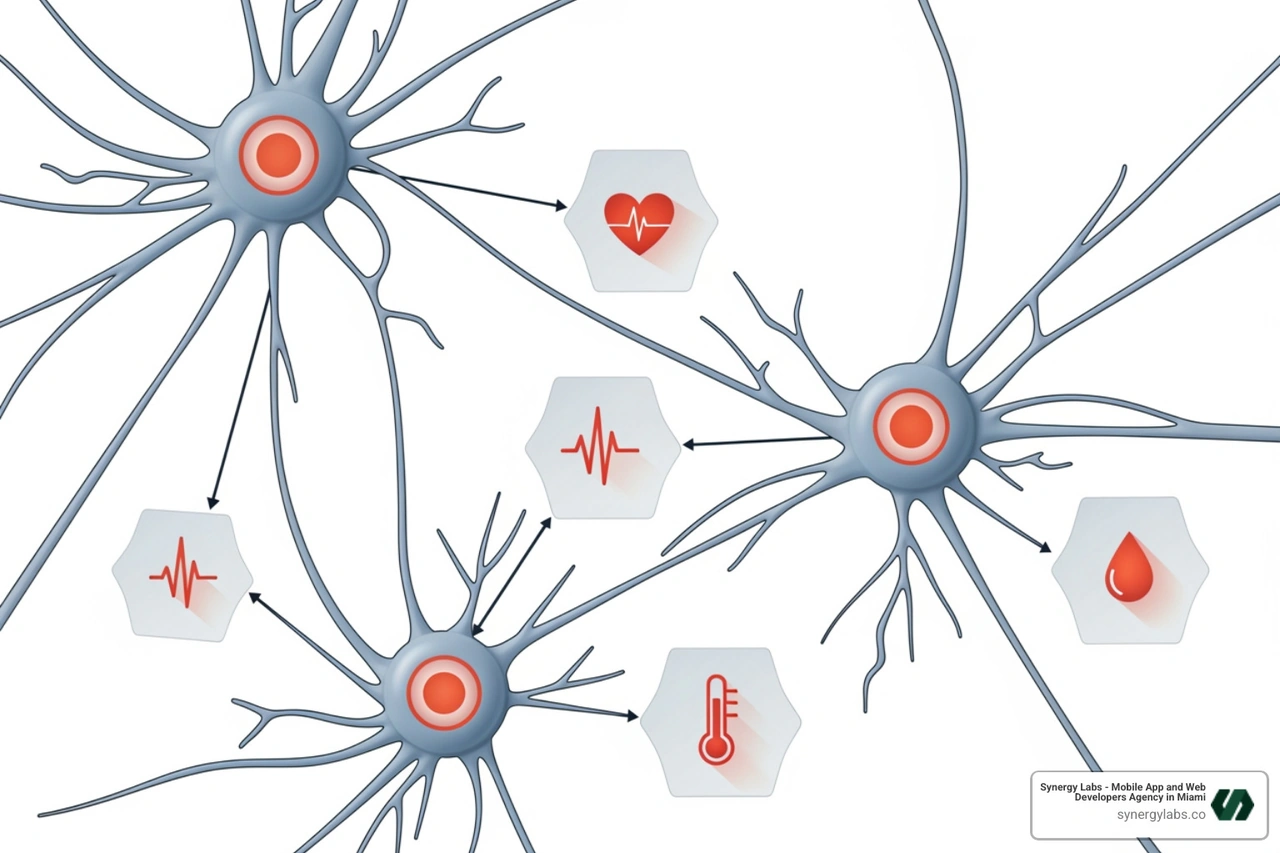
The global healthcare landscape is changing, driven by the need for intelligent systems. The synergy of AI, IoT, and wearables creates the "Internet of the Body" (IoB)—an evolution of IoT integrating technology with human physiology. This revolution pioneers a new healthcare model where devices continuously communicate and make decisions, actively contributing to the user's health journey.
The market is exploding. Valued at US $84.2 billion in 2024, the global wearable technology market is forecasted to reach US $186.14 billion by 2030, a 13.6% CAGR. This growth highlights the demand for smarter, health-aware mobile apps.
At Synergy Labs, we help businesses in Miami, Dubai, and London harness this potential. We focus on delivering solutions that improve care quality, optimize operations, and empower individuals. The convergence of AI and IoT in mobile apps enables a shift from passive data storage to active, intelligent health management, providing solutions that are both innovative and vital.
The Foundation: Anatomy of an IoT-Enabled Wearable Device
At the heart of any Wearables + IoT: The Blueprint for Smarter, Health-Aware Mobile Apps solution lies the wearable health device (WHD). These powerful gadgets are the primary data collectors, and understanding their core components is crucial for developing mobile apps that leverage their rich data stream.
Core Hardware Components and Their Function
An IoT-enabled wearable's components are engineered to capture, process, and transmit physiological data. They are designed to be non-invasive, comfortable, and integrate into a user's daily life, from New York City to Doha.
Physiological Sensors: These are the eyes and ears of the wearable, collecting raw biological signals.
Photoplethysmography (PPG) sensors: Often found in smartwatches, these use light to detect changes in blood volume under the skin, enabling heart rate monitoring and, in some cases, blood oxygen saturation (SpO2) estimation.
Electrocardiogram (ECG) sensors: These measure the electrical activity of the heart, providing detailed information about heart rhythm and detecting potential anomalies.
SpO2 sensors: Specifically designed to measure blood oxygen levels, crucial for monitoring respiratory health and sleep quality.
Temperature sensors: Like the LM35, known for accuracy, these monitor body temperature, vital for detecting fevers or tracking ovulation.
Other specialized sensors: This can include galvanic skin response (GSR) for stress, blood pressure sensors (using oscillometric methods), or even continuous glucose monitors.
Accelerometers and Gyroscopes: These motion sensors detect movement, orientation, and acceleration. They are fundamental for tracking activity levels, sleep patterns, fall detection, and even gesture recognition.
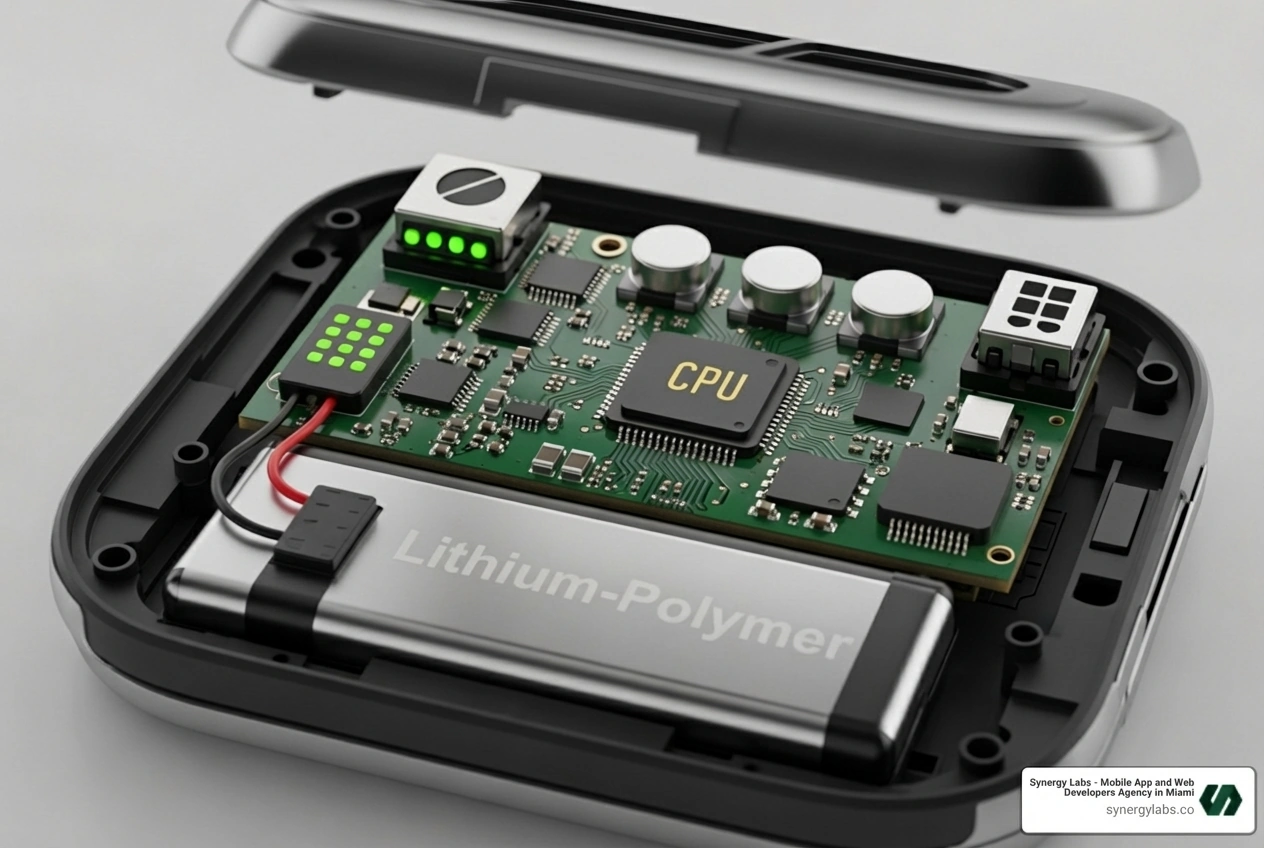
Microcontrollers (MCUs): The "brains" of the wearable, MCUs are small, integrated circuits that process data from the sensors, manage device functions, and handle communication protocols. They are optimized for low power consumption, essential for wearable battery life.
Power Management Units (PMUs) and Batteries: Given the small form factor and continuous operation, efficient power management is paramount. PMUs regulate power distribution, while compact, long-lasting batteries ensure the device can function for extended periods without frequent recharging.
Wireless Connectivity Modules: These enable the wearable to communicate with companion mobile apps or directly with cloud platforms. This includes Bluetooth Low Energy (BLE) for short-range, power-efficient communication and Wi-Fi for higher bandwidth data transfer.
These components work in concert, continuously collecting data that, when processed by a mobile app, can provide invaluable insights into a user's health. For example, integrating these biosensors with mobile applications allows for personalized monitoring, which is key to enhancing user experience in mobile applications.
Data Transmission: Wi-Fi vs. Bluetooth Low Energy (BLE)
The choice of data transmission technology significantly impacts a wearable's functionality, battery life, and the responsiveness of its associated mobile app. Both Wi-Fi and Bluetooth Low Energy (BLE) play critical roles, each with distinct advantages and use cases in the Wearables + IoT: The Blueprint for Smarter, Health-Aware Mobile Apps.
Bluetooth Low Energy (BLE): This is the workhorse for most personal wearables. BLE is designed for very low power consumption, making it ideal for devices that need to operate for days or weeks on a single charge. It's excellent for short-range communication with a companion mobile app, transmitting small bursts of data like heart rate readings, step counts, or sleep data. However, BLE's bandwidth is limited, and its range is typically shorter than Wi-Fi. Many medical wearables, being BLE devices, cannot communicate directly to the cloud and require a gateway, often a mobile phone application, to exchange data with a cloud solution.
Wi-Fi: For applications demanding higher bandwidth, lower latency, or direct cloud connectivity, Wi-Fi steps in. Research indicates that Wi-Fi consistently outperforms BLE in latency and scalability for certain WHD applications. This makes it suitable for scenarios where larger data packets (e.g., high-resolution ECG waveforms) or more immediate responsiveness is required. However, Wi-Fi is more power-intensive, which can be a limiting factor for battery-constrained wearables.
At Synergy Labs, we help clients in San Francisco and Riyadh by carefully considering these trade-offs. Wi-Fi is often preferred for real-time monitoring requiring robust data transfer. BLE is the go-to for devices focused on long battery life and periodic syncing. A hybrid approach is also common, using BLE to connect to the mobile app, which then uses Wi-Fi or cellular to reach the cloud.
The AI Brains: Turning Raw Data into Actionable Health Insights
This is where AI and IoT converge to create intelligent, health-aware mobile apps. Raw data from wearables is just part of the story; the AI layer transforms this data into actionable health insights. Without AI, an app is a data logger; with AI, it becomes a personalized health coach, predictive diagnostician, and proactive guardian of well-being.
AI models analyze patterns, detect anomalies, and make predictions impossible for humans to discern from raw data alone. This enables predictive analytics, moving healthcare from reactive treatment to proactive prevention, which is fundamental to building smarter apps in 2026.
Key AI Technologies Powering Intelligent Health Apps
The intelligence in these apps comes from advanced AI technologies, each adding unique capabilities to the Wearables + IoT: The Blueprint for Smarter, Health-Aware Mobile Apps:
Deep Learning (DL): This subset of machine learning is particularly adept at processing complex raw data like biosignals.
Convolutional Neural Networks (CNNs): Excellent for pattern recognition in time-series data (like ECG waveforms) to detect arrhythmias.
Long Short-Term Memory (LSTM) networks: Ideal for analyzing trends in physiological metrics over time, predicting future states, or identifying subtle changes.
Transformer models: These advanced architectures have achieved 96.1% classification accuracy with 30 ms latency in biosignal analysis, making them suitable for real-time applications.
Reinforcement Learning (RL): RL agents learn to make optimal decisions through interaction and feedback. In wearables, RL can be used for:
Adaptive Sampling: An RL-based strategy can reduce power consumption by 50% by intelligently deciding when to collect data, extending battery life.
Personalized Interventions: RL can adapt coaching advice based on user response for highly effective, personalized health programs.
Federated Learning: This privacy-preserving AI technique trains models on decentralized data (e.g., on mobile devices) without raw data leaving the device. A federated security framework has shown 98.9% tampering detection with a 90% privacy risk reduction, making it a powerful tool for sensitive health data, especially for clients in privacy-conscious regions like the UK and UAE.
The Power of Prognostics and Health-Aware Control (HAC)
Beyond analyzing current data, AI-driven wearables introduce prognostics and Health-Aware Control (HAC).
Prognostics: This is the ability to predict future health events from current and historical data. Imagine an app that doesn't just report a high heart rate but predicts a potential cardiac event risk in the coming days. This proactive capability is invaluable for early warning systems, personalized risk assessment, and preventative interventions.
Health-Aware Control (HAC): HAC uses these predictions to dynamically adjust device or app functionality to improve user experience and health outcomes. For example:
If a wearable detects stress signs, the app might suggest a guided meditation or breathing exercises.
In patient monitoring, if a smart knee brace detects a deviation predicting a complication, the app could alert a physical therapist and suggest corrective exercises.
RL-based adaptive sampling is a prime example of HAC optimizing power consumption based on health states.
The Core Blueprint: How Wearables + IoT Create Smarter, Health-Aware Mobile Apps
The goal of integrating wearables and IoT is a seamless, personalized mobile app experience. This is the core of the Wearables + IoT: The Blueprint for Smarter, Health-Aware Mobile Apps. Mobile apps act as the central hub, aggregating data and presenting insights while hiding technical complexity. This focus on user experience is paramount, as highlighted in the importance of user experience (UX) in mobile app design.
Leveraging Data: The Role of Wearables + IoT in Smarter, Health-Aware Mobile Apps
The health data collected by AI-driven wearables forms the bedrock of smarter mobile apps, enabling unprecedented levels of personalized care:
Heart Rate and Heart Rate Variability (HRV): Provides insights into the autonomic nervous system, indicating stress, recovery, and cardiovascular health.
Blood Oxygen Levels (SpO2): Crucial for monitoring respiratory function, sleep apnea, and overall oxygenation.
Sleep Stages and Quality: Wearables differentiate between light, deep, and REM sleep, detailing sleep architecture and identifying potential disorders.
Activity Levels and Movement Patterns: Accelerometers and gyroscopes track steps, distance, calories burned, and specific exercises.
Stress Indicators: Metrics like skin conductance and HRV can be analyzed to detect rising stress levels.
Body Temperature: Essential for tracking illness, fertility, and athletic performance.
ECG Waveforms: Detailed electrical activity of the heart for detecting arrhythmias and other cardiac conditions.
Mobile apps transform this raw data through:
Data Visualization: Presenting complex data in easy-to-understand graphs and dashboards.
Trend Analysis: Identifying long-term patterns and deviations for proactive adjustments.
Personalized Recommendations: Using AI to provide custom advice on diet, exercise, and stress management based on individual data and goals.
Practical Applications and User Benefits
The integration of AI and IoT in wearables translates into many practical applications and benefits for personalized healthcare, relevant to our communities in Chicago, Austin, and beyond:
Remote Patient Monitoring (RPM): For patients with chronic conditions, RPM allows providers to continuously track vital signs remotely, reducing hospital visits and enabling timely interventions. A cloud IoT application template, for example, shows how smart vitals patches can track temperature and falls, alerting care teams.
Fitness and Wellness Coaching: Apps provide dynamic workout plans and real-time feedback based on biometric data, helping users optimize their fitness journey. This is a core driver for movement-first wellness apps.
Mental Health Tracking: Wearables can passively monitor physiological markers of stress and anxiety, while apps offer guided meditations or mental health support.
Elderly Care: Devices with fall detection and GPS tracking provide peace of mind for seniors and their families.
Post-operative Recovery: Monitoring vital signs and activity levels helps ensure a smooth recovery, alerting healthcare teams to complications.
Early Disease Detection: Continuous monitoring can identify subtle changes that might indicate the onset of conditions like hypertension, facilitating earlier diagnosis.
These applications empower individuals to actively manage their health, shifting from a reactive "sick care" model to a proactive "well-being" paradigm.
Fortifying the System: Security, Privacy, and Overcoming Challenges
The potential of Wearables + IoT: The Blueprint for Smarter, Health-Aware Mobile Apps brings significant responsibility for securing sensitive health data. As we connect more devices, ensuring trust and protection is paramount. Mobile security software is a fundamental necessity.
Securing Sensitive Health Data in a Connected World
Healthcare data is highly valuable and sensitive, so robust security is non-negotiable for any health-aware mobile app. We employ a multi-layered approach:
End-to-End Encryption: All data must be encrypted from the wearable to the cloud, ensuring it remains unreadable if intercepted.
Blockchain for Tamper-Proof Data: Blockchain creates an immutable, distributed ledger, ensuring data integrity and auditability. A federated security framework combining AI with blockchain has achieved 98.9% tampering detection with a 90% privacy risk reduction, a critical development for patient data integrity, as explored in a deep dive into AI-driven health devices.
Federated Security Frameworks: These frameworks distribute security responsibilities, making the system more resilient to attacks without centralizing data.
Robust Authentication and Access Control: Multi-factor authentication and role-based access ensure only authorized individuals can view specific data.
Navigating Regulatory and Ethical Problems
Developers must also steer complex regulatory and ethical issues, which are critical for legal compliance and user trust in markets like Miami and London.
HIPAA Compliance: In the U.S., the Health Insurance Portability and Accountability Act (HIPAA) sets strict standards for protecting patient health information (PHI).
GDPR Considerations: For users in the UK and UAE, the General Data Protection Regulation (GDPR) imposes stringent rules on collecting and processing personal data.
Data Ownership: A crucial question is who owns the data generated by wearables. Clear policies and transparent consent are essential.
Algorithmic Bias: AI models trained on biased datasets can amplify health disparities. Addressing this requires diverse datasets, careful model validation, and continuous monitoring.
Ensuring Fairness and Avoiding Bias in AI Models: Developers must mitigate bias by:
Diversifying training data: Ensuring representation across demographics.
Fairness metrics: Evaluating model performance across different subgroups.
Explainable AI (XAI): Providing transparent rationales for AI predictions to foster trust and allow for human oversight.
Navigating these challenges requires technical prowess and a deep understanding of healthcare regulations, ethics, and user-centered design, which we prioritize at Synergy Labs.
The Road Ahead: The Future of Health-Tech Integration
The journey for Wearables + IoT: The Blueprint for Smarter, Health-Aware Mobile Apps is just beginning. The future promises a more integrated, predictive, and personalized healthcare experience, driven by innovation in AI and IoT. This evolution is a top tech trend for 2026.
Future-Proofing Your App: The Evolving Landscape of Wearables + IoT for Smarter, Health-Aware Mobile Apps
To future-proof health-aware mobile apps, we must anticipate several key trends:
Further Miniaturization of Sensors: Expect smaller, less intrusive sensors integrated into everyday items like clothing or jewelry. This will expand data collection and improve user comfort, making the "Internet of the Body" more pervasive.
Non-Invasive Monitoring (e.g., Smart Tattoos): The future may see smart tattoos or epidermal electronics that continuously monitor biomarkers with minimal user interaction, offering high-fidelity data.
Integration with Smart Environments: Wearables will integrate with smart homes, cars, and workplaces. Imagine your bedroom lighting adjusting to your sleep patterns. Context-aware systems will use this data for richer health interventions.
The Shift from Reactive to Preemptive Healthcare: As AI improves, healthcare will move towards preemptive strategies, predicting potential health issues weeks or months in advance to enable proactive lifestyle changes and early intervention.
AI-Native UX: The user experience will become "AI-native," with more conversational and predictive interactions. This shift means the next great products won't look like traditional apps, as explored in AI-Native UX: Why the Next Great Products Won't Look Like Apps.
Hyper-personalization: AI will enable unprecedented personalization, tailoring health recommendations to individual data, genetic predispositions, and environmental factors.
At Synergy Labs, we explore these emerging technologies to ensure our solutions for clients in Phoenix, Austin, and San Francisco are future-proofed for tomorrow's healthcare ecosystem. This forward-looking approach is key to AI-first app development: how modern products are built in 2026.
Building Your Health-Tech Future
The convergence of wearables, IoT, and AI isn't just a trend; it's the new frontier of personalized healthcare, creating unprecedented opportunities for innovative mobile applications. Building these complex systems requires a partner who understands the entire blueprint, from the sensor to the screen. At Synergy Labs, we provide the expert guidance and development power to bring your vision to life. Our unique model combines an in-shore CTO with a world-class offshore development team, ensuring clear communication and cost-efficiency. With our fixed-budget pricing and milestone-based payments, you can innovate with confidence, knowing your project will be delivered on time and on budget. Ready to build the future of health? Let's create your mobile app blueprint together.


.avif)

.avif)


