Mobile apps are no longer just screen-based — wearables and IoT sensors are turning them into ambient, always-on experiences that anticipate your needs before you even tap.
Why Wearable Data and IoT Are Reshaping Mobile Experiences
The Future of Mobile UX: Wearable Data, IoT Sensors, and Always-On Insights is here. This shift means mobile UX is evolving from screen-based taps to ambient, context-aware experiences. Wearable devices (smartwatches, rings) collect real-time biometric data, while IoT sensors connect everyday objects to your apps. AI uses this data to deliver predictive insights without user input, changing industries like healthcare, smart homes, and retail.
The global IoT market is projected to hit $1.52 trillion by 2029, and the wearable market is set to reach $186.14 billion by 2030. The key isn't just data collection; it's creating seamless experiences where your app anticipates user needs. Think of a fitness app adjusting your workout based on sleep quality from your smartwatch.
This presents design challenges: creating intuitive UIs for tiny screens, managing battery life, and ensuring user privacy. As experts in rapid app development at Synergy Labs, we've seen how embracing this future creates a competitive advantage. We help clients integrate wearable and IoT data into secure, cross-platform apps that feel effortless.
Learn more about The Future of Mobile UX: Wearable Data, IoT Sensors, and Always-On Insights:
The Dawn of a Connected Era: What are Wearables and IoT?
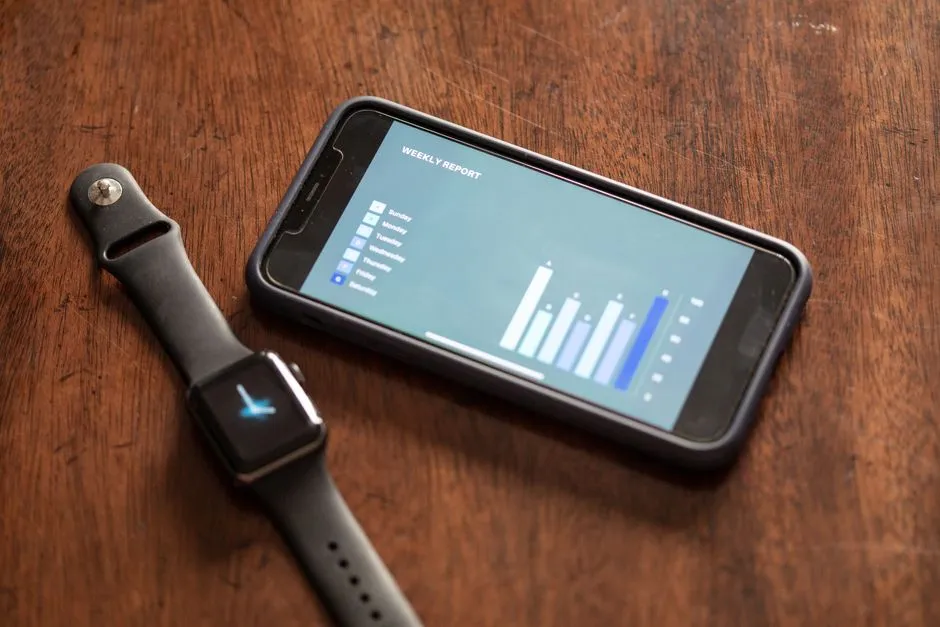
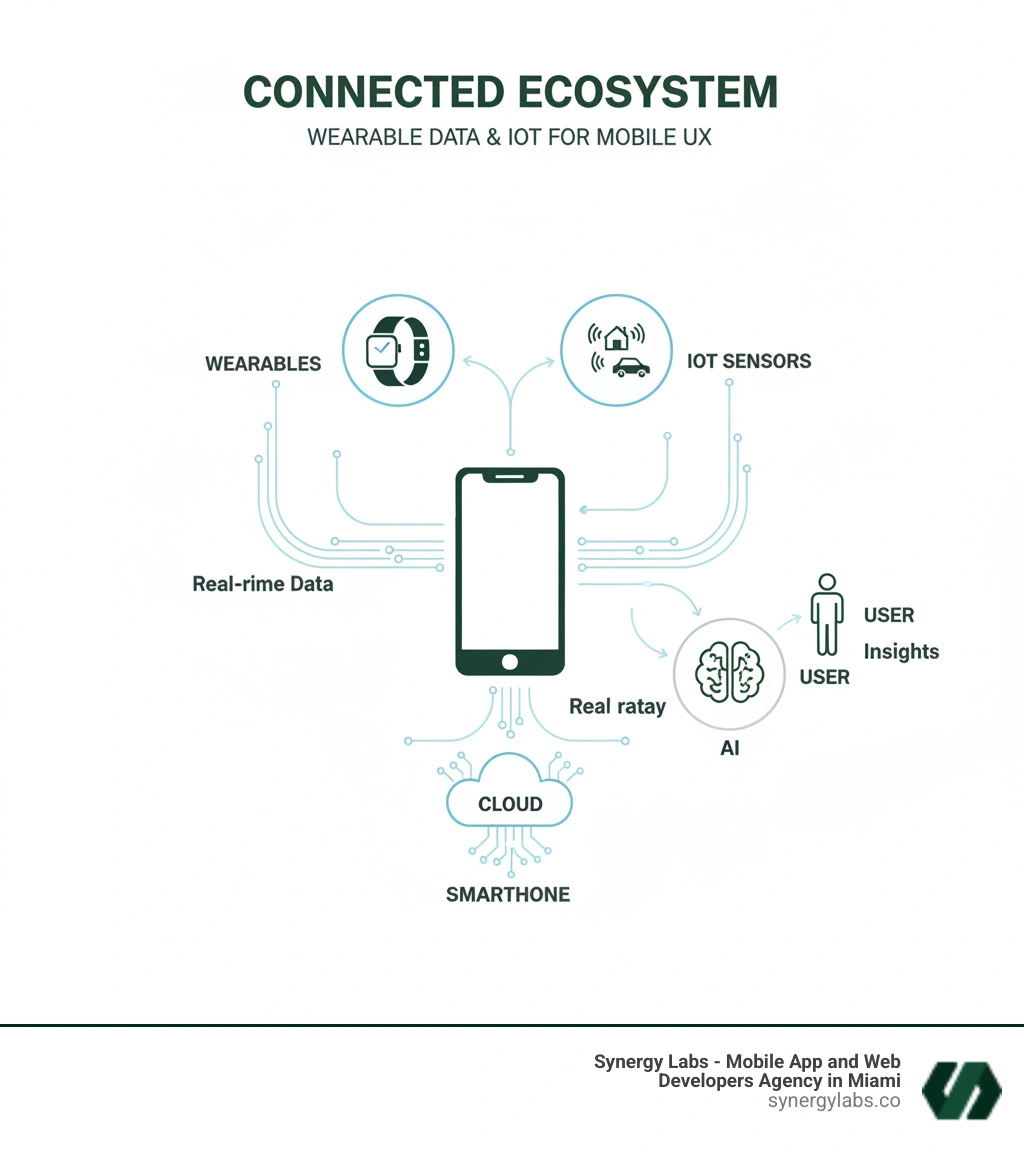
We've moved far beyond phones that just make calls. Today, technology is woven into our lives through wearables and the Internet of Things (IoT). Wearables—like smartwatches and fitness trackers—are packed with data collection sensors that constantly measure heart rate, sleep patterns, and activity. This data flows to your phone via smartphone integration, where apps turn numbers into actionable insights. The market reflects this shift, with the wearable technology market projected to reach $186.14 billion by 2030.
The Internet of Things (IoT) extends this connectivity to everything else: thermostats, cars, and security cameras. These devices form a network that collects data and communicates, creating an ecosystem of always-on insights. Your smart ring tracks sleep, and your thermostat adjusts the temperature automatically before you wake up. The global IoT market is expected to soar to $1.52 trillion by 2029, growing at 24.7% annually.
This is what we mean by The Future of Mobile UX: Wearable Data, IoT Sensors, and Always-On Insights. It’s a move from reactive apps that wait for commands to proactive intelligence that anticipates needs. Your smartwatch might detect stress and trigger your smart lights to dim and your speaker to play a calming playlist. This is the power of real-time data access from multiple sources, creating a responsive, connected experience.
Why Integration is No Longer Optional: The Core Benefits of Connected UX
A standard mobile app is no longer enough to stand out. True differentiation comes from integrating with the wearables and IoT devices your users rely on daily. This connected approach is the core of The Future of Mobile UX: Wearable Data, IoT Sensors, and Always-On Insights, offering profound benefits for both users and businesses. As we note in The Importance of User Experience (UX) in Mobile App Design, connected UX lifts the entire experience.
A Seamless User Journey
Connected experiences make technology work around your life, not interrupt it. This means hands-free convenience, like adjusting your thermostat with a voice command to your watch. It delivers contextual information, so your app knows you're at the gym and starts tracking your workout automatically. The result is reduced friction, with glanceable, proactive notifications that anticipate your needs—like a reminder that you left the garage door open. Tying this all together is cross-device interoperability, where your watch, phone, and smart home hub sync instantly. This fluid experience, which we explore in More on creating a seamless user experience, feels natural and intuitive.
Data-Driven Business Intelligence
For businesses, the data from wearables and IoT devices is a goldmine. The key is turning raw data into actionable insights that drive better decisions. This enables predictive analytics, allowing a health app to flag potential issues from biometric data or a smart home system to predict appliance failure. This leads to improved operational efficiency, as logistics companies optimize routes in real-time and retailers manage inventory with precision. Most importantly, it provides a deep understanding of user behavior based on real-world actions, not just surveys. This fosters immense customer loyalty, as users feel understood by an app that delivers timely, personalized value. The opportunity is massive: the global mobile app market is expected to grow by $2.63 trillion from 2025 to 2029, driven by AI and IoT integration. At Synergy Labs, we help businesses harness this potential by creating connected experiences that genuinely improve users' lives.
The Blueprint for Success: Designing for Wearables and IoT
Creating apps that truly harness The Future of Mobile UX: Wearable Data, IoT Sensors, and Always-On Insights requires a new mindset. It’s not about shrinking a smartphone app; it’s about reimagining the experience for unique constraints like tiny screens and limited battery life. At Synergy Labs, we use user-centered design and agile methods to steer these challenges, a process we detail in Mobile App Development Agency: What to Expect from Discovery to Launch.
Key Design Principles for Wearable Data and IoT Sensors
Success in this space hinges on a few core principles. Minimalism is functional, not just aesthetic; every pixel on a tiny screen must serve a purpose. Information must be glanceable, communicating what matters in three seconds or less. Voice UI and haptic feedback are crucial, enabling interaction without visual attention. Most importantly, context-aware design allows your app to understand what users are doing and anticipate their needs, creating a magical experience.
Our top 3 UI/UX considerations for small screens are:
Prioritize essential information: Show only what's immediately relevant and actionable.
Optimize for clarity: Use large fonts, bold icons, and high-contrast colors.
Design for micro-interactions: Focus on quick taps, swipes, and voice commands.
Technical Problems and How to Overcome Them
Several technical problems are common. Battery life optimization is paramount, as users expect all-day performance. We use efficient code and smart data syncing to conserve power. Limited processing power on wearables means complex tasks must be offloaded to a connected smartphone or the cloud. Robust data synchronization is critical to ensure information is consistent across all devices. Cross-device compatibility is another puzzle, with countless device and OS variations. Here, 4 Key Benefits of Cross-Platform Development offer a strategic advantage. Finally, network dependency requires stable, low-latency connectivity, a challenge that 5G is helping to solve. Our senior developers at Synergy Labs have extensive experience solving these real-world problems.
Industries Reimagined: Where Wearable and IoT Apps are Making an Impact
We're not just talking theory here. The Future of Mobile UX: Wearable Data, IoT Sensors, and Always-On Insights is already changing how entire industries operate, creating real value for businesses and users alike. Let's explore where these technologies are making the biggest waves.
Healthcare and Fitness
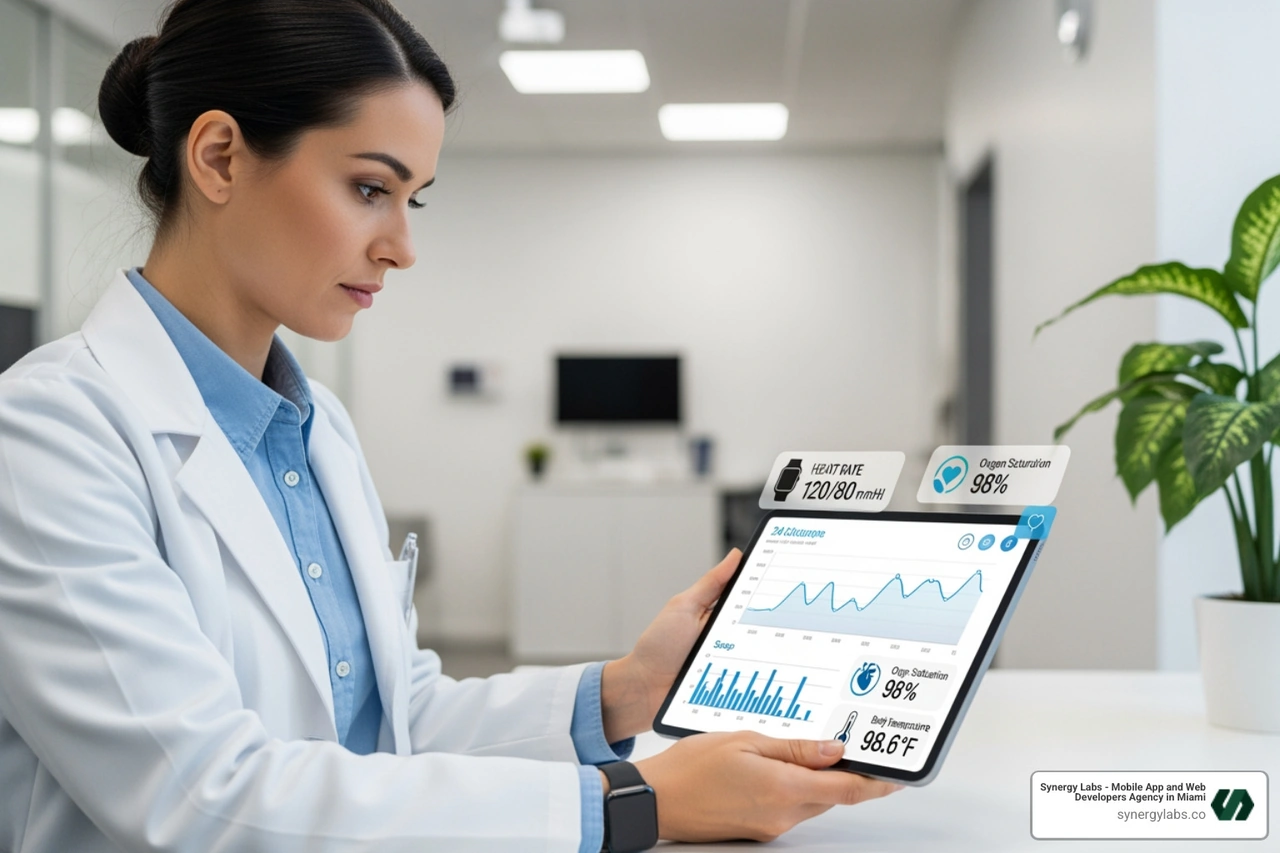
This sector has been revolutionized by wearables. The global fitness app market is projected to reach USD 22 billion by 2035, fueled by connected devices. Remote patient monitoring allows doctors to track chronic conditions via continuous data from smartwatches, with systems that can alert providers to irregularities. For fitness, personalized coaching apps analyze sleep quality, heart rate, and recovery to adjust daily workouts. Sleep tracking provides deep insights into rest patterns, helping users improve their overall health. This intersection of chronic disease management and personal wellness is where technology becomes life-changing, a trend we explore in our guide to the Top 5 Health and Fitness Apps to Watch in 2025.
Smart Homes and Cities
IoT sensors are making our living spaces more responsive and efficient. Home automation systems learn your patterns, adjusting thermostats and lighting proactively. Energy management tools identify waste and optimize usage to save money and reduce environmental impact, a topic we cover in how apps are creating a greener future. Beyond the home, smart cities use IoT for smart traffic control and optimizing waste management. Your smartphone or watch becomes the central hub for improved security and control over your entire environment.
Retail and Logistics
In retail, connected tech is creating seamless experiences and solving operational problems. Personalized shopping experiences are now possible, with apps sending relevant offers to your smartwatch as you enter a store. Contactless payments via wearables have made checkout frictionless. Behind the scenes, IoT-powered inventory management and supply chain optimization ensure products are always in stock and delivered efficiently. Fleet tracking sensors monitor vehicle location, cargo conditions, and driver behavior, enabling dynamic route optimization. This level of personalization and efficiency drives customer loyalty and gives businesses a competitive edge.
The Future of Mobile UX: Wearable Data, IoT Sensors, and Always-On Insights
Looking ahead, The Future of Mobile UX: Wearable Data, IoT Sensors, and Always-On Insights points to a fundamental shift in our relationship with technology. The goal isn't more screen time; it's technology that understands and anticipates our needs. For more on this evolution, see our overview of the Top 10 Tech Trends in 2025 Shaping the Future of Innovation.
Using Always-On Insights with AI and Machine Learning
The vast data from wearables and IoT sensors is just noise until AI and Machine Learning make sense of it. These technologies create predictive alerts, like a health app flagging that you might be getting sick based on biometric changes. Through behavioral analysis, apps learn your preferences and rhythms, enabling automated adjustments—your fitness app modifies your workout based on last night's sleep, or your thermostat warms the house before you arrive home. Generative AI is taking this further, creating interfaces that adapt to individual users over time, a concept we explore in AI-Powered Personalization: Enhancing User Experience in Mobile Applications. With forecasts indicating that by 2026, four out of ten wearable devices will operate with advanced AI, AI is clearly the engine of modern mobile experiences.
The Impact of 5G, Smart Rings, and Display-less Tech
Evolving hardware and networks are enabling new forms of interaction. 5G's low-latency connectivity is a game-changer, allowing for instantaneous communication between devices, which is critical for real-time IoT control and immersive AR. The rise of discreet wearables like smart rings—a market expected to surpass $12.6 million by 2027—shows a demand for technology that doesn't demand attention. This points toward display-less technology and ambient computing, where interaction happens through voice, gestures, and haptic feedback. Technology becomes a quiet, helpful presence that fits seamlessly into your life instead of interrupting it. At Synergy Labs, we design for this future, creating experiences that feel simple and helpful.
Navigating the Maze: Security, Privacy, and Ethical Considerations
The power of The Future of Mobile UX: Wearable Data, IoT Sensors, and Always-On Insights comes with immense responsibility. Handling deeply personal data from smartwatches and home sensors requires an unwavering commitment to security and ethics. At Synergy Labs, we believe building trust is paramount.
Our strategy is built on several key pillars. Data encryption is the first line of defense, protecting information both in transit and at rest. However, technology alone isn't enough. User consent and transparency are crucial; users must know what data is collected and why, with full control to view, manage, or delete it. This isn't just good practice—it's a legal requirement under regulations like GDPR and CCPA, with HIPAA compliance being essential for health apps. You can learn more about securing your app in our guide to Mobile Security Software.
We also address the risk of algorithmic bias by using diverse datasets and auditing our AI models for fairness. We firmly believe that data ownership rests with the user, not the company. By implementing secure authentication, conducting regular security audits, and designing with privacy at the forefront, we protect against data breaches that erode the trust that is so hard to build. Responsible innovation means ensuring users feel safe, respected, and in control of their digital lives.
Frequently Asked Questions about Wearable and IoT App Development
As you explore The Future of Mobile UX: Wearable Data, IoT Sensors, and Always-On Insights, questions are natural. Here are concise answers to the most common ones we hear.
What is the biggest challenge when designing for wearables?
The primary challenge is designing for quick, glanceable interactions within the severe constraints of limited screen space and battery life. Interactions must be completed in seconds, meaning every pixel counts. You must accept minimalism, prioritize essential information, and leverage voice commands and haptic feedback. Simply shrinking a phone app will fail; you must rethink the experience from the ground up.
How do you ensure data privacy in an IoT ecosystem?
A multi-layered approach is essential. It starts with end-to-end encryption for all data. This is supported by secure authentication methods like biometrics. Critically, you must ensure transparency and user consent, giving users full control over their data. This approach is necessary for building trust and complying with regulations like GDPR, CCPA, and HIPAA. Privacy cannot be an afterthought; it must be integrated from day one. For more details, review our guide on Mobile Security Software.
What's the first step to integrating my app with a wearable device?
The first step isn't technical. It's asking: "What problem does a wearable solve that my smartphone app can't?" Start with user research to identify a core value proposition unique to wearables, such as hands-free interaction or continuous monitoring. Once you have a clear purpose, you can define a minimalist design, choose a platform, and plan for data synchronization. A successful wearable feature adds genuine value, not just a checkmark on a feature list. Our discovery to launch guide walks through this strategic process.
Shaping Tomorrow's Digital Mix: Your Partner in Connected Experiences
Here's the truth: navigating The Future of Mobile UX: Wearable Data, IoT Sensors, and Always-On Insights is complex. It requires a partner who balances innovation with practicality, data collection with privacy, and powerful features with all-day battery life. The future of mobile is contextual, personal, and seamlessly woven into daily life. Wearables and IoT are not fads; they are fundamentally reshaping how people interact with technology.
At Synergy Labs, we thrive on these nuances. We turn complex sensor data into intuitive, delightful experiences through user-centered design and robust security. What sets us apart is direct access to senior talent in innovation hubs from San Francisco to Dubai. We've guided founders from the initial "what if?" to a polished app that users love.
We manage the complexity—data sync, screen optimization, battery constraints, and ironclad privacy—so the end user experiences something that feels effortless.



.avif)

.avif)


