Solar, geothermal, wind, and battery storage are more accessible than ever in 2025 — federal tax credits and falling equipment costs mean going green finally makes financial sense too.
Green energy home solutions are changing how we power our homes, cutting costs and environmental impact. Here are the most effective renewable energy options:
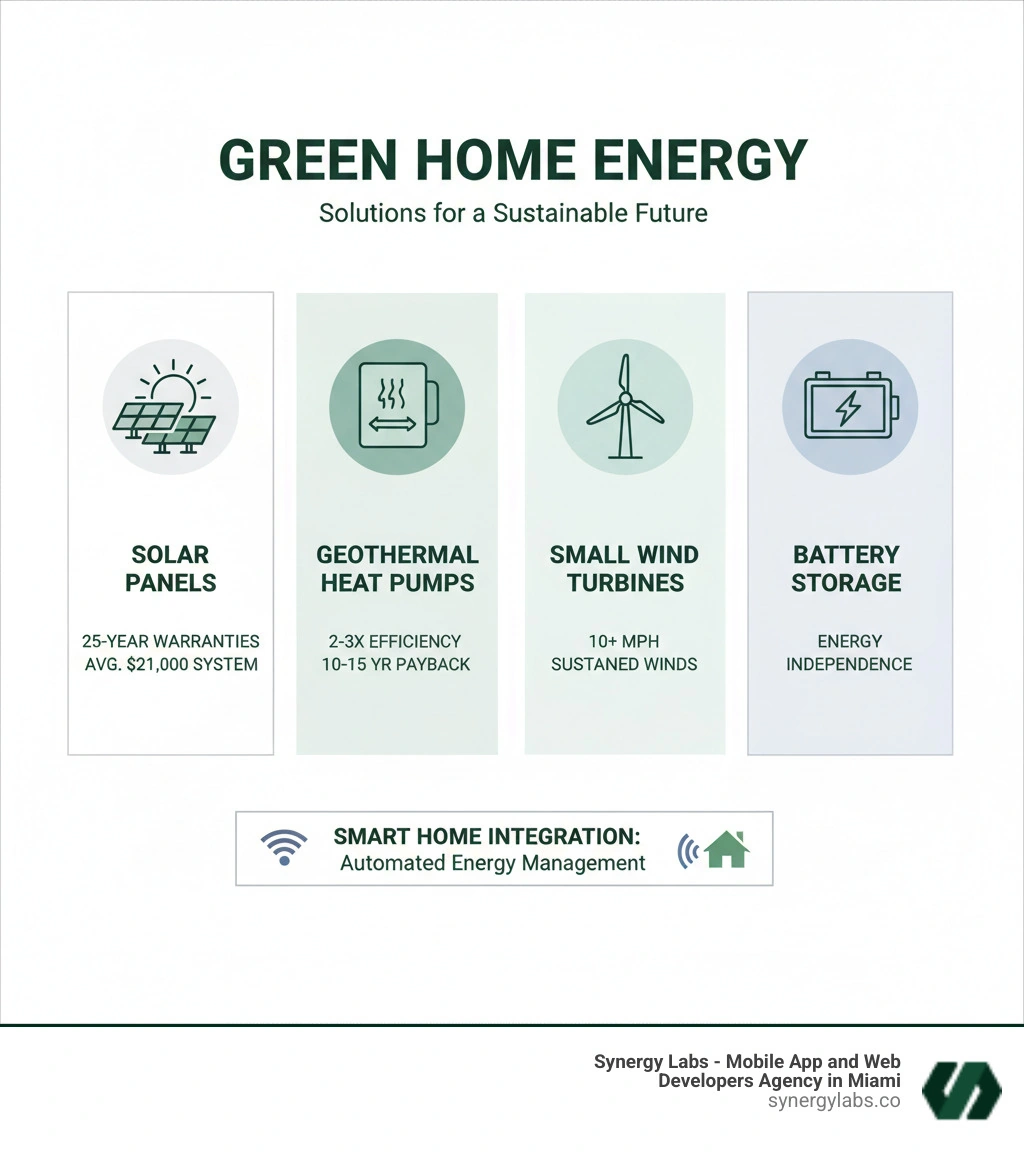
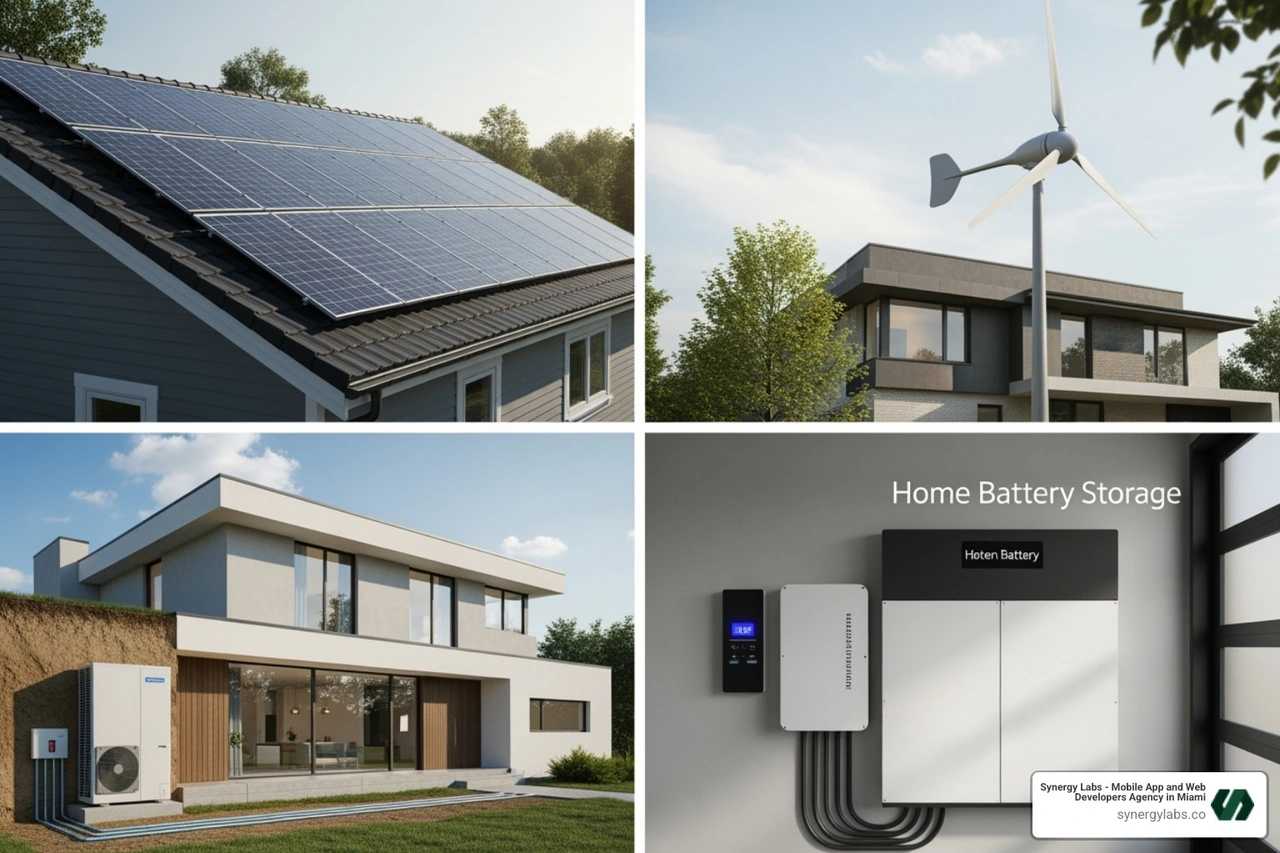
Solar panels - Generate 10+ watts per square foot, cost ~$3 per watt installed
Geothermal heat pumps - Achieve 2-3x higher efficiency than traditional systems
Small wind turbines - Require sustained 10+ mph winds, generate 30% more power on 100-foot towers
Solar water heating - Meet 50% of hot water needs, cost $5,000-$7,000 installed
Battery storage systems - Store excess energy for use when renewable sources aren't generating
The numbers are compelling. The average American household consumes about 900 kilowatt-hours per month, but a 7-kilowatt solar system can provide 20-35 kWh daily depending on your climate. That could meet most of your home's electricity needs.
2025 is the perfect time to go green. Federal tax credits, state rebates, and falling equipment costs make renewable energy more accessible than ever. Plus, green energy technologies are evolving into mainstream necessities through innovative methods that integrate seamlessly with smart home systems.
Whether you're looking to slash electricity bills, increase your home's value, or reduce your carbon footprint, the path forward starts with understanding your options.
As the founder of Synergy Labs, I've seen how technology amplifies renewable energy benefits. We help clients integrate smart solutions, from monitoring apps to automated energy management, leveraging our experience in scalable digital platforms.
Step 1: Assess Your Home's Energy Needs
Before investing in green energy home solutions, you must understand your home's energy needs. It's like knowing your destination before a road trip. Every house has a unique energy fingerprint; identifying yours prevents costly mistakes. The goal is to create a system sized for your actual needs, not just install panels arbitrarily.
Start with an energy audit. The simplest approach is to review a year of your electricity bills. Look for patterns, like spikes in July when the air conditioner works overtime or in January when your heating system is in high gear.
A helpful benchmark: the average American household consumes about 900 kWh per month. But your actual consumption might be higher or lower depending on your home's size, age, and lifestyle.
Calculating your electricity consumption involves identifying your home's "energy hogs"—appliances that consume the most power. Your air conditioner is often the biggest culprit, followed by water heaters, refrigerators, and older electronics.
Analyzing your utility bills reveals seasonal usage patterns crucial for sizing your renewable energy system. Summer months might show double the consumption of spring, for example.
Before you invest in renewable technology, prioritizing energy efficiency first is key. Simple improvements like better insulation, sealing air leaks, upgrading to LED lighting, or installing a programmable thermostat can cut energy needs by 20-30%.
Why does this matter? Because every kilowatt-hour you don't need is money you don't have to spend on renewable energy equipment. A more efficient home needs a smaller solar array, which means lower upfront costs and a faster payback period.
At Synergy Labs, we see how smart technology amplifies these gains. Real-time energy insights, automated thermostats, and usage alerts work with renewable systems to maximize your investment.
The bottom line? Understanding your energy needs isn't just the first step—it's the foundation that everything else builds upon. Get this right, and your green energy journey will be more effective and affordable.
Your Guide to the Best Green Energy Home Solutions
Now that you know your energy needs, let's explore green energy home solutions. Each option has unique benefits and requirements. Modern renewables are flexible. Grid-tied systems connect to the utility, allowing you to sell excess power. Off-grid systems offer full independence but require battery storage.
System sizing is key to matching production capacity to your needs. A system that's too small won't meet your goals, while one that's too large is an unnecessary expense.
Using the Sun: Solar Power Options
Solar energy is popular for good reason: it's accessible, reliable, and affordable. Let's review the options.
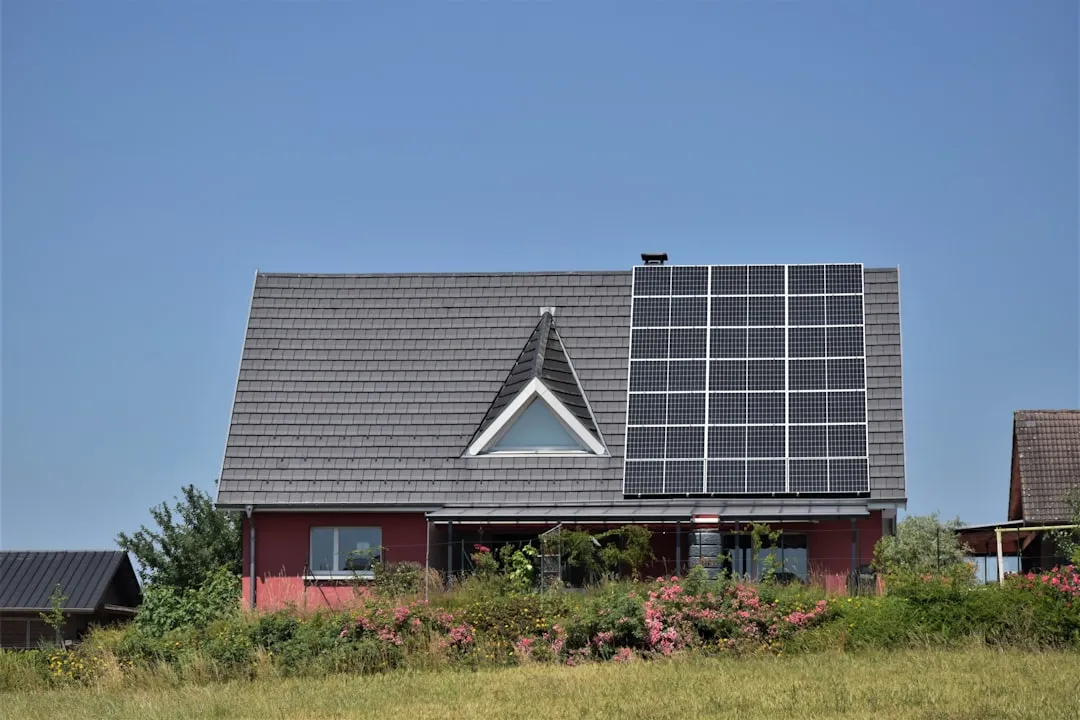
Photovoltaic (PV) systems are what most people picture. These solar panels convert sunlight directly into electricity. A typical 7-kilowatt system can produce 20-35 kWh daily, covering most of a home's electricity needs. A 7kW system costs around $21,000 before incentives. Owning the system allows you to claim tax credits and sell excess power back to the utility, creating a return on your investment.
Solar shingles are a sleek alternative that integrates into your roof, perfect if you're already planning a roof replacement.
Solar water heating is another approach. Solar-powered water heaters can meet 50% of hot water needs for $5,000-$7,000. Since water heating is a major expense, this delivers significant savings.
Solar air conditioning uses solar thermal energy to power cooling systems. This is ideal in hot climates, as cooling is most needed when the sun is brightest, slashing summer electricity bills.
Solar ovens are a simple entry point, using sunlight to cook meals for free and reducing reliance on conventional appliances.
Capturing the Breeze: Residential Wind Power
Residential wind power is less common than solar but highly effective in the right conditions, as it's more location-dependent. To make small wind turbines worthwhile, you need sustained winds of at least 10 mph. A small wind turbine on a 100-foot tower generates 30% more power than one on a 60-foot tower because wind is stronger and less turbulent at higher altitudes.
Siting is crucial. Wind turbines need open space, away from obstructions like trees and buildings that create turbulence. Wind is best for rural areas with consistent breezes. Urban and suburban sites often face issues with inconsistent wind, noise, and zoning. However, with the right property, a turbine provides reliable power that complements solar.
Tapping the Earth: Geothermal Systems
Just 10 feet underground, the earth maintains a stable temperature of 45°F to 75°F year-round. Geothermal heat pumps use this stable ground temperature to achieve efficiency rates 2-3 times higher than traditional HVAC systems, as detailed in geothermal energy by heat pump technology.
Though the upfront cost is higher, geothermal systems pay for themselves in 10-15 years through energy savings. The underground components can last over 50 years. Geothermal systems are versatile, quiet, and low-maintenance. Synergy Labs can help integrate them with smart home controls for optimal efficiency. Learn more info about our services.
Other Innovative Home Energy Technologies
Microhydropower systems are an option for properties with flowing water. Using hydraulic systems, they provide continuous, predictable power 24/7, with a 10kW system capable of powering a large home.
Battery storage systems solve the intermittency of renewables by storing excess energy. They can be programmed to optimize energy costs and provide backup power during outages.
Smart home integration creates an intelligent energy network. You can monitor and automate your systems from your phone, optimizing when to use, store, or sell power, which amplifies your investment.
Tubular skylights, or "sun tunnels," are a simple way to reduce energy use. They channel natural light into your home, reflecting over 90% of available sunlight and reducing the need for electric lighting during the day.
The key is to mix and match technologies to create a custom solution for your home. Every step, big or small, moves you toward energy independence.
The Practical Side: Installation, Costs, and Regulations
Choosing green energy home solutions is exciting, but practical questions about cost, installation, and regulations are crucial. Let's break it down.
Professional installation is essential for complex systems like solar panels, wind turbines, and geothermal heat pumps. Professionals handle complex electrical and structural work safely, ensure warranties remain valid, and steer local codes and permits. Most systems are also low-maintenance. Solar panels may need cleaning, and wind and geothermal systems require periodic inspections, but it's a small investment for long-term performance.
Key financial aspects of green energy home solutions
Green energy home solutions require an upfront investment, but the long-term savings are significant.
Solar photovoltaic systems are popular. A 7-kilowatt system costs around $21,000 and can generate 20-35 kWh daily, covering most of the average household's 900 kWh monthly usage and leading to immediate bill reductions.
Geothermal heat pumps have a higher upfront cost but are 2-3 times more efficient than traditional systems. The investment is typically recouped in 10-15 years through energy savings.
Solar water heating systems are a great entry point. For $5,000-$7,000, they can cover half of a family's hot water needs, quickly generating savings.
Incentives are a game-changer. Use the Database of State Incentives for Renewables & Efficiency to find federal tax credits and state rebates that can cover 30% or more of installation costs. This helps systems pay for themselves in 5-15 years. Payback periods vary, but the long-term financial benefits and increased home value make these a smart investment.
Legal and regulatory factors for green energy home solutions
Navigating the regulatory landscape properly prevents future headaches.
Zoning laws and building codes dictate placement and installation requirements. Permits and inspections are necessary for safety and compliance.
Check your homeowners association (HOA) rules. While many states protect solar installations, HOAs may have specific aesthetic requirements.
Net metering policies allow you to sell excess electricity back to the utility for credits or payment. A bi-directional meter tracks the power you generate and use.
Grid connection agreements with your utility outline the technical and safety standards for connecting your system and detail net metering terms.
Easements are legal agreements that can protect your system's access to sunlight or wind from future obstructions.
Synergy Labs develops smart monitoring apps to help clients manage regulatory compliance, which we'll explore next.
Smart Homes: Maximizing Your Green Energy Investment
The real power of green energy home solutions is open uped through smart home technology, which acts as a brain for your house, making intelligent energy decisions.
With energy monitoring, you can use an app to see how much power your systems are generating, how efficiently they're running, and which appliances are using the most electricity. These systems send alerts for issues like drops in solar output or unusual battery drain, saving you money on lost efficiency and repairs.
Smart thermostats learn your routines and adjust temperatures automatically. For example, they can pre-cool your house using peak solar power, acting as a personal energy assistant.
Automated appliances can be set to run when renewable energy is abundant or electricity rates are low. Your dishwasher, water heater, or EV can operate at the most cost-effective times.
Smart load management is effortless. A battery can store excess solar power generated during the day and use it during peak evening hours, saving an average household $50-100 per month.
Modern HVAC systems integrated with smart controls dramatically improve your overall energy efficiency. A geothermal heat pump can communicate with your home's energy management system to run when renewable power is abundant.
Synergy Labs develops custom apps that unify these systems into a single interface. Watching your home run on self-generated power provides not just savings, but also energy independence and peace of mind.
These smart features can be added gradually. Start with energy monitoring and expand as your budget and comfort level allow.
Frequently Asked Questions about Home Renewable Energy
Switching to green energy home solutions can feel overwhelming. Here are answers to the most common questions we hear.
What is the best renewable energy source for my home?
There is no single 'best' system for every home; the ideal choice depends on your specific needs and location.
Solar power is the most versatile option, working almost anywhere with decent, unobstructed roof space. The technology is reliable and increasingly affordable.
Wind power is more location-specific, requiring consistent 10+ mph winds and open space, making it ideal for many rural properties. In the right conditions, it's highly productive.
Geothermal systems are highly efficient, using stable ground temperatures for heating and cooling. While upfront costs are higher, the long-term savings are substantial.
Often, the best solution is a combination, like solar panels with battery storage, which provides clean energy production and backup power.
Can I go completely off-grid with renewable energy?
Yes, going completely off-grid is possible with a properly sized renewable energy system and robust battery storage. However, most homeowners choose grid-tied systems. These connect to the utility grid for backup, reduce bills, and allow you to sell excess power via net metering.
Grid-tied systems are more affordable upfront and provide a safety net, eliminating the need for extensive battery storage to cover long periods of low generation. Still, if full energy independence is your goal, off-grid living is achievable with a comprehensive battery storage system.
How much money can I save with green energy?
The financial benefits can be substantial, but savings depend on your specific situation.
System size and type are key factors; a larger system costs more but yields greater savings.
Location is crucial. High electricity rates and good solar or wind resources lead to a faster return on investment.
Most systems pay for themselves in 5-15 years. After that, you enjoy decades of nearly free electricity. Solar panels often have 25-year warranties and produce power long after.
In addition to monthly savings, green energy home solutions can increase your property value, helping your home sell faster and for a higher price. While savings vary, the combination of lower bills, incentives, and increased home value makes renewable energy a smart financial move for most.
At Synergy Labs, we know that smart technology integration through intuitive apps maximizes these savings, making your investment work harder.
Conclusion: Powering a Sustainable Future, One Home at a Time
The path to a greener home involves thoughtful choices that create positive change. This guide has explored how green energy home solutions can transform how we power our lives.
We've seen how a well-sized solar system can meet the average home's 900 kWh monthly needs, how geothermal systems offer 2-3x more efficiency, and how smart technology integrates these systems into an energy powerhouse. The financial case is compelling, with tax credits, rebates, and payback periods of 5-15 years leading to decades of free energy. The real magic, however, is combining renewables with smart home technology.
Modern energy monitoring gives us unprecedented control. You can track generation on your phone and automate energy usage to align with peak production times. This technology is available now.
At Synergy Labs, we develop custom, user-friendly apps that maximize green energy investments. Integrating smart apps with your green energy home solutions creates a home that actively minimizes costs and environmental impact.
The environmental impact is significant. Every renewable kilowatt-hour reduces reliance on fossil fuels, leading to measurable improvements in carbon emissions and air quality when adopted widely. Crucially, these solutions offer energy independence. This means protection from rising utility rates, backup power during outages, and the satisfaction of running on clean energy.
The technology is evolving rapidly. Smart home integration, energy management apps, and automated systems are becoming more sophisticated and accessible.
Ready to take the next step? The journey begins with exploring your options. The key is to understand your needs and goals, whether you're interested in solar, geothermal, wind, or a combination.
Curious how technology can improve your green energy journey? Explore our portfolio of innovative solutions to see how Synergy Labs creates intelligent apps to help homeowners maximize their investments. The future of home power is smart, connected, and designed around you.




.avif)

.avif)


