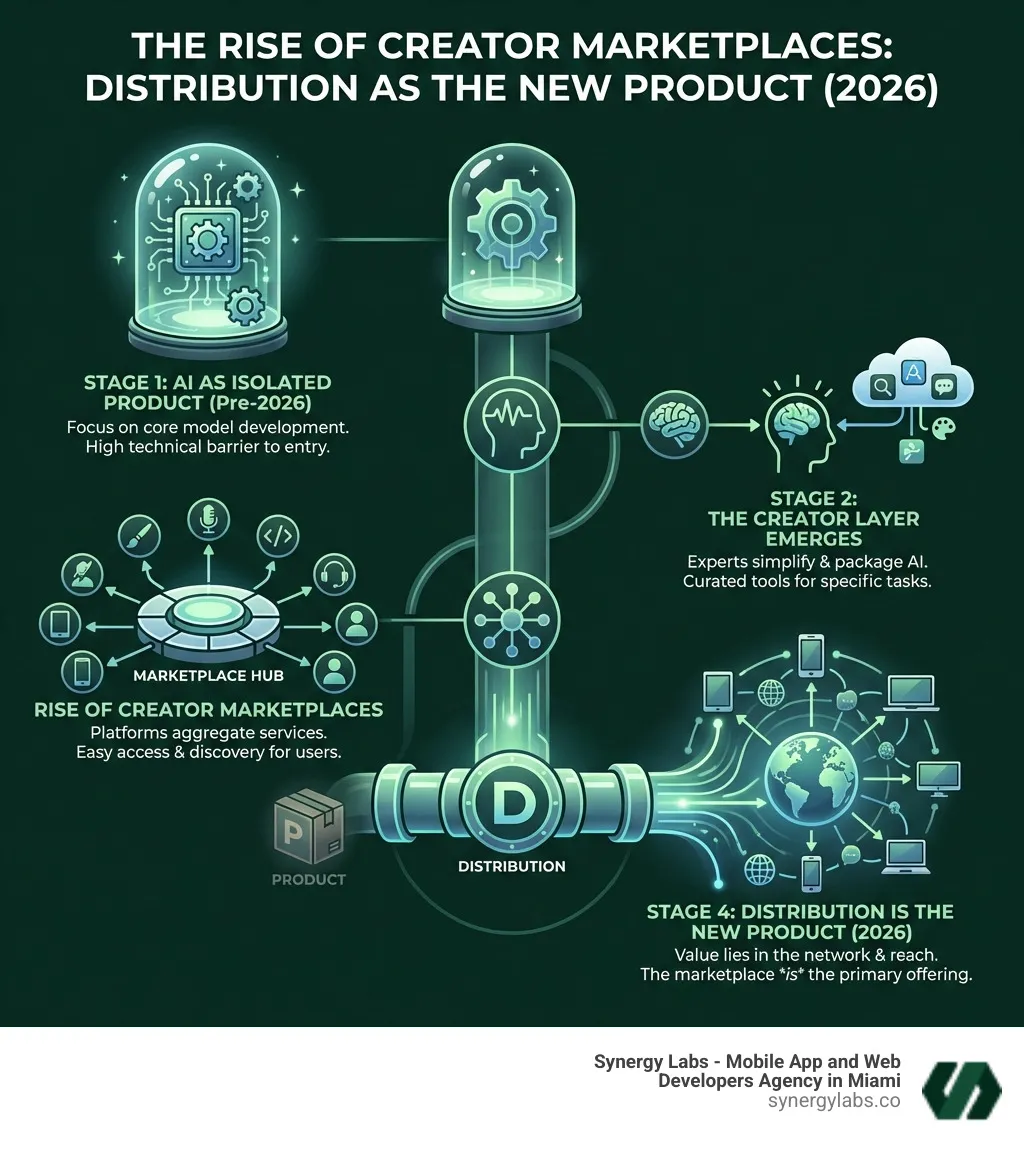
"The year 2026 marks a fundamental shift in how AI tools reach consumers, driven by the rise of creator marketplaces where distribution is the new product."
The year 2026 marks a fundamental shift in how AI tools reach consumers, driven by the rise of creator marketplaces where distribution is the new product. Here's what's happening:
AI models are commoditizing - Building AI is now easier than ever, making the technology itself less of a differentiator.
Creators are becoming tech entrepreneurs - Moving beyond endorsements to launch their own AI-powered platforms and tools.
Trust-driven distribution wins - Audiences trust creators more than brands, making creator channels the new growth engine.
Access beats innovation - Having the best AI means nothing if users can't find it or don't trust it.
Answer Engine Optimization (AEO) replaces SEO - AI agents and chat interfaces are the new front door to the internet.
The data is clear: half of consumers use AI for online searches, with 44% preferring it over traditional methods. Creator platforms are also set to surpass traditional media in ad revenue, with an estimated $37 billion in U.S. creator ad spend in 2026. This is a complete restructuring of how products reach people.
In 2026, winning companies won't just have the best AI models; they'll have the best distribution. Success means getting AI into users' hands through trusted channels like creators and communities, as traditional app stores and search engines are disrupted by AI agents and creator platforms.
At Synergy Labs, a Miami-based mobile app and web development agency, we've been on the front lines of this change. We've seen how creator marketplaces are reshaping product development and go-to-market strategies. Our work with successful apps that have surpassed 1M+ downloads has taught us that building great technology is table stakes. What matters most is building the right bridges to your audience.
Important The Rise of Creator Marketplaces for AI Services: Why Distribution Is the New Product in 2026 terms:
The Great Commoditization: When AI Execution Became the Easy Part
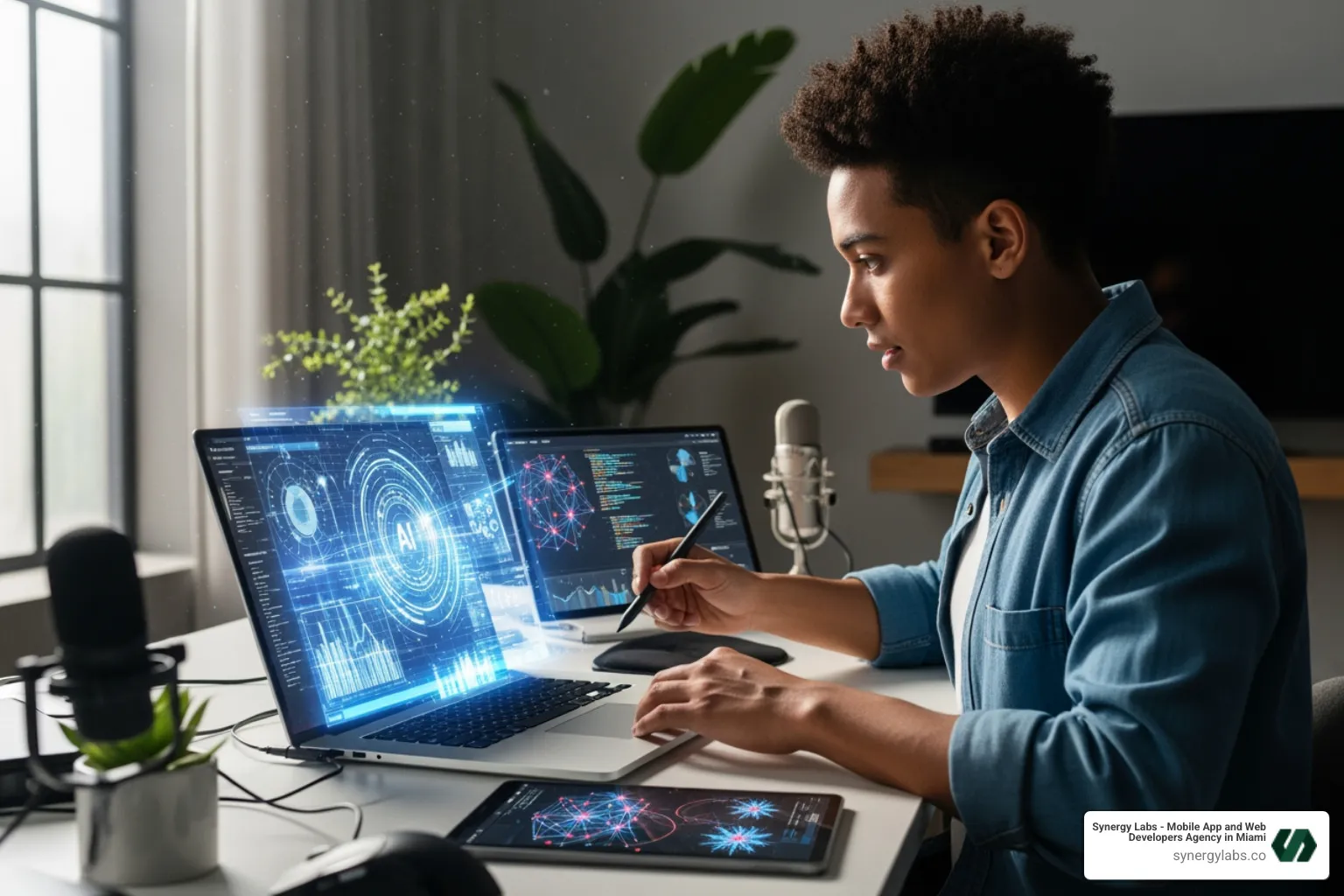
In the 2026 AI era, execution is the easy part. The barrier to entry for developing AI services has plummeted, thanks to powerful generative AI and no-code platforms. It's a far cry from the days when building a website or app required a team of specialized engineers.
AI models are no longer exclusive to tech giants. State-of-the-art models are only about six months ahead of open-source alternatives, meaning the technology is commoditized. If you can dream it, an AI can help build it. AI is now the engine running marketing workflows for content creation, personalization, and strategy.
In 2026, AI is fully integrated into marketing, helping with everything from content creation and trend analysis to campaign strategy. AI sits at the center of production pipelines, unifying creative development into a single process. Digital platforms now unite hyper-personalization with AI-driven creative, using data to shape ideas in real time. However, a key challenge remains: "most brand design systems can’t handle the firehose of AI content generation that 2026 will require."
The focus is no longer on how to build AI, but who can distribute it. AI has moved from novelty to ubiquity. This accessibility, via no-code platforms, allows anyone with an idea to "wrap" an AI model into a service. As we explored in AI Design Tools: Progress, Limitations, and the Future of Human Creativity, the tools are here. The challenge is getting them into the right hands.
The Creator Economy Matures: From Endorsements to Ownership
In 2026, the creator economy is shifting from influence to ownership. Creators are becoming tech entrepreneurs, launching their own AI-powered platforms. This evolution is a response to AI commoditization and the value of trust-driven distribution.
A major power shift is underway. Creator platforms are set to surpass traditional media in ad revenue, with an estimated $37 billion in U.S. creator ad spend in 2026. As a result, "social-first is no longer a buzzword; it is the default operating model."
Major social media platforms are facilitating creator-brand partnerships. Brands are responding, with many launching shop-by-creator experiences. These creator storefronts, where creators curate products for a commission, are becoming a major income stream, with some earning six- to seven-figure paydays.
It's more than affiliate links. Creators are leveraging their audience's trust to launch their own AI tech. As one report notes, "creators are moving beyond endorsements to ownership in AI tech deals, with trust and distribution becoming more critical than technical differentiation." They are launching training platforms and niche assistants, making trust the deciding factor in AI adoption.
Creator-led agencies are also on the rise. In 2026, more creators will launch their own agencies as top talent goes indie. Marketers are flocking to these small, senior-led shops for direct access to talent. Built on cultural insight, these agencies are perfectly positioned to lead.
As long-form content is increasingly broken into short-form snippets, "clippers" are being recognized as a class of creators. These "nano-creators" are cost-effective at scale and help brands co-create with communities.
The message is clear: creators are the new gatekeepers of attention and trust. Their evolution from influencers to entrepreneurs, using AI to build and distribute their own services, is a cornerstone of this new era.
The Rise of Creator Marketplaces for AI Services: Why Distribution Is the New Product in 2026
With AI commoditized and creators becoming entrepreneurs, distribution is now the most valuable product in AI marketplaces. It's not about selling software, but about selling access, trust, and curated solutions.
Historically, marketplaces struggled with high customer acquisition costs or low lifetime value. AI is changing this by reviving failed marketplace categories. It can "reduce the cost of making a match from hundreds of dollars in human labor to a few dollars," turning "graveyards into greenfields" by making unit economics viable.
Consider these examples of AI-driven marketplaces:
Talent marketplaces use AI voice agents to vet candidates and make matches, cutting human involvement.
Real estate platforms use AI to handle inquiries, scheduling, and paperwork, significantly reducing broker workload and commissions.
Homecare services use AI to coordinate handymen via subscription, creating recurring revenue.
Specialized services (e.g., legal, health) use AI to manage complex processes, offer fixed-fee services, and perform initial patient assessments, lowering costs.
These examples show AI as an efficient "middleman" that automates vetting and matching, reducing costs and increasing throughput. This makes services more transparent and efficient. Hyper-personalization is now table stakes, and as we discussed in AI-Powered Personalization: Enhancing User Experience in Mobile Applications, individualized experiences are expected.
The global SaaS market is estimated at USD 408.21 billion in 2026, highlighting the massive opportunity. This is the democratization of AI, where creators can build and distribute niche AI solutions directly to their audiences. This is part of a larger trend toward "agentic commerce," where AI agents act on behalf of consumers. With projections reaching $3-5 trillion, this represents a fundamental rethinking of shopping. Distribution within this agent ecosystem is paramount.
The New Findy Engine: How Creators Are Winning at Answer Engine Optimization (AEO)
Forget SEO. In 2026, the internet's new front door is AI. Consumers are moving "from broad search to AI-mediated answers," meaning "relevance to a specific question now matters more than general visibility." AI is collapsing the buying journey into a single conversational flow.
This new paradigm is Answer Engine Optimization (AEO), and creators are mastering it. As AI-powered search becomes central, brands must focus on AEO. Instead of pleasing traditional search engine algorithms, marketers must now consider how AI models interpret and present information.
As LLMs become gateways to information, brands with trustworthy, structured insights will gain visibility. This is where creators shine. Their specific, context-rich content is ideal source material for AI answers.
Brands now partner with creators to ensure they are cited in AI search responses. Creators are becoming essential data points for the AI models shaping findy. The traditional search funnel is being replaced by a direct, conversational path where specific intent determines visibility.
Building Trust in a World of Synthetics: The Authenticity Counter-Movement
In a world of AI-generated content, trust is the ultimate currency. AI risks creating "synthetic sameness," but a counter-trend is emerging where brands that resist this are winning. Public backlash against overtly AI campaigns and a desire to "toggle off AI content" highlight the risk of inauthenticity.
While AI handles the "what," humans are essential for the "so what." The differentiator is shifting back to human judgment, creativity, and empathy. As one expert notes, when everyone uses the same machines, nothing stands out. This is triggering a "feverish demand for authenticity."
This is why creators are so powerful. Their brands are built on genuine connection, offering a human counterpoint to sterile AI output. For consumers, a creator's brand is a verification layer. Trust-driven distribution is "becoming the deciding factor in AI adoption."
Businesses must adapt. As AI agents become prevalent, brands must engage both consumers and the autonomous agents acting for them. This requires balancing AI efficiency with an authentically human message. Success will come to brands that lead with "reassurance, transparency, and tangible value."
How Businesses Can Thrive in the New Distribution-First Landscape
Navigating The Rise of Creator Marketplaces for AI Services: Why Distribution Is the New Product in 2026 requires a fundamental shift in business strategy. It's no longer enough to simply build a great AI product; you must also build robust bridges to your audience through trusted channels.
Here's how businesses can thrive:
Accept Creator Partnerships: Creators are the new distribution channels. Partner with credible creators who hold authority in specific domains, moving beyond endorsements to deeper collaborations like co-developing AI solutions. This includes investing in IRL partnerships and creator collaborations on professional networking platforms.
Master Answer Engine Optimization (AEO): With AI search becoming the norm, ensure your content is "agent findable." Create specific, context-rich, use-case-driven content that AI models can parse. Partner with creators to leverage their content for your AEO strategy and appear in AI-mediated answers.
Prioritize Authenticity: In an AI-saturated world, human judgment and creativity are the true differentiators. Resist "synthetic sameness" by focusing on originality and storytelling. Use AI to improve human creativity, not replace it, ensuring AI execution serves human connection.
Design for Hyper-Personalization: Consumers expect individualized experiences. Leverage AI to deliver audience-of-one experiences at scale by designing for the AI-native behaviors consumers are adopting. Our team at Synergy Labs is adept at building these AI-Powered Personalization: Enhancing User Experience in Mobile Applications.
Structure Data for AI Agents: For agentic commerce, optimize your product catalogs for agent readability and semantic understanding. Develop agent-authenticated interfaces and build persistent customer-context layers for hyper-personalization. Make your business intelligible to AI agents.
Rethink Business Models: Traditional sales models are evolving. Explore new monetization strategies like subscription businesses, multibrand bundling, or real-time negotiation fees. Use AI to transform your value proposition with transparency and efficiency. Our AI-Infusion Service can help integrate these capabilities.
By adopting these strategies, businesses can move beyond simply reacting to AI trends and actively shape their future in this distribution-first landscape. For further insights into how AI drives business growth and competition, refer to AI-Driven Growth: Transforming Business Innovation and Competition.
Frequently Asked Questions about Creator-Led AI Marketplaces
What is a creator marketplace for AI services?
It's an online platform where creators develop and distribute specialized AI tools and services directly to consumers. Unlike traditional marketplaces, these leverage a creator's personal brand and community to provide trusted, niche, and hyper-personalized AI solutions.
Creators "wrap" commoditized AI models into user-friendly apps or agents, like an AI meeting summarizer from a productivity influencer. The creator's identity is central, building on a "trust-driven distribution" model where audiences adopt services from trusted sources.
Existing AI-driven marketplaces for talent or real estate show how AI can act as a "middleman," automating processes and reducing costs. For creators, it's about moving "beyond endorsements to ownership in AI tech deals" and leveraging their communities to distribute their own solutions. Many of the "20 Profitable SaaS App Ideas You Can Launch in 2026" are ripe for this model.
Why is distribution more important than the AI product itself in 2026?
In 2026, having the "best" AI product isn't the primary differentiator due to the commoditization of AI models. The core technology is accessible, making it easy to build similar solutions. As one expert noted, "'AI model wrappers' [can be] valuable if they can leverage distribution and network effects."
The real value lies in distribution: how an AI service reaches users, gains their trust, and integrates into their lives. An unfinded product is useless.
Here's why distribution reigns supreme:
AI Commoditization: With AI tech readily available, the unique selling proposition shifts from core capability to application and user experience.
Abundance of Tools: In a flooded market, users face decision fatigue. Trusted recommendations and easy access cut through the noise.
Audience Reach: Creators have built-in audiences and a direct connection to users, a powerful distribution channel that's hard for brands to replicate.
Trust as a Value Driver: In a world of synthetic content, trust is paramount. Audiences trust creators more than brands, making "trust-driven distribution... the deciding factor in AI adoption."
The Challenge of Findy: As AI collapses the buying journey, being found by AI agents (AEO) and trusted creators is critical. Being "agent findable" is more important than technical superiority.
Innovation in how AI reaches users is now more impactful than innovation in the AI itself.
How can my business prepare for the rise of creator marketplaces for AI services?
Preparing for this new landscape involves a proactive and strategic approach, blending technological adaptation with human-centric marketing. Here's what we at Synergy Labs recommend:
Partner with Aligned Creators: Find creators whose niche aligns with your services. Move beyond endorsements to collaborative partnerships, like co-developing AI solutions. Learn from their agility and consider IRL partnerships to build deeper connections.
Focus on Answer Engine Optimization (AEO): Shift your content strategy to AEO. Create specific, context-rich content that answers user questions for AI models. Work with creators to generate content that gets prioritized by AI search tools.
Adopt an AI-First Mindset: Build apps with AI at their core. Our guide to AI-First App Development: How Modern Products Are Built in 2026 can help. Focus on modular, API-first solutions that integrate with AI agents and invest in agent-ready infrastructure.
Build for Niche Communities: Creator marketplaces thrive on niche interests. Develop AI services for specific communities and use AI to deliver hyper-personalized, audience-of-one experiences.
Structure Data for AI Agents: Make your product catalogs machine-readable for agentic commerce. Optimize for semantic understanding and develop agent-authenticated interfaces so AI agents can find and recommend your offerings.
Prioritize Authenticity: With the rising demand for authenticity, lead with transparency and tangible value. Ensure your AI services are human-centric and your messaging emphasizes empathy over AI polish.
Explore New Business Models: Be open to innovative models like subscriptions, bundled offerings, or performance-based partnerships with creators. AI enables flexible pricing and new revenue streams.
By embracing these strategies, your business can effectively prepare for and capitalize on the significant opportunities presented by The Rise of Creator Marketplaces for AI Services: Why Distribution Is the New Product in 2026.
From Code to Community: Your Next Move in the AI Revolution
We've explored how The Rise of Creator Marketplaces for AI Services: Why Distribution Is the New Product in 2026 is fundamentally reshaping the digital landscape. The age of AI commoditization has arrived, shifting the focus from simply building cutting-edge technology to effectively distributing it through trusted, community-driven channels. Creators, armed with their loyal audiences and entrepreneurial spirit, are becoming the new gatekeepers, leveraging AI to build niche services and winning the battle for attention through Answer Engine Optimization and authentic connection.
The future is community-first, driven by trust and authenticity in a world increasingly saturated with synthetic content. Building bridges to users, rather than just products, will be the defining characteristic of successful businesses.
Navigating this new landscape requires a partner who understands both the cutting-edge AI and the human-centric design needed to succeed. At Synergy Labs, we help businesses build and integrate these next-generation AI solutions. With our fixed-budget model, in-shore CTO guidance, and milestone-based payments, we de-risk innovation and ensure your project is delivered on time and on budget. Ready to build the future? Explore our services.


.avif)

.avif)


