Enterprise app development isn't just about building software — it's about creating systems that automate operations, handle scale, and grow alongside your business.
Enterprise App Development is the process of creating specialized software applications for large organizations. These apps are designed to automate tasks, manage large-scale data, and streamline complex business processes to improve efficiency and support growth.
Key characteristics include:
Custom Software: Built for a company's unique needs.
Large-Scale: Designed for many users and complex operations.
Business Processes: Aims to automate company operations.
Integration: Connects with existing business systems.
Scalability: Built to handle future growth.
While traditional software development was often slow and costly, modern tools and platforms have made it faster and easier to create custom apps. This allows companies to meet customer demands and boost productivity more effectively.
At Synergy Labs, our approach to Enterprise App Development starts with a deep findy phase to tailor solutions to unique user needs. We focus on building modern, high-performing applications that drive growth and solve complex business problems.
Enterprise App Development terms you need:
enterprise mobile app development company
The Strategic Importance of Enterprise Apps for Business Growth
In today's business world, efficiency and intelligence are key. Enterprise App Development provides strategic tools that drive digital change and competitive advantage. By converting manual processes into automated workflows, enterprise apps empower businesses to innovate and scale. The global enterprise application software market reached $387 billion in 2024, with a 13.7% annual growth rate, reflecting the immense value these applications bring. Custom software solutions are crucial for market leadership, which is how custom software solutions can give your startup a competitive edge.
Key Benefits of Enterprise Application Development
Investing in Enterprise App Development offers numerous advantages:
Streamlined Operations and Increased Efficiency: Enterprise apps automate tasks and integrate departments, eliminating errors and bottlenecks for smoother workflows. Using an enterprise application to access one source of truth helps employees streamline their work processes for greater efficiency and productivity, with some studies suggesting mobile apps can save employees 7.5 hours per week.
Improved Data Management and Accuracy: By centralizing data, enterprise apps create a single source of truth, improving data accuracy, consistency, and accessibility for better decision-making.
Increased Employee Productivity: Automating mundane tasks frees employees to focus on mission-critical activities, boosting both productivity and job satisfaction.
Better Customer Relationships: CRM tools help businesses track interactions and personalize services, improving customer satisfaction and loyalty.
Scalability for Future Growth: Custom enterprise apps are built to scale with your business, accommodating more data, users, and evolving requirements without major overhauls.
Cost Reduction: While there is an initial investment, long-term savings come from reduced manual labor, optimized processes, and fewer errors.
Improved Communication and Collaboration: Features that facilitate real-time communication and collaboration among teams improve teamwork and break down departmental silos.
Improved Security and Compliance: Custom apps can incorporate robust security features and compliance protocols custom to specific industry regulations, safeguarding sensitive data.
Typical Goals of Enterprise Application Development
When starting an Enterprise App Development project, we define clear, strategic goals:
Automating Workflows and Processes: Reducing manual effort and minimizing errors by automating repetitive or complex tasks.
Integrating Disparate Systems: Connecting siloed systems to create a unified ecosystem and a single source of truth for data.
Improving Data Security and Compliance: Building in robust security measures from the ground up to protect sensitive data and meet regulations like GDPR or HIPAA.
Mobilizing the Workforce: Providing secure mobile access to critical business applications and data to support remote and hybrid work.
Providing Real-time Analytics and Insights: Collecting and analyzing data in real-time to enable swift, data-driven decisions.
Supporting New Business Models and Innovation: Creating custom apps that enable new products, services, or operational models.
Enhancing Collaboration and Communication: Improving how employees interact and share information to boost team effectiveness.
The ultimate goal of Enterprise App Development is to solve specific business challenges and create tangible value that contributes to strategic growth.
Enterprise vs. Regular Software: Understanding the Core Differences
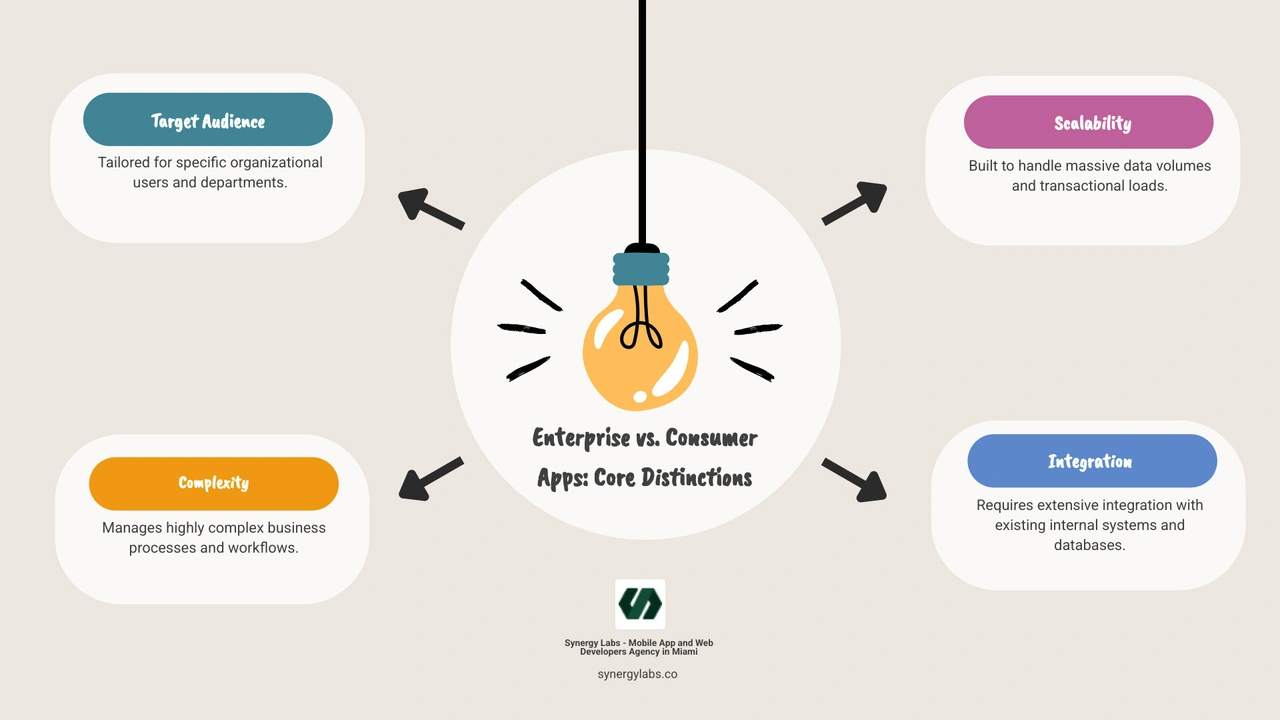
Enterprise App Development is fundamentally distinct from regular software development. It's like comparing a custom-built race car to a standard family sedan—both are vehicles, but their purpose, complexity, and engineering are worlds apart. Enterprise software is specialized for large organizations, while regular software targets a broader audience with more generic solutions.
Here's a table illustrating the key distinctions:
CriteriaRegular Software DevelopmentEnterprise App DevelopmentTarget AudienceGeneral public, individuals, small businessesLarge organizations, specific departments, employees, partners, customersComplexitySimpler, fewer functionalities, often standaloneHighly complex, multi-functional, intricate business logic, often part of a larger ecosystemScalabilityDesigned for a large user base, but not necessarily massive data/transactionsBuilt to handle massive data volumes, high transaction loads, and thousands of concurrent users, supporting organizational growthData HandlingStandard data storage, less sensitiveManages highly sensitive, large-scale, and diverse datasets; robust data governance requiredSecurityStandard security measures, often consumer-gradeStringent, multi-layered security protocols, encryption, compliance with industry regulations, role-based access controlIntegrationLimited or no integration with other systemsExtensive integration with existing legacy systems, third-party services, and other enterprise applicationsCustomizationMinimal or configurable optionsHighly customizable to fit specific business processes and organizational structureMission-CriticalTypically non-essentialOften supports core business functions; downtime can have severe financial or operational impactCostGenerally lower initial cost and maintenanceHigher initial investment and ongoing maintenance due to complexity and customization
Common Types of Enterprise Applications
The world of enterprise applications is vast, designed to cater to every business function:
Enterprise Resource Planning (ERP): Integrates core business processes like finance, HR, manufacturing, and supply chain.
Customer Relationship Management (CRM): Manages customer interactions and data to improve relationships and drive sales growth.
Supply Chain Management (SCM): Manages the flow of goods, data, and finances from procurement to delivery.
Business Intelligence (BI): Collects and analyzes business data to provide actionable insights for strategic planning.
Human Resource Management (HRM): Manages employee data, payroll, recruitment, and other HR functions.
Collaboration Tools: Facilitates communication, project management, and teamwork among employees.
Content Management Systems (CMS): Used to create, manage, and publish digital content.
Asset Management Apps: Track company assets throughout their lifecycle.
Procurement Apps: Consolidate purchasing requirements and supplier information.
Customer Support Apps: Assist agents in resolving customer inquiries and issues.
Sales Apps: Empower sales teams to streamline sales processes and achieve targets.
Why Enterprise App Development is Fundamentally Different
The very nature of Enterprise App Development sets it apart due to several critical factors:
Focus on Robustness and Reliability: Enterprise apps are often the backbone of an organization, so they must be exceptionally stable and operate continuously under demanding conditions.
Long-Term Lifecycle and Maintainability: Built for longevity, these applications require careful architecture to be maintained and updated over many years.
Complex Integration Requirements: A new enterprise app must seamlessly integrate with a multitude of existing systems, which is a significant technical challenge.
Stringent Security Protocols: Handling sensitive data means security is paramount, requiring multi-layered protection, granular access controls, and rigorous testing.
Performance Under Heavy Load: Applications must perform efficiently for thousands of concurrent users and massive data volumes.
Alignment with Specific Business Processes: Apps are designed to mirror and improve unique business workflows, requiring a deep understanding of the business domain.
At Synergy Labs, we understand these nuances, ensuring our solutions are not just functional, but truly transformative.
The Evolution of the Enterprise App Development Process
The journey of Enterprise App Development has evolved from slow, rigid "waterfall" methods to agile, modern approaches. The traditional, linear process was characterized by long development cycles, high costs, and on-premise system limitations, often resulting in outdated applications.
Challenges in Traditional Development
Historically, building enterprise applications was fraught with problems:
Legacy Systems: Outdated systems are often incompatible with new technologies, leading to high costs and technical debt.
Talent and Resource Shortages: Finding and retaining skilled developers is a constant challenge. 86% of IT leaders anticipate increased workloads, while 33% lack the in-house resources to tackle them.
Poor Business-IT Collaboration: A disconnect between business and IT teams can lead to applications that don't meet business needs.
Lack of Organizational Agility: Inflexible structures and siloed teams often lead to production delays and higher costs.
How Modern Methodologies and Platforms Accelerate Delivery
Enterprise App Development has shifted towards more efficient methodologies. At Synergy Labs, we accept these modern approaches:
Cloud-Native Architecture: Building applications for the cloud provides inherent scalability, resilience, and flexibility for faster deployment and easier updates.
Reusable Components and APIs: Using pre-built components and Application Programming Interfaces (APIs) significantly speeds up development by reusing code and functionalities.
API-First Approach: Designing with an API-first mindset fosters modularity and ensures different systems can communicate effortlessly.
Seamless Integration: Modern tools prioritize integration, making it easier to connect new applications with existing systems and break down data silos.
These modern approaches mean our clients see their ideas become high-quality applications in a fraction of the time, keeping them competitive.
Key Technologies and Platforms Shaping the Future
The landscape of Enterprise App Development is continuously evolving, driven by groundbreaking technologies like modern development platforms, cloud infrastructure, Artificial Intelligence (AI), and the Internet of Things (IoT). These tools are converging to create a future where enterprise applications are more intelligent, interconnected, and responsive than ever before.
The Impact of Modern App Development Platforms
Modern app development platforms have been a game-changer:
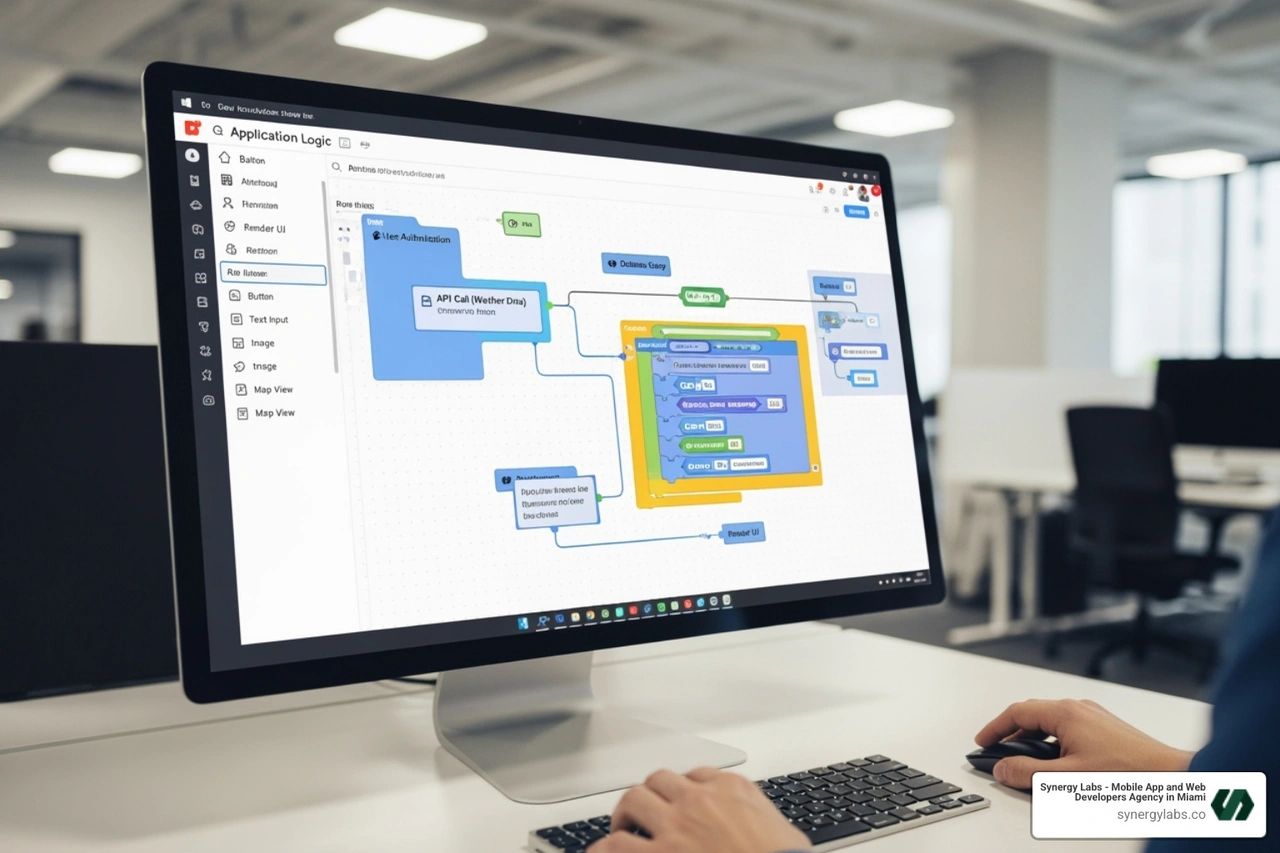
Accelerating Development Cycles: Features like visual builders and pre-configured templates allow for rapid prototyping and deployment.
Reducing IT Backlog: By simplifying development, these platforms empower more team members to contribute, alleviating pressure on IT departments.
Empowering Business Users: Intuitive interfaces allow non-programmers to participate in creating simple applications or workflows.
Enabling Rapid Prototyping and Deployment: The speed of these platforms allows for quick iteration, ensuring the final product aligns with user needs.
How Cloud Infrastructure Enables Modern Enterprise Apps
Cloud computing is the foundation for modern Enterprise App Development, offering advantages over traditional on-premise systems. Cloud services are typically categorized as:
Infrastructure as a Service (IaaS): Provides basic computing infrastructure like virtual machines and storage.
Platform as a Service (PaaS): Offers a complete development and deployment environment.
Software as a Service (SaaS): Delivers ready-to-use software applications over the internet.
The benefits of using cloud infrastructure are immense:
Scalability and Flexibility: Cloud platforms allow applications to scale seamlessly to handle fluctuating user demand.
Reduced Overhead and Cost Efficiency: Offloading infrastructure management reduces capital expenditures on hardware and maintenance.
Global Accessibility and Disaster Recovery: Cloud-hosted apps are accessible from anywhere and benefit from robust disaster recovery capabilities.
Improved Security: Major cloud providers invest heavily in security measures, often exceeding what individual organizations can afford.
Supporting AI and Emerging Technologies
The future of Enterprise App Development is intertwined with AI and other emerging technologies to open up new levels of automation and insight.
AI-Driven Automation: AI can automate complex business processes, freeing up human resources. By 2028, 75% of enterprise software engineers are projected to use AI code assistants.
Predictive Analytics: Machine learning algorithms can analyze vast datasets to identify patterns and predict future outcomes, enabling proactive decision-making.
Personalized User Experiences: AI allows applications to learn from user behavior to deliver highly personalized experiences for employees and customers.
Integration of IoT: The Internet of Things (IoT) brings real-world data from connected devices into enterprise applications for operational optimization and real-time alerts.
Strategic Investment: AI software spending is projected to reach $297.9 billion by 2027, showing a clear enterprise commitment to integrating generative AI.
Our AI Infusion Service helps businesses embed these capabilities into their applications, turning data into actionable intelligence.
Choosing the Right Tools and Partners for Success
Success in Enterprise App Development hinges on choosing the right development tools and the right partner. This decision requires a partner with expertise in scalable architectures, security protocols, and user-centered design. As highlighted in the ultimate guide to choosing an enterprise mobile app development company in 2025, select a partner who brings both technical prowess and strategic vision.
Essential Features of an Effective Development Platform
When evaluating a platform for Enterprise App Development, we look for features that empower rapid, secure, and scalable creation:
Rapid Development Tools: Visual prototyping, drag-and-drop interfaces, and pre-built components significantly accelerate the development process.
Robust Security and Governance: Built-in security features like threat detection, MFA, and user permission tools are essential for managing compliance and organizational standards.
Openness and Extensibility: The platform must allow for easy integration with other systems through APIs, ensuring flexibility and preventing vendor lock-in.
Built-in Collaboration Tools: Platforms that facilitate real-time collaboration among developers, designers, and stakeholders streamline communication.
Cloud-Native Architecture: A platform designed for the cloud offers inherent scalability, resilience, and global accessibility.
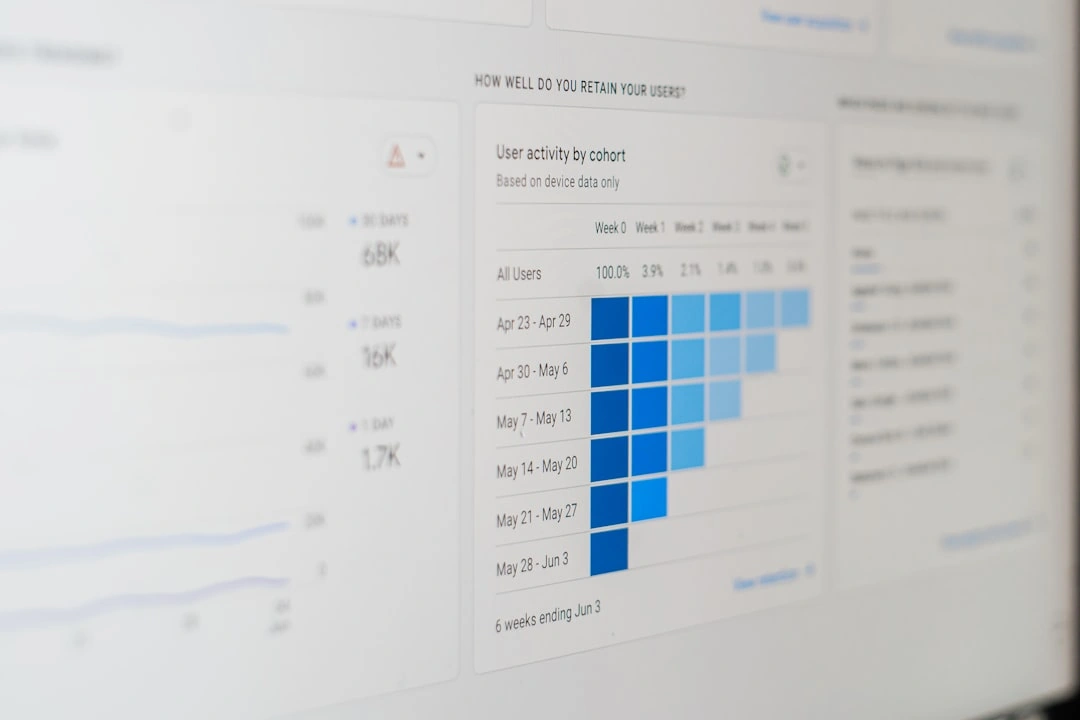
Comprehensive Analytics and Monitoring: Tools to track application performance, user behavior, and system health are crucial for continuous improvement.
How Enterprise App Development Improves Security and Compliance
In Enterprise App Development, security and compliance are fundamental. We build every application with a security-first mindset:
Centralized Data Control: Consolidating data into a managed environment makes it easier to implement consistent security policies and monitor access.
Role-Based Access Controls (RBAC): Granular RBAC ensures employees only access data and functions relevant to their roles, minimizing breach risks.
Encryption Standards: Data is encrypted both in transit and at rest, safeguarding information from unauthorized access.
Audit Trails and Logging: Detailed audit trails record all actions within the application, which is essential for security analysis and compliance audits.
Adherence to Regulations (GDPR, HIPAA, etc.): Custom apps can be built to comply with specific industry regulations like GDPR, HIPAA, or PCI DSS.
Secure Authentication Methods: Strong authentication like multi-factor authentication (MFA) and single sign-on (SSO) prevents unauthorized account access.
Proactive Threat Detection: Integration with advanced security tools allows for real-time threat detection and immediate response.
At Synergy Labs, we integrate these measures from the initial design phase to ensure our applications exceed industry security and compliance standards.
Frequently Asked Questions about Enterprise App Development
We often get asked various questions about Enterprise App Development. Here are answers to some of the most common ones.
How long does it take to build an enterprise application?
There's no single answer, as development time can range from three to nine months or longer. The timeline depends on several key factors:
Complexity: A simple app with limited features will be faster to build than a complex system with intricate business logic and multiple modules.
Feature Set: The number and sophistication of features directly impact the development timeline.
Integration Requirements: Integrating with numerous existing legacy systems or third-party APIs can be time-consuming.
Team Size and Expertise: An experienced, well-coordinated development team can often deliver more efficiently.
Methodology: Agile methodologies can show progress faster, though the overall project duration for large applications will still be substantial.
Smaller apps might take 3-6 months, while large, complex applications can extend beyond a year.
What is the difference between enterprise mobility and enterprise app development?
These terms are related but distinct:
Enterprise Mobility: This is the broad strategy that enables employees to work effectively from any location using mobile devices. It includes policies, security, and the overall vision for a flexible workforce.
Enterprise App Development: This is the process of building the actual software applications that enable enterprise mobility. These apps provide the secure access and functionality employees need to perform their tasks remotely.
In short, enterprise mobility is the goal, and Enterprise App Development is the means to achieve it. At Synergy Labs, we develop the robust applications that bring your enterprise mobility strategy to life.
How do you measure the ROI of an enterprise application?
Measuring the Return on Investment (ROI) is crucial for justifying the project. This is done by tracking Key Performance Indicators (KPIs):
Increased Productivity: Track metrics like task completion rates or time saved on specific processes.
Cost Savings from Automation: Quantify the reduction in operational costs from automated tasks and fewer manual errors.
Reduced Errors and Rework: Measure the decrease in errors and the time spent on corrections.
Improved Customer Retention: Monitor customer satisfaction scores (CSAT), Net Promoter Scores (NPS), and churn rates.
Faster Time-to-Market: Measure the reduction in time it takes to bring new products or services to market.
Improved Data Accuracy: Better data leads to better decisions. Track the impact of these decisions on revenue or efficiency.
Compliance Cost Reduction: Measure savings from reduced fines or the effort required to meet regulatory requirements.
We work with clients to define relevant KPIs from the start to ensure the application's impact can be clearly measured.
Conclusion
We've explored Enterprise App Development, from its strategic importance and evolution to the key technologies shaping its future. The message is clear: custom enterprise applications are a necessity for driving digital change, improving productivity, and gaining a competitive edge.
The shift to modern, agile, and cloud-based solutions allows businesses to deploy powerful applications faster and more securely than ever before.
At Synergy Labs, we are at the forefront of this evolution. Our expertise in building scalable and secure enterprise applications, combined with our commitment to personalized service and direct access to senior talent, ensures our clients receive solutions strategically aligned with their business goals. We focus on rapid launches, user-centered design, and ongoing support to ensure your applications deliver lasting value.




.avif)

.avif)


