

Why On-Demand Apps Are Reshaping Modern Business

On-Demand App Development: A Roadmap for Building Scalable Marketplaces stems from a fundamental shift in consumer behavior: people expect instant access to services. Whether booking a ride, ordering groceries, or hiring a plumber, the on-demand economy has transformed how we live and work.
Quick roadmap overview:
- Define your niche - Identify underserved markets and validate demand
- Plan your monetization - Choose between commission, subscription, or hybrid models
- Build the core architecture - Customer app, provider app, and admin panel
- Select your tech stack - React Native/Flutter for frontend, Node.js/Rails for backend
- Launch an MVP - Test with real users in 4-6 months
- Scale strategically - Use AI, analytics, and marketing to grow both supply and demand
The on-demand service market is projected to cross $630 billion by 2030, growing at over 16% annually. This trend isn't just about ride-sharing; it spans healthcare, home services, logistics, and countless niche verticals.
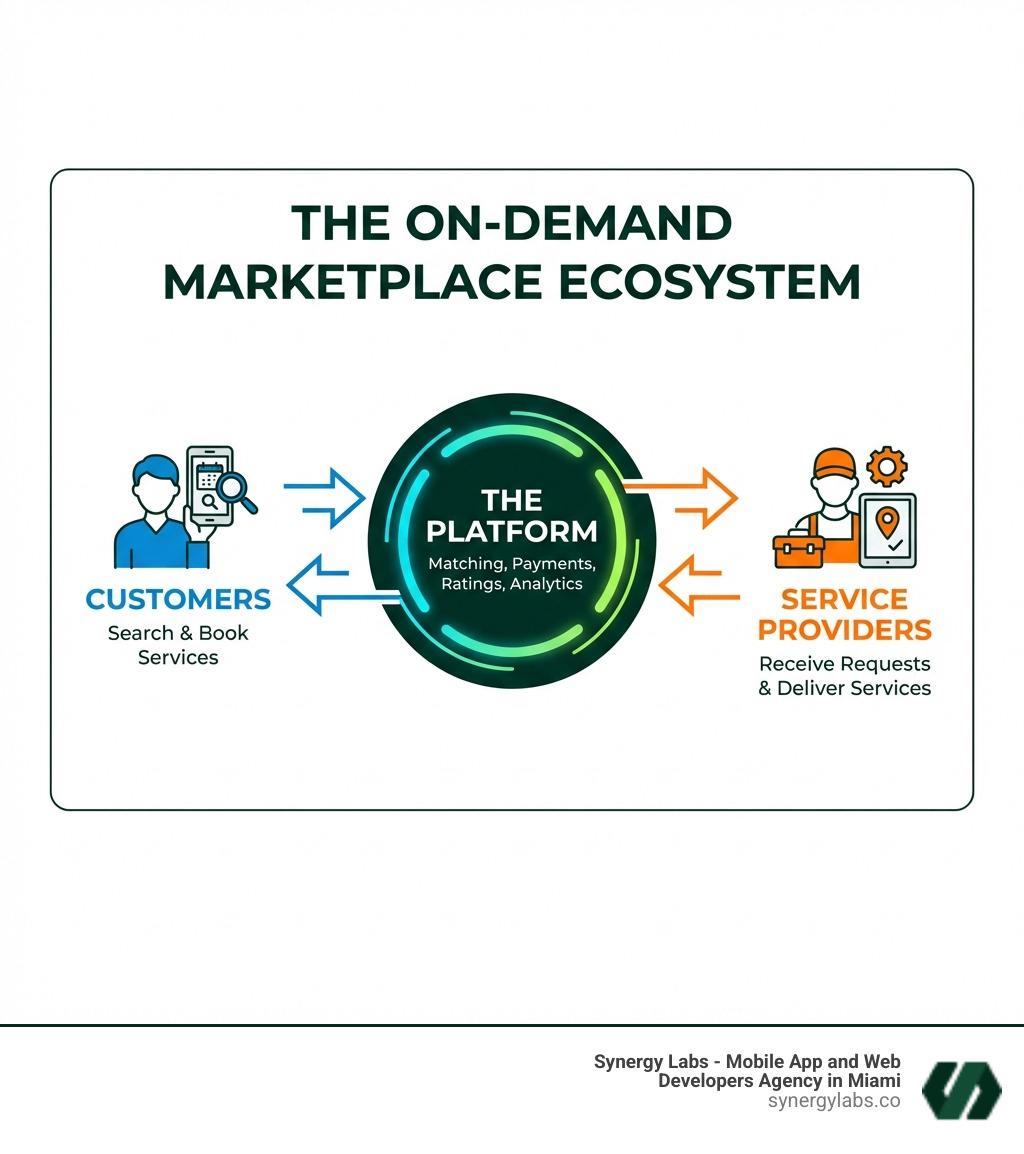
However, building a successful marketplace is hard. You're not just creating an app—you're orchestrating an ecosystem connecting customers, service providers, and your platform. The "chicken and egg" problem is real: you need providers to attract customers and vice versa.
The good news is that a playbook exists. Pioneering companies proved the model works by solving real pain points, building trust, and scaling with a solid technical foundation.
This guide is based on our experience helping startups with On-Demand App Development: A Roadmap for Building Scalable Marketplaces. At Synergy Labs, we've built apps that scaled to millions of users, learning that strategic planning and technical execution are key to success from the start.
On-Demand App Development: A Roadmap for Building Scalable Marketplaces basics:
- From MVP to Market Leader: Scaling an App Without Rewriting Everything
- Super Apps Explained: How All-in-One Platforms Drive Engagement and Retention
- Beyond Ads: The 2026 Monetization Stack for High LTV Apps
Why is Demand Skyrocketing?
The demand for on-demand apps is a fundamental shift driven by modern expectations and technology. We live in an era where instant gratification is expected.
- Convenience and Speed: People want services delivered quickly. On-demand apps provide instant solutions, meeting expectations for speed and efficiency. Over 70% of people prefer booking services via apps for the clarity, speed, and control they offer.
- Mobile-First World: With smartphones being ubiquitous, users rely on mobile apps for daily tasks. On-demand apps leverage this behavior, providing seamless experiences accessible anytime, anywhere.
- Operational Efficiency for Businesses: For businesses, these apps are a game-changer. They offer a direct channel to customers, streamline provider processes, and boost engagement, leading to higher satisfaction and expanded market reach.
- Improved Customer Satisfaction: On-demand apps offer transparency, real-time tracking, and secure payments, which contribute to a superior customer experience. When users can track a service in real-time, their satisfaction soars.
- Data-Driven Insights: Marketplaces collect rich data invaluable for personalization, optimization, and identifying new opportunities, allowing businesses to adapt and refine their offerings.
Core Benefits for Businesses and Customers
On-Demand App Development: A Roadmap for Building Scalable Marketplaces creates a symbiotic ecosystem where everyone wins.
For Customers:
- Time-saving: Instantly access services, eliminating waiting times and manual searches.
- Transparency: Real-time tracking, clear pricing, and verified provider profiles build trust.
- Wider Choice: Access a diverse pool of service providers and products beyond local options.
- Secure Payments: Integrated, secure payment gateways ensure hassle-free transactions.
- Real-time Tracking: Monitor the progress of services from booking to completion.
For Businesses:
- Increased Reach: Expand your customer base beyond geographical limits and tap into new markets in cities like Miami, New York City, or Dubai.
- Scalability: On-demand platforms are designed to scale, accommodating more users and transactions.
- Brand Building: Establish a strong brand by providing consistent, high-quality service.
- Improved Efficiency: Streamline operations, automate bookings, and manage providers effectively to reduce costs.
- New Revenue Streams: Diversify income through various monetization models.
Custom on-demand apps give startups a competitive edge by enhancing customer satisfaction and operational efficiency.
Categories of On-Demand Marketplace Apps
The on-demand model is adaptable across many industries, revolutionizing how people access everything from transport to healthcare. Here are some prominent categories:
- Transportation (Ride-hailing): These apps connect users with drivers for instant rides, offering real-time tracking, fare estimation, and secure payment.
- Food & Grocery Delivery: These platforms bring meals and essentials to your doorstep, featuring menus, live order tracking, and secure payments.
- Home Services: These apps provide access to services like cleaning, plumbing, and electrical work, enabling users to book professionals quickly.
- Healthcare & Fitness: Teleconsultation apps allow users to schedule virtual appointments and order medicine. Fitness apps often integrate scheduling for personal trainers.
- Freelance & Professional Services: These marketplaces connect clients with freelancers for tasks from graphic design to software development, facilitating project management and payments.
- Rental Services: Apps for vehicle rentals or property rentals allow users to book assets for short-term use.
The Strategic Blueprint: Planning Your On-Demand Marketplace
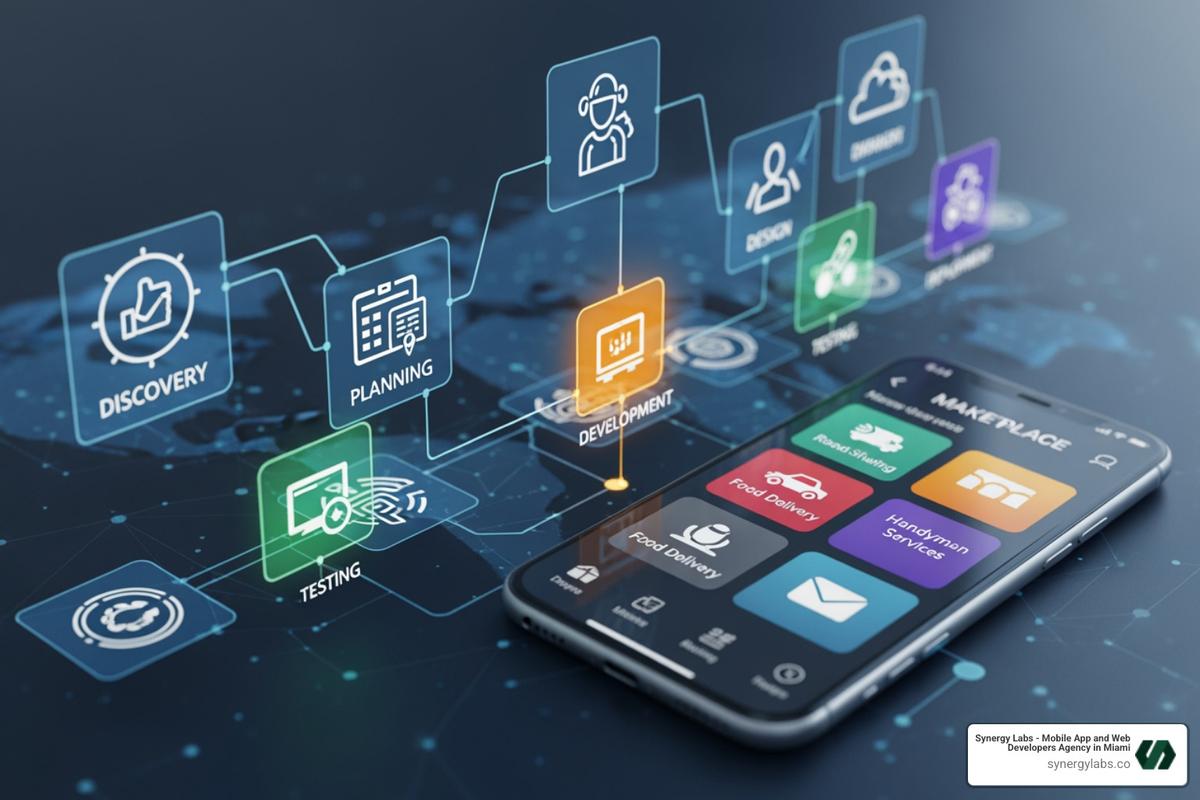
Building a successful on-demand marketplace requires strategic planning, a clear vision, deep market understanding, and a meticulous approach to features and user experience.
Defining Your Niche and Monetization Model
Defining your niche is a critical step in On-Demand App Development: A Roadmap for Building Scalable Marketplaces. In a crowded market, trying to be everything to everyone is a recipe for disaster.
- Niche Selection Importance: Choosing the right niche helps you stand out and improves your chances of success. Instead of targeting broad "services," focus on a vertical like "on-demand luxury car detailing in Phoenix." Niche verticals often scale faster by targeting focused demand. We encourage founders to find unmet needs on platforms like Reddit and Quora.
- Monetization Strategies: Your monetization strategy must be clear from day one. Common models include:
- Commission Fees: Taking a percentage of each transaction, typically 20-30%. AI-driven dynamic pricing can increase gross margins by 8-15% over fixed rates.
- Subscription Models: Charging a recurring fee for premium features or unlimited access.
- Listing Fees: Charging providers to list their services on the platform.
- Freemium Features: Offering a basic service for free and charging for advanced functionalities.
- Advertising & Promoted Listings: Allowing providers to pay for higher rankings in search results.
- Lead-based Models: Charging providers for high-quality leads (common in home services).
Without a clear monetization plan, failure is likely. We help our clients explore various app monetization strategies to ensure a sustainable business model.
Essential Features for a Thriving Marketplace
A robust on-demand marketplace has three parts: the Customer App, the Provider App, and the Admin Panel. We prioritize features for a seamless experience, as detailed in our guide to the Top Features Every Successful App Needs in 2026.
1. Customer App Features:
- User Registration & Profiles: Easy sign-up and profile management.
- Search & Filtering: Intuitive search with advanced filters (e.g., "plumber in Chicago").
- Booking & Scheduling: Real-time and scheduled booking options.
- In-App Messaging: Direct communication with service providers.
- Secure Payments: Integration with multiple payment gateways (Stripe, PayPal).
- Ratings & Reviews: A system for customers to rate providers, building trust.
- Real-Time Tracking: GPS tracking for services like deliveries or rides.
2. Service Provider App Features:
- Profile & Service Management: Manage profiles, services, availability, and pricing.
- Order/Booking Management: Accept or decline requests and manage schedules.
- Payment & Earnings Tracking: Transparent tracking of earnings and performance.
- Customer Interaction: In-app chat or call functionality.
- Navigation/Route Optimization: Integrated maps with optimized routes.
3. Admin Panel Features:
- User & Provider Management: Manage user and provider accounts, including verification.
- Service & Listing Management: Oversee all services and listings on the platform.
- Transaction & Billing Management: Monitor transactions and manage commissions.
- Customer Support Tools: Handle inquiries, disputes, and refunds.
- Analytics & Reporting: Dashboards with insights into user behavior and revenue.
- Geospatial Zone Management: Define service areas and manage dynamic pricing.
The Critical Role of UI/UX Design in User Retention
A beautiful app with poor usability will fail. In On-Demand App Development: A Roadmap for Building Scalable Marketplaces, UI/UX design is fundamental to user retention and success, not just aesthetics.
- First Impressions: An intuitive, visually appealing design captures attention. A confusing app will be abandoned quickly.
- Intuitive Navigation: Users expect seamless navigation to find, book, and pay with minimal effort. An intuitive UI/UX improves findability and user retention.
- Reducing Friction: Friction, like extra steps or confusion, hurts the user journey. We aim to eliminate it from onboarding to service completion through simplified processes.
- Building Trust Through Design: A professional, clean design builds trust. Clear communication, transparent info (like ratings and tracking), and organized layouts create a trustworthy experience.
- Accessibility: Accessibility design ensures your app is usable by the broadest audience, including those with disabilities, expanding your market.
A great UI/UX is non-negotiable. That's why we emphasize The Importance of User Experience (UX) in Mobile App Design from the start of every project.
The Complete On-Demand App Development: A Roadmap for Building Scalable Marketplaces
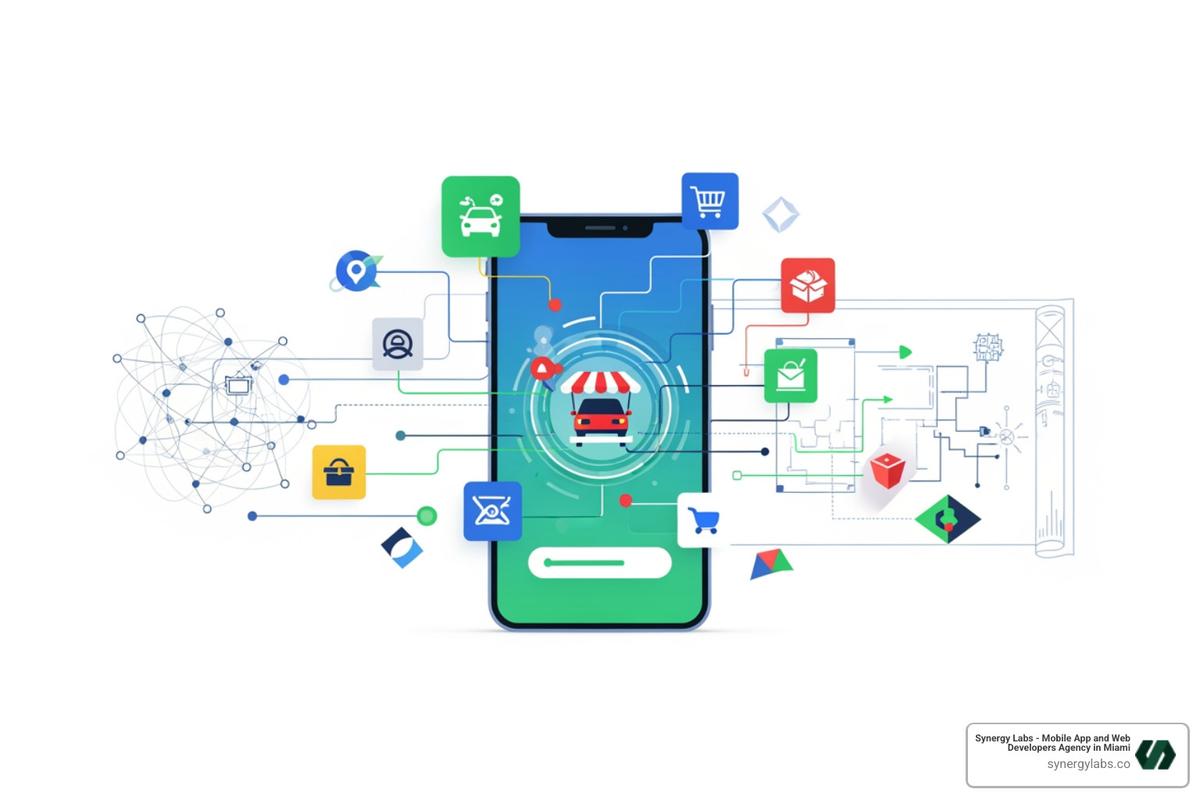
On-Demand App Development: A Roadmap for Building Scalable Marketplaces requires a structured approach. We break the process into manageable steps for clarity and efficiency from conception to launch.
Step 1: From Idea to a Validated MVP Concept
Before coding, we lay a robust foundation by validating your idea and defining the product core.
- Market Research & Competitor Analysis: We conduct thorough market research to understand the target audience, identify pain points, and analyze competitors. This helps define your unique value proposition (UVP) and assess market demand.
- Defining the Unique Value Proposition (UVP): What makes your marketplace stand out? A niche focus, superior service, or advanced tech? For example, "emergency plumbing in Miami with a 60-minute response" is a strong UVP.
- Wireframing and Prototyping: We create wireframes and prototypes using tools like Figma. This visual blueprint helps refine the user journey and gather early feedback.
- User Flow Mapping: Understanding user navigation is crucial. We map separate, friction-free onboarding flows for customers and providers.
- Minimum Viable Product (MVP) Definition: We prioritize essential MVP features that solve the core problem. This allows a rapid launch to test the market and gather feedback, aligning with The Benefits of Building a Minimum Viable Product (MVP) First.
Step 2: Choosing the Right Technology Stack for Scalability
The tech stack is your marketplace's backbone. The right tools ensure functionality and future scalability. We use proven technologies for rapid development and robust growth.
- Frontend Development: We leverage cross-platform frameworks for responsive interfaces.
- React Native or Flutter: These build for both iOS and Android from a single codebase, reducing development time and cost, as highlighted in our insights on cross-platform development.
- Backend Development: This is where server-side logic and data management reside.
- Node.js or Ruby on Rails: These frameworks are excellent for building scalable, real-time applications. Python with Django is another strong contender.
- Databases: For structured data storage and efficient retrieval.
- PostgreSQL or MongoDB: PostgreSQL offers robust relational capabilities, while MongoDB provides flexibility for unstructured data.
- Cloud Infrastructure: Essential for scalability, reliability, and global reach.
- AWS or Google Cloud Platform: These leading cloud providers offer comprehensive services. By 2026, 83% of enterprise workloads will be in the cloud, with the market projected to cross $1 trillion by 2027.
- Microservices Architecture: We use a microservices architecture, breaking the app into small, independent services. This improves scalability and allows components to scale based on demand, which is critical for What Makes an App Scalable: A Technical Guide for Growing Companies.
Step 3: The Development, Testing, and Launch Process
With the blueprint and tech stack decided, we begin the build, test, and launch phases.
- Agile Development Methodology: We use agile methodologies, breaking the project into sprints for continuous feedback, flexibility, and faster delivery.
- Building the MVP: Development focuses on the core MVP features to get a functional product to users quickly for validation and feedback.
- Quality Assurance (QA) Testing: Thorough QA testing is paramount. We conduct functional, performance, security, and usability tests across devices to ensure a bug-free experience.
- Security Protocols: We implement robust security from the start, including secure coding, data encryption, and strong authentication. PCI DSS compliance for payments is non-negotiable.
- Beta Testing: Before public launch, we conduct beta testing with real users to find issues, gather insights, and make final refinements.
- App Store Submission & Deployment: Once refined, we prepare the app for the Apple App Store and Google Play Store, managing the entire deployment process and ensuring compliance.
- From Idea to Launch: A Step-by-Step Guide to Developing Your First Mobile App outlines our detailed approach to this crucial phase.
Fueling Growth: Cost, Marketing, and Future-Proofing Your App
Launching an on-demand marketplace is just the beginning. Sustained growth requires a clear understanding of costs, a strategic marketing plan, and a focus on future innovations.
A Realistic Look at On-Demand App Development Costs
The cost of On-Demand App Development: A Roadmap for Building Scalable Marketplaces varies based on complexity and features. We can provide a realistic range based on our experience.
- Factors Influencing Cost:
- Complexity and Features: More intricate functionalities (e.g., AI matching, dynamic pricing) increase the cost.
- Platform: Developing for a single platform is cheaper than cross-platform or native for both.
- UI/UX Design: Custom, high-fidelity designs cost more than template-based solutions.
- Team Location and Expertise: Our model combines an in-shore CTO for strategic guidance with a world-class offshore team for cost-efficiency without sacrificing quality.
- Typical Cost Ranges (estimates):
- Basic MVP: For core functionalities, expect to invest between $20,000 and $50,000.
- Medium Complexity App: An app with advanced features and custom UI might range from $50,000 to $100,000.
- Advanced App: A full-featured, highly scalable marketplace with AI integration could cost upwards of $100,000.
- Development Timeline: The timeline is typically 4 to 9 months. An MVP can be delivered in 4-6 months, while a complex app may take 8-12 months or more.
For a deeper dive into financial planning, refer to The Cost of Enterprise-Grade App Development: 2026 Benchmark Guide.
Your Go-to-Market Strategy: Acquiring Users and Providers
Solving the "chicken and egg" problem of attracting both customers and providers is a major challenge. A robust go-to-market strategy is essential.
- Pre-Launch Buzz:
- Landing Pages: Use landing pages to capture early interest and emails.
- Social Media Teasers: Build anticipation with teasers on social media.
- Beta Invitations: Offer exclusive access to generate hype and gather feedback.
- Post-Launch Growth:
- Content Marketing: Create valuable content (blogs, videos) that addresses your audience's pain points.
- Referral Programs: Encourage users and providers to invite new ones with attractive incentives.
- Paid Advertising: Use targeted ads (PPC) on social media and search engines to reach specific demographics (e.g., "driver jobs in New York City").
- SEO (Search Engine Optimization): Optimize your app store listings and website to rank for relevant keywords.
- Influencer Marketing: Partner with niche influencers to gain traction and credibility.
For specific tactics, especially in the transportation sector, exploring Strategies for launching driver on-demand apps can provide valuable insights.
Future-Proofing: Innovations in On-Demand App Development
The on-demand landscape is constantly evolving. To future-proof your app, accept emerging technologies like AI and anticipate consumer needs.
- AI-powered Personalization: AI and machine learning drive hyper-personalization, offering custom recommendations and enabling dynamic pricing and fraud detection.
- Predictive Analytics: Use AI to predict demand, optimize routes, and manage inventory, creating a scalable, efficient ecosystem.
- Voice Search Integration: Integrating voice commands for booking and searching will become standard as voice assistants grow more popular.
- Hyper-automation: Automating complex workflows, like intelligent matching and support chatbots, will improve efficiency and user experience.
- Super Apps: The trend towards "Super Apps"—all-in-one platforms—suggests future marketplaces may consolidate services to improve engagement. For platforms launching in 2026 and beyond, AI is a necessity, as detailed in our insights on AI-First App Development: How Modern Products Are Built in 2026.
Frequently Asked Questions about On-Demand App Development
What is the first step in building an on-demand marketplace app?
The first step is thorough market research and niche validation. Before coding, you must identify a clear problem, understand your target audience (customers and providers), and confirm real demand. This phase sets the foundation for your business model and app features, answering who you serve, what problem you solve, and why they will choose you.
How do you ensure the security of an on-demand app?
Security is a multi-layered process. It involves secure coding, data encryption, robust user authentication (like MFA), and PCI DSS compliance for payments. Regular security audits and penetration testing are vital to protect user data, prevent fraud, and build trust with customers and service providers.
How long does it take to build an on-demand marketplace?
The timeline depends on complexity. A Minimum Viable Product (MVP) with core features usually takes 4 to 6 months to launch. A full-featured, custom app with advanced functions like AI-matching and dynamic pricing could take 9 months or longer. We use an agile approach for a faster time-to-market and continuous iteration.
From Roadmap to Reality: Building Your Market-Leading App
Building a scalable on-demand marketplace is a marathon, not a sprint. It requires a clear vision, a solid strategy, and an expert technical partner. By focusing on user value, robust technology, and continuous innovation, you can turn your idea into the next market leader.
Ready to build your on-demand empire? Partner with Synergy Labs. We provide a dedicated, in-shore CTO to guide your project, backed by a world-class offshore development team. Our fixed-budget model and milestone-based payments eliminate financial surprises, ensuring your vision is delivered on time and on budget. Let's build something amazing together. Explore our mobile app development services.