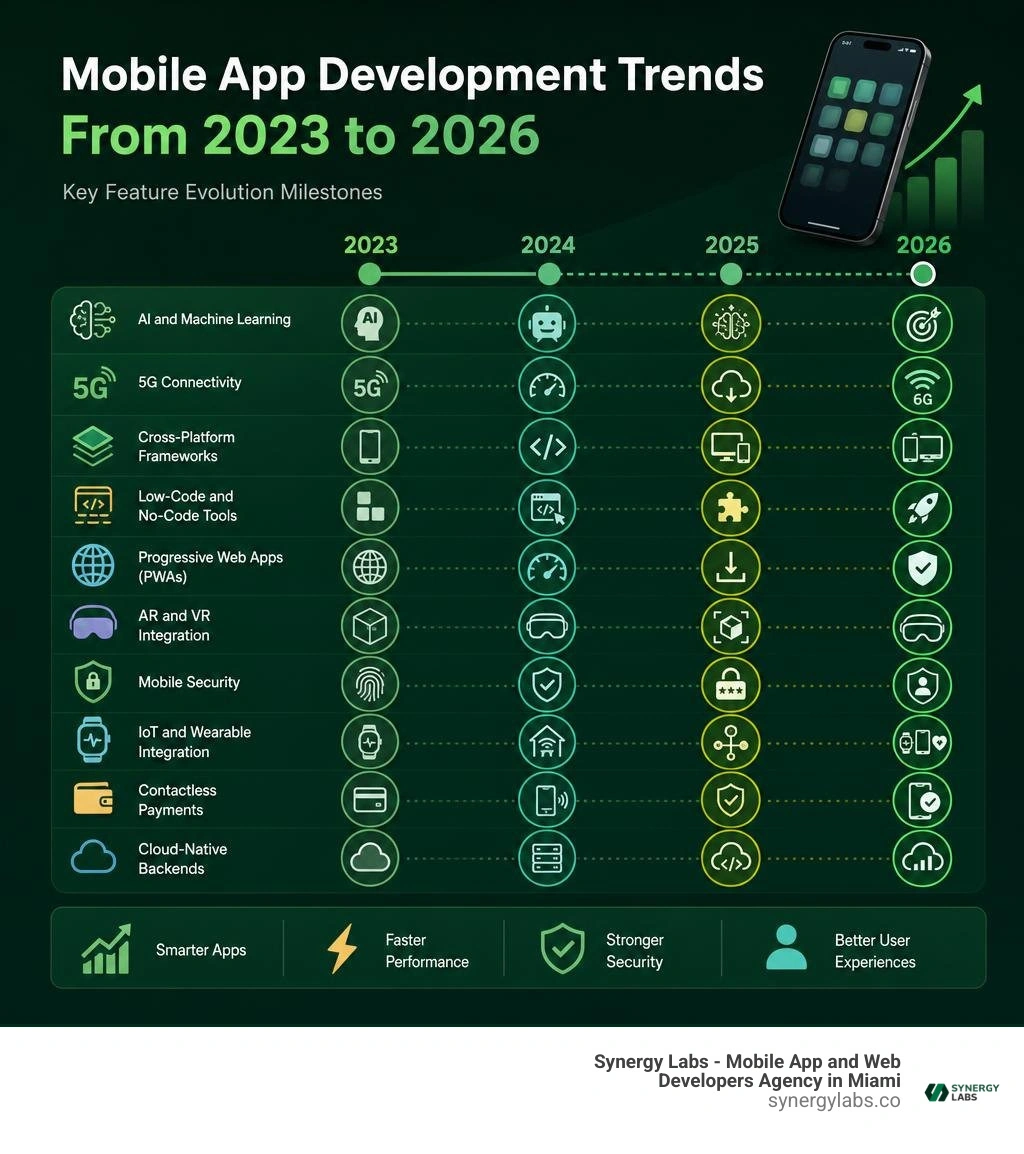
AI, 5G, cross-platform frameworks, and PWAs didn't just define 2023 — they set the foundation every serious developer builds on today. Here's what those trends mean for your app in 2026.
Mobile apps have become the backbone of modern business — and the pace of change is relentless. Global app downloads hit an estimated 299 billion in 2023, up from 247 billion just three years earlier, setting up the massive growth trajectory we navigate today in 2026.
What drove that growth? A wave of technologies — AI, 5G, foldable hardware, AR, and smarter development tools — converged at the same time. Apps that felt cutting-edge in 2020 started feeling outdated by 2023. The bar for user experience, performance, and security rose sharply, and it hasn't stopped rising in 2026.
Understanding what shifted in 2023 isn't just a history lesson. The foundations laid that year — AI personalization, cross-platform efficiency, privacy-first architecture — are the exact same ones powering the best apps being built right now in 2026.
As Director of Product at Synergy Labs, I've watched these trends reshape client projects firsthand, and in this guide I'll break down exactly what mattered, what stuck, and what you need to build for today's 2026 tech ecosystem.
The AI and Machine Learning Revolution in Mobile Architecture
Artificial intelligence and machine learning shifted from nice-to-have experiments into core structural elements of mobile architecture. When we analyze app development trends 2023, the shift toward intelligent, contextual user experiences stands out as the definitive turning point. Apps ceased to be static menus waiting for tapping fingers; they became proactive assistants capable of anticipating what a user needed before a single button was pressed.
The market for AI expanded rapidly toward an estimated $190 billion projection by 2026 with a compound annual growth rate (CAGR) of 37%. Mobile platforms became the primary vehicle for delivering this intelligence directly into consumers' hands. From smart recommendation engines in retail apps to automated diagnostic tools in healthcare, machine learning algorithms fundamentally changed how software handles user input and server resources.
Generative AI and Predictive Personalization
Generative AI integrations completely overhauled how dynamic content feeds operate. Rather than serving identical interface layouts to every user, modern apps leverage predictive analytics to construct individual paths. In fact, research indicates that AI-driven personalization can boost mobile app engagement by 40% to 60%.
When building custom digital platforms, our engineering teams focus heavily on how behavioral data is collected and processed. Predictive personalization works behind the scenes by evaluating in-app navigation, historical interactions, and environmental context. This continuous stream of telemetry allows applications to dynamically rearrange UI components, surface relevant content, and automate redundant workflows.
Dynamic Content Tailoring: Apps instantly modify home screens based on usage patterns, location, and past conversion history.
Predictive Task Automation: Systems learn frequent workflows — like ordering a daily morning coffee or booking a weekly ride — and offer one-tap shortcuts.
Generative Design and Messaging: In-app push notifications and contextual banners are tailored individually, improving conversion rates without overwhelming users with generic ads.
Intent-Based Chatbots and Voice Recognition Features
Static customer support forms are effectively obsolete. Modern intent-based chatbots leverage advanced Natural Language Processing (NLP) to understand complex queries, contextual history, and sentiment. The global chatbot market is projected to expand at a CAGR of 23.3% from 2023 through 2030, reflecting a massive consumer preference for instant, conversational assistance.
At the same time, voice recognition technologies have transformed hands-free mobile navigation. With the voice search market expected to reach nearly $50 billion globally, integrating voice-driven user interfaces has become essential. Voice assistant application markets expanded dramatically from $2.8 billion in 2021 toward a projected $11.2 billion, enabling users to interact seamlessly with software through conversational spoken commands.
By utilizing intent recognition, apps interpret conversational commands like "Find my reservation for tonight and add 15 minutes to my arrival time" without forcing the user to manually click through sub-menus.
Next-Gen Connectivity and Hardware Acceleration: 5G, Foldables, and Wearables
Software improvements are only half the equation; hardware and network connectivity represent the other half. The rapid expansion of 5G infrastructure alongside novel device form factors has opened brand-new possibilities for engineering teams. Understanding these hardware shifts is crucial when reviewing Top 10 Tech Trends in 2026 Shaping the Future of Innovation.
5G Infrastructure and Real-Time Data Streaming
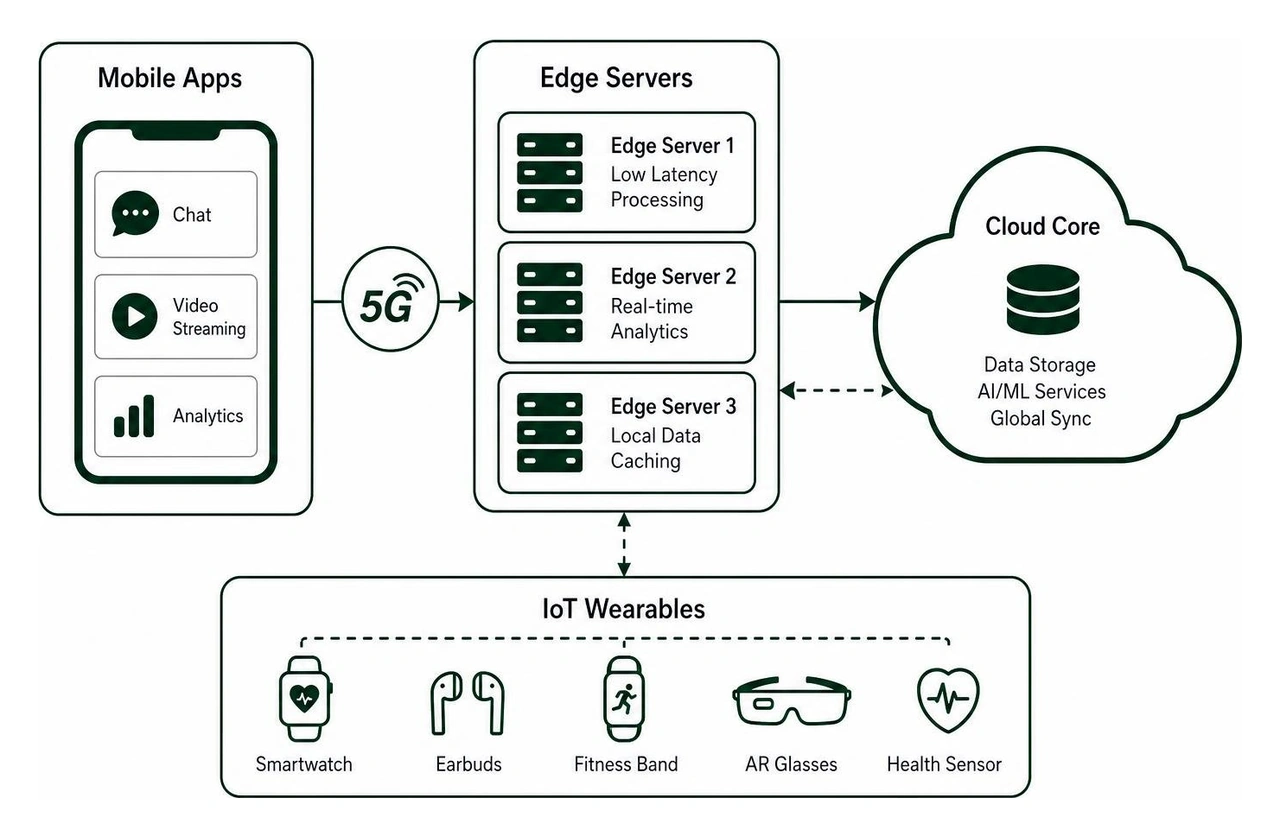
The global rollout of 5G networks transformed mobile app performance parameters. Worldwide 5G subscriptions reached 1.9 billion in 2023 and are on track to climb to 5.9 billion by 2027. What makes 5G isn't merely raw download speed — which is up to 100 times faster than 4G — but ultra-low latency dropping down to a single millisecond.
This dramatic reduction in network delay allows mobile applications to perform heavy computational tasks on remote edge servers in real-time. Apps can stream 4K video feeds, execute complex augmented reality overlays, and synchronize dense database records instantly without draining the user's local battery or overheating the handset.
Responsive Multi-Window Layouts for Foldables and Connected Wearables
The hardware landscape expanded beyond flat glass rectangles. Global shipments for foldable devices are projected to hit 48.1 million units with a market valuation reaching $42 billion. Designing software for foldable screens requires responsive multi-window UI layouts that fluidly adapt as the device transitions between folded compact states and expanded tablet-like displays.
Concurrently, the total number of connected wearable devices worldwide grew to 1.1 billion. Modern applications now function across integrated hardware ecosystems:
Continuity across devices: Users start a task on a smart ring or smartwatch, transition seamlessly to a foldable phone display, and complete it on a desktop interface.
Biometrics and Health Monitoring: Wearables continuously gather biometric telemetry — such as heart rate variability, skin temperature, and motion vectors — passing data locally to mobile hubs for real-time analysis.
Glanceable User Interfaces: Wearable apps demand concise, micro-interaction UI design focused on rapid notification response and immediate feedback.
Essential App Development Trends 2023 and Beyond for Security and Cloud Infrastructure
As mobile apps become increasingly central to daily commerce and personal life, they inevitably attract greater scrutiny from cyber criminals. Cybersecurity and resilient backend architectures have become foundational pillars of modern digital engineering, as highlighted in comprehensive analyses like the Top 29 Mobile App Development Trends In 2023 - DEV Community.
DevSecOps and Privacy-First Compliance Standards
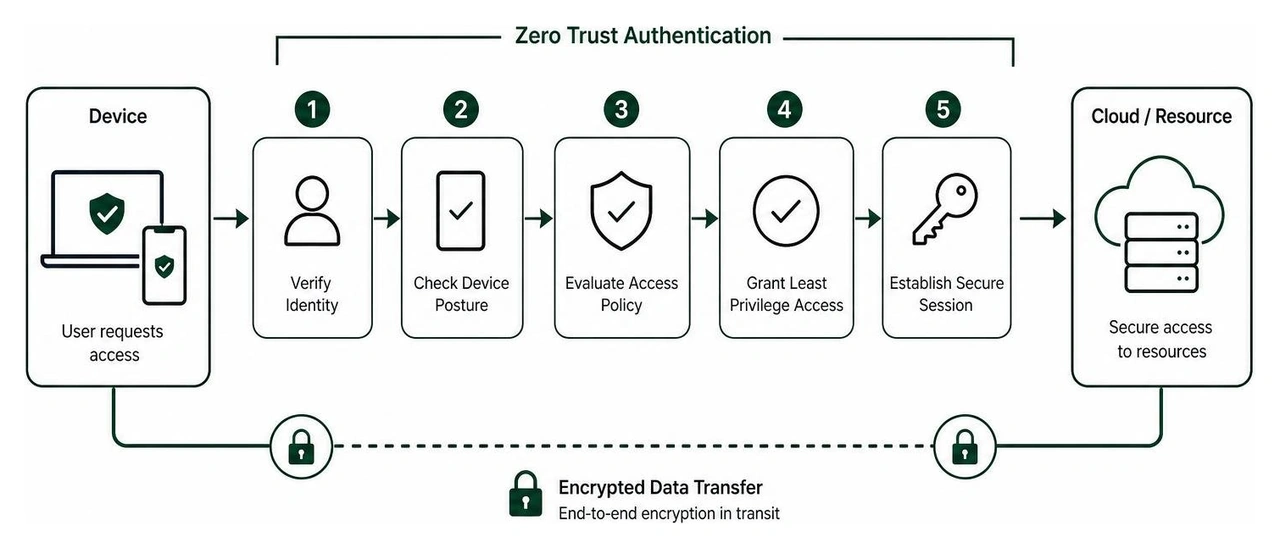
With global malware attacks topping 5.5 billion, security cannot be treated as an afterthought or a final pre-launch checkbox. Modern engineering mandates DevSecOps — integrating automated security testing directly into continuous development pipelines. Explore more on these foundational security methodologies in our breakdown of the Top 5 Trends in Mobile App Development.
Security failures have severe commercial consequences. Research shows that nearly 45% of users will immediately abandon and discourage others from using an app they perceive as insecure. Furthermore, strict regulatory frameworks like GDPR and CCPA require developers to adopt privacy-first architectures.
How Data Architecture Evolved from App Development Trends 2023
To balance heavy computational workloads with high security, data architecture migrated decisively to cloud-native backends. Global revenue earned by IoT-related technology is projected to cross $1.6 trillion, while the global IoT market reached $318 billion — with over $226 billion originating from software and mobile management apps.
Cloud-based mobile applications offload data processing from local memory onto serverless backend systems. This architectural pattern keeps local device storage light while maintaining high availability. Furthermore, edge computing strategies allow sensitive personal data to be processed locally on the hardware, sending only anonymized tokens to cloud servers, satisfying GDPR compliance without sacrificing feature rich functionality.
Framework Velocity: Cross-Platform, Low-Code, and PWAs
Speed to market can determine whether a product succeeds or fails. Modern software teams must deploy robust, feature-packed mobile solutions rapidly without ballooning development budgets or compromising quality.
Key Mobile App Development Trends 2023 to Watch for Low-Code Platforms
The market for low-code and no-code platforms expanded rapidly toward an estimated $65 billion global valuation. These platforms allow cross-functional teams and "citizen developers" to rapidly prototype enterprise applications, build custom paywalls, and automate simple internal workflows without writing thousands of lines of boilerplate code.
Low-code platforms allow organizations to build and iterate concepts up to ten times faster than traditional custom coding. To read more about how software velocity is shaping product strategies, read The Future in Code Top 5 Software Development Trends for 2026.
Native Performance with Progressive Web Apps and Modular Frameworks
Progressive Web Apps (PWAs) remain a dominant web and mobile strategy. By taking advantage of modern browser technologies like Service Workers, PWAs offer offline capability, push notifications, and fast loading times directly through a web URL, bypassing app store download friction.
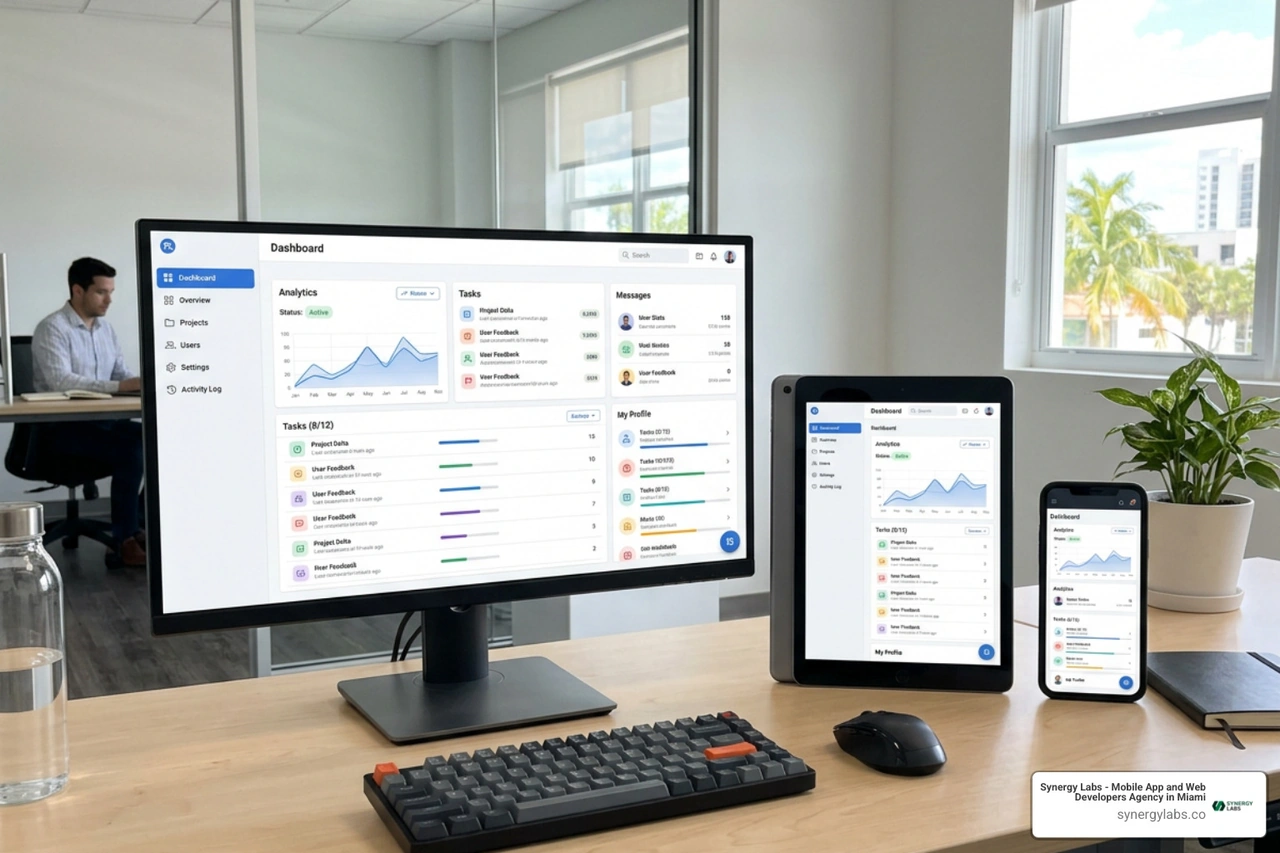
For native mobile development, modern cross-platform frameworks like Flutter and React Native provide near-native execution speeds while maintaining a single codebase for iOS and Android. This cross-platform approach cuts initial development costs by 40% to 60%. Combined with declarative UI toolkits like Jetpack Compose and SwiftUI, engineering teams can build smooth, 120 FPS responsive interfaces with far less code complexity. Explore technical documentation on web trends via the official report on Web Development Trends in 2023.
Immersive Media and Seamless Commerce Integration
Modern user interface design has moved beyond flat static screens. Engaging users now requires interactive visual depth, augmented reality overlays, and frictionless payment channels built directly into app experiences.
Virtual Visualization via Augmented and Virtual Reality
Extended Reality (XR) — encompassing Augmented Reality (AR), Virtual Reality (VR), and Mixed Reality (MR) — is rapidly expanding, with hardware and software revenues projected to hit $52 billion. AR technology has evolved from a novel social media filter into a powerful commercial utility.
Virtual Product Try-Ons: Retail applications allow customers to place true-to-scale 3D furniture inside their living rooms or preview footwear before purchasing, directly lowering product return rates.
Enterprise and Field Training: Industrial and healthcare apps leverage AR headsets and mobile overlays to provide hands-on equipment repair guides, yielding average productivity boosts of up to 32%.
Camera-Focused Navigation: Urban mapping tools project real-time directional arrows over live smartphone camera feeds for effortless indoor and outdoor navigation.
Mobile Commerce, Wearable Wallets, and Touchless Interfaces
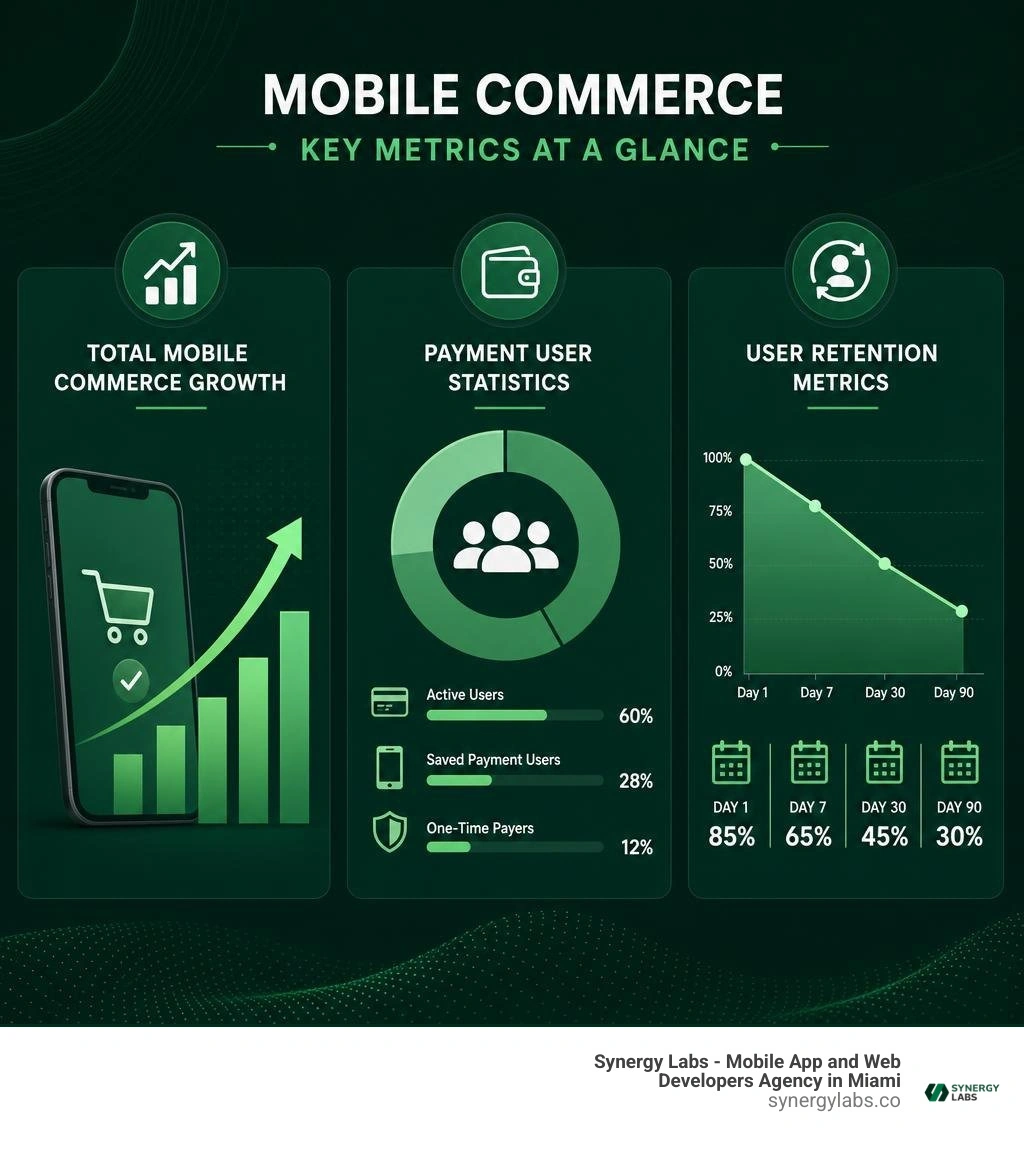
Mobile commerce (mCommerce) is a dominant force in global retail. With global e-commerce sales surpassing $5.7 trillion, mobile payment ecosystems must support fast, safe, and touchless transaction flows. Mobile payment transaction users reached 1.31 billion globally, driving the adoption of encrypted digital wallets and biometric one-tap checkouts.
Concurrently, user experience design prioritizes high engagement through micro-interactions and motion design. Gartner predicted that over 50% of major enterprise applications would incorporate touchless user interfaces, such as voice control, gesture recognition, and proximity marketing using Bluetooth beacons. Adding intentional motion design and micro-interactions can boost user conversion rates by more than 20%, keeping users engaged through dynamic, fluid transitions.
Frequently Asked Questions About Modern Mobile App Engineering
How have artificial intelligence and machine learning redefined app development?
Artificial intelligence and machine learning shifted app development from reactive programming to proactive software design. Rather than relying solely on static, pre-programmed user paths, modern applications leverage embedded AI models to dynamically customize content, predict user actions, and automate complex tasks.
Key practical applications include:
Hyper-Personalization: Content feeds, product recommendations, and search results adapt in real time to user behavior.
Intelligent Customer Support: Intent-based AI chatbots handle complex, multi-turn conversations using natural language processing.
Code Generation and QA: Developers use generative AI coding assistants to automate unit testing, refactor code, and accelerate build pipelines by up to 50%.
Are Progressive Web Apps still a viable alternative to native mobile apps?
Yes, Progressive Web Apps (PWAs) remain a powerful, cost-effective complement or alternative to native applications, particularly for businesses seeking immediate accessibility without forcing users through an app store download.
PWAs leverage browser-based Service Workers to store data locally, enabling offline functionality, fast load speeds, and push notification delivery. While high-performance applications requiring deep hardware acceleration (like complex 3D gaming or advanced Bluetooth peripherals) still benefit from native native code, PWAs are ideal for e-commerce, content publishing, and SaaS portals looking to maximize user reach and minimize onboarding friction.
What is the most effective mobile app monetization model?
The most effective mobile app monetization strategy is currently a hybrid model that combines recurring subscriptions with contextual in-app purchases or tiered access levels. Subscription models generated over $66.8 billion in app store revenues, driven by consumer preference for flexible access.
To maximize lifetime value (LTV), successful mobile products implement:
Freemium Access: Offering robust baseline utility for free to acquire users, while locking advanced power features behind paywalls.
Low-Code Paywall Testing: Utilizing flexible, remote paywall tools to A/B test pricing tiers, trial durations, and promotional messaging without releasing full app updates.
Segmented Offers: Customizing pricing tiers based on regional purchasing power and user engagement history.
Crafting Your Next-Gen Mobile Software Strategy
Navigating technological trends requires more than just following industry buzzwords — it demands clear architectural strategy, rigorous security standards, and seamless user experiences. Whether you are building a predictive AI-driven portal, a high-throughput 5G IoT hub, or a sleek cross-platform shopping experience, choosing the right software architecture from day one is critical to long-term success.
At Synergy Labs, we specialize in converting complex ideas into scalable, production-grade applications. As a premier mobile app and web development agency, we provide customized digital solutions built around your exact business goals. Our unique operating model combines local technical leadership with high-velocity global engineering execution:
Fixed-Budget Transparency: We operate with predictable, fixed-budget pricing structures so you never have to worry about runaway development costs or unexpected scope fees.
In-Shore CTO Leadership: Every client works directly with an experienced, in-shore CTO based out of our core hubs — including Miami, San Francisco, New York City, Austin, London, and Dubai — giving you direct access to high-level strategic talent.
Dedicated Global Engineering Teams: Backed by high-performing offshore development teams, we deliver elite software engineering fast and cost-effectively.
Milestone-Based Guarantees: Payments are strictly tied to key project deliverables, ensuring complete accountability, quality assurance, and peace of mind at every phase of the development lifecycle.
If you are ready to build software that scales effortlessly, explore our specialized development services or reach out to our senior technical team today. Let's build something extraordinary together.




.avif)

.avif)


