Why Every Driver Needs a Dedicated Car Maintenance Reminder System
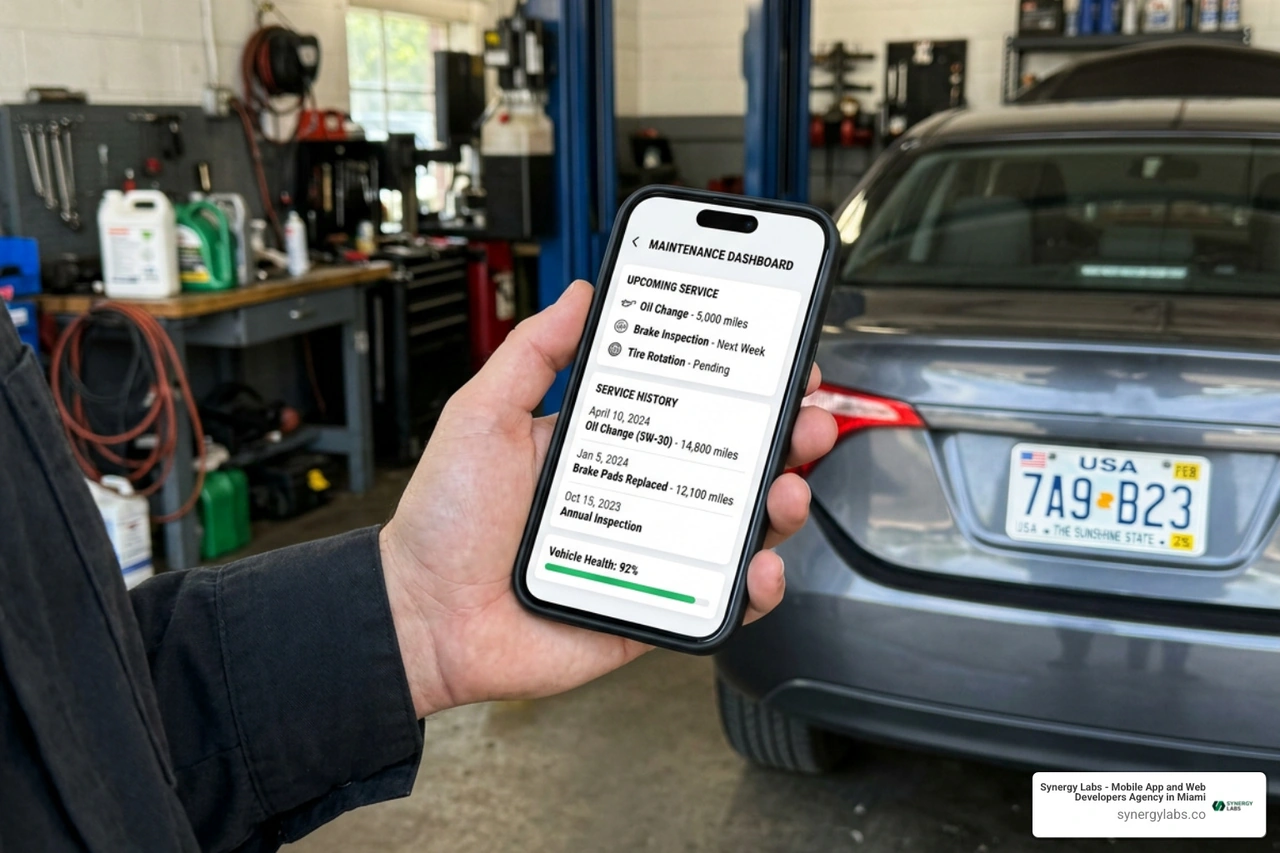
A car maintenance reminder system is a digital tool that tracks your vehicle's mileage and calendar intervals to notify you before scheduled services like oil changes, tire rotations, and brake inspections are due. To keep your vehicle running reliably, drivers should log service history immediately, track dual triggers (elapsed time and mileage driven), and set alerts at least two weeks or 500 miles ahead of factory service milestones.
Vehicle ownership has a funny way of making months feel like weeks. You tell yourself you will change the engine oil next Saturday, and suddenly three months and four thousand miles have slipped quietly past your bumper. When life gets busy, vehicle upkeep slips from the front of your mind.
According to AAA research, 1 in 3 drivers neglects routine vehicle maintenance. Across American highways alone, an estimated 77 million vehicles carry deferred repairs at any given moment. These are not minor oversights; they represent ticking financial time bombs. Routine inspections catch worn belts, thinning brake pads, and leaking fluids long before they strand you on the shoulder of a dark highway. Adhering to verified routine car care standards ensures that minor wear items do not cascade into catastrophic mechanical failures.
A dedicated reminder system changes the dynamic from reactive panic to planned convenience. Instead of trying to decipher faded oil stickers or hoping your dashboard light gives you enough warning, a smart tool tracks wear continuously. It calculates upcoming service milestones in the background, pinging you with enough lead time to book an appointment with your mechanic before metal grinds against metal.
The Real Cost of Neglected Vehicle Services
Deferred maintenance is easily the most expensive kind of car ownership. Skipping a routine fifty-dollar service might feel like saving money in the moment, but the hidden compound interest of deferred upkeep is brutal. Research shows that the average cost of a repair resulting from neglected maintenance exceeds $500, with severe engine or transmission repairs routinely topping thousands.
Consider what happens beneath the hood when standard service windows lapse:
- Oil Sludge and Engine Seizure: Motor oil breaks down over heat cycles, accumulating carbon, metal particulates, and moisture. Left long enough, it transforms into thick black sludge that starves camshafts and crankshaft bearings of lubrication. Replacing an engine block costs twenty to forty times more than a decade of synthetic oil changes.
- Premature Brake Assembly Damage: Brake pads feature sacrificial friction material designed to wear down safely. When worn past their limits, the backing plate contacts the rotor directly. What could have been a straightforward pad swap turns into warped rotors, damaged calipers, and significantly longer stopping distances.
- Blown Timing Belts: Many modern engines use interference designs where valves and pistons share the same cylinder space at alternating micro-intervals. If an aged timing belt snaps because it was neglected past its service window, pistons slam into open valves, instantly destroying the internal valvetrain.
- Clogged Cabin and Engine Air Filters: A blocked engine filter chokes air supply, lowering fuel economy and fouling spark plugs. A neglected cabin filter strains the climate control blower motor and circulates allergens and mildew throughout the cabin.
How a Smart Car Maintenance Reminder Protects Resale Value
When you sell or trade in a vehicle, buyers pay for peace of mind. A clean exterior is nice, but a complete, documented service history provides the real leverage during price negotiations. Private buyers and dealerships inherently discount offers when service records are missing because they must budget for worst-case mechanical surprises.
A dedicated digital tracking system creates an immutable, organized service portfolio. Rather than handing a prospective buyer a messy glovebox stuffed with crinkled, oil-stained paper receipts, you provide a clear chronological record showing every oil change, brake flush, tire rotation, and battery replacement.
Capturing digital logs offers tangible advantages:
- Receipt Photo Attachments: High-resolution snapshots of parts invoices and mechanic repair orders prove that quality OEM components and manufacturer-recommended fluids were used throughout the vehicle's life.
- Odometer Verification: Consistent maintenance timestamps document steady, verified mileage progression, alleviating buyer concerns about odometer discrepancies.
- Transferable Transparency: Digital maintenance exports validate that the car was driven with care, allowing you to command top market value and sell significantly faster than competing listings with unverified backgrounds.
Core Features to Look for in Modern Maintenance Tracking Apps
Not all digital logbooks offer the same value. A barebones note app might let you type down an oil change date, but it will not forecast when your tires need rotating or notify you before your registration expires. Modern vehicle upkeep platforms leverage smart automation, device syncing, and interactive features that make upkeep completely effortless.
When evaluating a tracking platform, prioritize the following foundational capabilities:
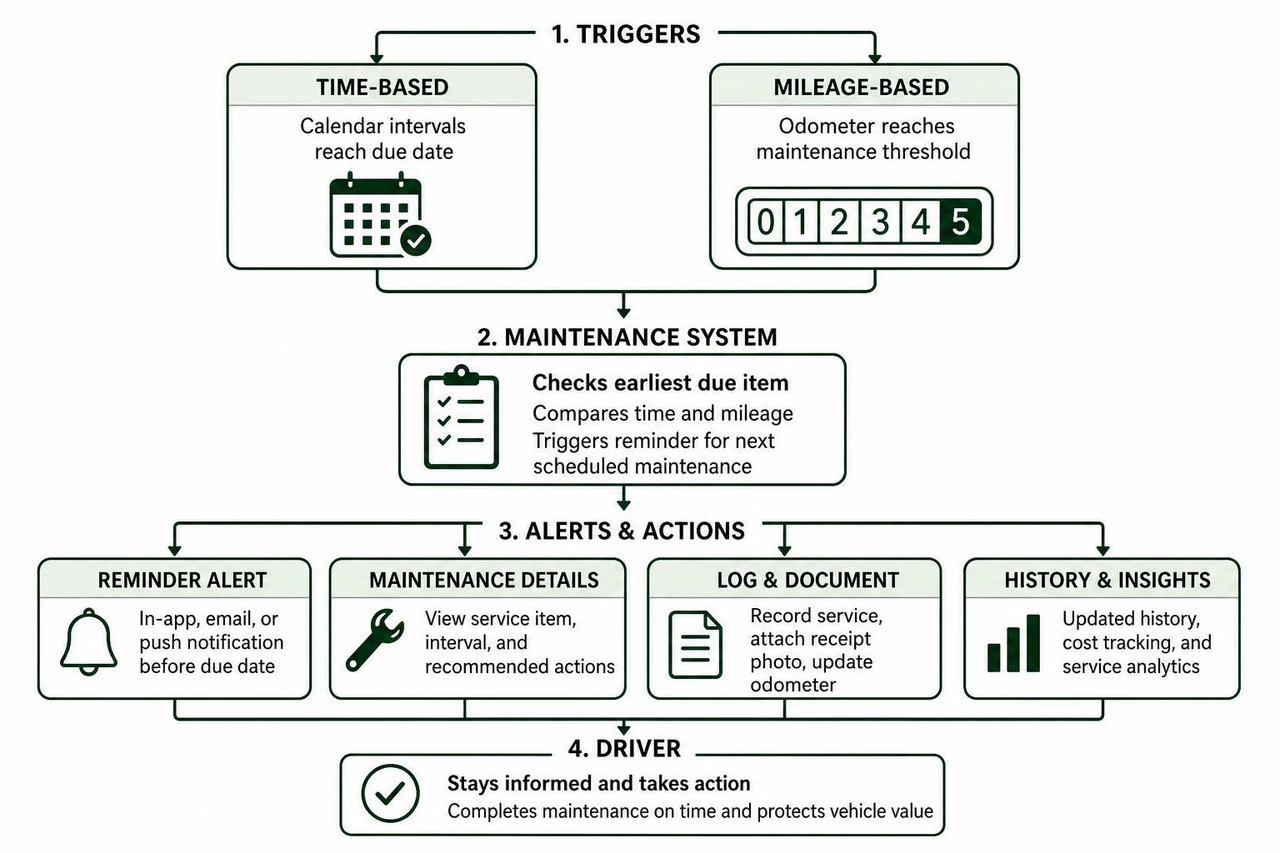
- Dual-Trigger Alerts: The application must monitor both calendar dates and mileage benchmarks, alerting you as soon as the earliest threshold arrives.
- Multi-Vehicle Architecture: Whether you manage a family garage with two sedans and an SUV or run a small commercial delivery fleet, the software should organize separate maintenance schedules under a single interface.
- Expense Analytics and Cost Tracking: Clear dashboards detailing annual maintenance expenditure, fuel efficiency metrics, and total cost of ownership per vehicle.
- Flexible Data Exporting: The ability to export records to standard formats like PDF or CSV ensures your data remains portable and ready for buyers or mechanics.
- Intuitive Connected User Experience: Modern automotive digital experiences increasingly rely on smart integrations. From responsive mobile dashboards to conversational connected car interfaces, intuitive design helps drivers interact with diagnostic tools without friction.
Mileage-Based vs. Time-Based Interval Triggers
The core engine of any reliable maintenance reminder is its interval logic. Vehicles degrade through two distinct mechanisms: mechanical friction (distance traveled) and chemical aging (time elapsed).
For instance, engine oil loses viscosity and lubricity as it circulates through hot mechanical components over thousands of miles. However, oil also absorbs ambient moisture, acids, and unburnt fuel vapors while sitting in the sump over months of short-trip driving. For this reason, manufacturers specify intervals such as "7,500 miles or 6 months, whichever comes first."
Quality maintenance apps employ predictive mileage algorithms. If you enter your current odometer reading whenever you refuel or wash the car, the application calculates your average daily mileage. If it detects you drive 45 miles per day, it dynamically calculates the precise calendar day you will cross your next 5,000-mile tire rotation threshold.
If you prefer building your own customized spreadsheets to model these formulas manually, exploring structured templates like a car maintenance google sheet can give you complete control over your service projections.
Standalone Software vs. OBD2 Hardware Scanners
When building your maintenance tracking workflow, you will encounter two distinct categories of tools: standalone software applications and hardware-linked On-Board Diagnostics (OBD2) systems.
Standalone applications run directly on your smartphone, tablet, or web browser without requiring physical plugins. You manually log service visits, enter odometer updates, and receive reminders via local notifications or emails. They are accessible, inexpensive, and work on any vehicle regardless of age, make, or fuel type.
OBD2-connected platforms pair a physical scanner module plugged into your car's diagnostic port with a mobile application. The scanner reads telemetry directly from the vehicle's engine control module (ECM). Dedicated OBD maintenance systems automatically log exact mileage the second you start the car, scan for hidden trouble codes before warning lights illuminate, and enable one-tap resets for maintenance warning lights.
Top Digital Solutions for Vehicle Upkeep in 2026
The automotive software landscape in 2026 offers versatile tracking solutions tailored to every type of vehicle owner. Drivers no longer have to rely on generic notepad apps or clunky software. Modern platforms incorporate cloud backups, cross-device synchronization, and integrated financial analytics to provide a comprehensive look at vehicle health.
Modern automotive software also mirrors advancements across the broader mobility sector, where seamless user interfaces connect daily driving data with insurance and maintenance workflows, much like specialized modern integrated insurtech platforms.
Choosing the Best Free Car Maintenance Reminder for Your Garage
If you want a straightforward maintenance tool without expensive monthly subscriptions or specialized hardware, several outstanding options prioritize clean functionality and data ownership:
- Progressive Web Apps (PWAs): Modern lightweight web applications run locally on your device's browser and install directly onto your home screen. They function completely offline, require zero account creation if you prefer local storage, and allow you to log fluid flushes, brake services, and custom maintenance categories with zero ads.
- Operating System-Native Trackers: iOS and Android native apps built specifically for vehicle logs often store data locally on your device with optional private cloud syncing. These tools typically offer clean home screen widgets, Apple CarPlay support, and quick entry fields for fuel and service logging.
- Manufacturer and Service Portals: Several major automotive service networks provide free digital glovebox apps that automatically pull historical service records by simply entering your vehicle's VIN or license plate number.
Multi-Vehicle Garages, Hybrids, and Electric Vehicles
Managing maintenance across multiple household vehicles requires a tool that understands differing powertrain requirements. A modern plug-in hybrid or battery electric vehicle (EV) follows a drastically different service schedule than a conventional turbocharged gasoline vehicle.
Because electric vehicles deliver instant torque and carry heavy battery packs, tire wear occurs up to 30% faster than on comparable internal combustion vehicles, making automated tire rotation reminders crucial. Similarly, because regenerative braking handles most deceleration, physical brake pads can last over 80,000 miles, but hygroscopic brake fluid still absorbs atmospheric moisture over time and must be flushed based on calendar intervals.
Look for multi-vehicle applications that provide distinct profile templates for electric, hybrid, and gas powertrains, enabling you to track kilowatt-hour charging metrics alongside standard mechanical service items.
Data Privacy, Cloud Sync, and Local Backup Options
Your vehicle records contain sensitive information, including daily travel habits, home addresses, license plate numbers, and spending data. Choosing an application with robust data hygiene ensures your personal records remain secure:
- Local-First Architecture: Tools that store information locally on your device ensure you retain 100% access to your service history even when parked in underground structures or traveling through remote rural areas with zero cell connectivity.
- Zero Third-Party Data Sharing: Select platforms that do not monetize by packaging your driving habits or location history for data brokers or marketing firms.
- Automated Private Cloud Backups: Platforms that sync directly through your personal iCloud or Google Drive accounts ensure seamless multi-device continuity across your phone, tablet, and desktop without creating unnecessary third-party accounts.
- Clean Export Standards: Regular backups to open formats like CSV and JSON protect you against unexpected app updates or platform migrations.
Maintaining reliable mobile software requires proactive engineering, continuous updates, and strict adherence to modern security frameworks, principles central to dependable ongoing app maintenance services.
Comparing Digital Reminder Apps, Spreadsheets, and Simple Calendars
Choosing the right maintenance management strategy depends on your technical comfort, garage size, and how much automation you want in your day-to-day life.
Here is a breakdown of how the three primary vehicle tracking approaches compare:
- Standard Calendar Alerts (Google Calendar / Apple Reminders):
- Pros: Zero learning curve, universally available on all devices, easy to share event invites with family members.
- Cons: Completely blind to vehicle mileage. A reminder set for "August 15" cannot adjust if you take an unexpected 3,000-mile cross-country road trip in June.
- Custom Spreadsheets (Excel / Google Sheets):
- Pros: Infinite customization, complete data privacy, capable of running complex financial depreciation formulas.
- Cons: High manual friction. Entering receipts and mileage updates on a mobile screen while standing in a repair shop parking lot is cumbersome, often leading to abandoned tracking.
- Dedicated Vehicle Maintenance Applications:
- Pros: Preconfigured service intervals, smart predictive mileage forecasting, receipt photo storage, automated push notifications, and instant PDF service log generation.
- Cons: Some platforms require subscriptions for advanced export features, and hardware-linked variants require purchasing an OBD2 adapter.
Frequently Asked Questions About Car Maintenance Reminders
What is the 30-60-90 rule for car maintenance?
The 30-60-90 rule represents the industry-standard schedule for comprehensive vehicle inspections and fluid services at 30,000, 60,000, and 90,000 miles.
- At 30,000 miles: Service typically includes replacing air and cabin filters, changing engine oil, rotating tires, and inspecting brake pads and suspension components.
- At 60,000 miles: Technicians perform all 30k services while adding transmission fluid exchanges, engine coolant flushes, brake fluid replacement, and battery health diagnostics.
- At 90,000 miles: Vehicles undergo thorough mechanical inspections, spark plug replacements, accessory drive belt changes, timing belt replacements (on applicable engines), and differential fluid flushes.
Are standalone car maintenance reminder apps completely free?
Many standalone vehicle maintenance apps provide robust free tiers that cover everything an individual driver needs. Free tiers typically include unlimited service logging, dual-trigger notifications, basic expense tracking, and local device backups.
Advanced capabilities—such as automated PDF resale reports, multi-vehicle fleet dashboards, live OBD2 telemetry diagnostics, or cloud family sharing—are often packaged as low-cost one-time in-app purchases or flexible annual subscriptions.
How do maintenance tracking apps handle electric vehicles?
Modern maintenance applications support electric vehicles by replacing internal combustion service checklists with EV-specific items. Rather than tracking spark plugs, engine oil, or exhaust filters, the app configures reminders for high-voltage battery diagnostic scans, cabin air filter swaps, reductive gearbox fluid servicing, and brake fluid moisture testing.
Because electric cars experience rapid tire wear due to heavy curb weight and high low-end torque, EV maintenance trackers emphasize tighter tire rotation intervals and wheel alignment schedules.
Accelerate Your Automotive Software Vision with Synergy Labs
Keeping your vehicle running in peak condition comes down to proactive maintenance. Tracking service intervals with a dedicated reminder tool prevents costly mechanical failures, safeguards your passengers, and maximizes the resale value of your vehicle. The right digital tool turns automotive upkeep from a guessing game into a streamlined, reliable habit.
If you are an entrepreneur, automotive enterprise, or mobility startup looking to build cutting-edge digital experiences, partner with Synergy Labs. We specialize in building scalable, enterprise-grade mobile and web applications with intuitive user experiences, robust offline capabilities, and secure cloud architectures.
Our proven development model is built around your success:
- Fixed-Budget Model: Transparent, predictable pricing with zero surprise overages, ensuring your software launches on scope and within budget.
- Senior Technical Leadership: Benefit from our hybrid structure featuring an in-shore CTO working directly alongside a high-velocity, elite offshore development team.
- Milestone-Based Payments: Protect your investment by paying only when clearly defined, verifiable software deliverables are completed and approved.
- Rapid Time-to-Market: We leverage agile workflows and modern cross-platform frameworks to design, engineer, and launch high-impact mobile products quickly.
Whether you need a custom fleet management platform, an AI-powered diagnostic utility, or an integrated connected-car experience, we have the technical expertise to turn your concept into market-leading software. Explore our full capabilities through our Mobile App Development Service and let us build your next digital product together.


.avif)

.avif)


