How to Choose Enterprise Mobile Application Development Companies

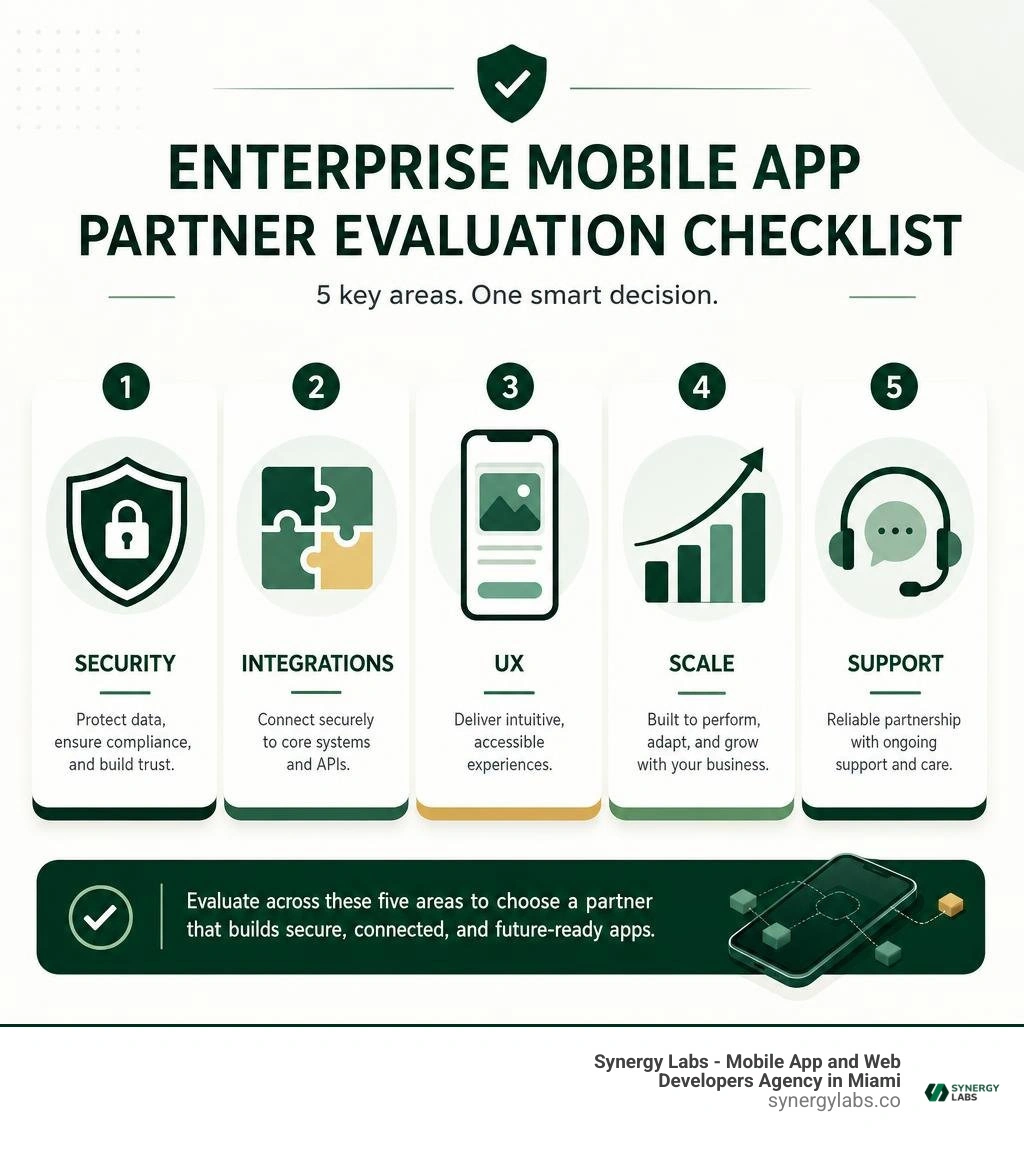
The best enterprise mobile application development companies pair strong mobile engineering with secure system integration, clear delivery planning, and long-term support. Before choosing a partner, look for proof that they can:
- Build for iOS, Android, or cross-platform needs without hurting user experience.
- Connect securely to core systems such as CRM, ERP, and internal APIs.
- Design for privacy, compliance, offline work, and growth from day one.
- Set realistic scope, milestones, costs, and post-launch ownership.
Enterprise mobility is no longer just a smaller screen for an old workflow. The right app can give field teams live data, automate approvals, support hands-free work, or bring complex back-office tools into the moment they are needed. Great software should remove friction, not move it into someone's pocket.
This guide compares the capabilities that matter most in 2026, from security architecture and legacy modernization to AI, indoor positioning, and cross-platform delivery. At Synergy Labs, I serve as Director of Product, helping teams turn high-stakes workflows into useful, scalable mobile products.
Enterprise mobile application development companies vocab to learn:
Introduction
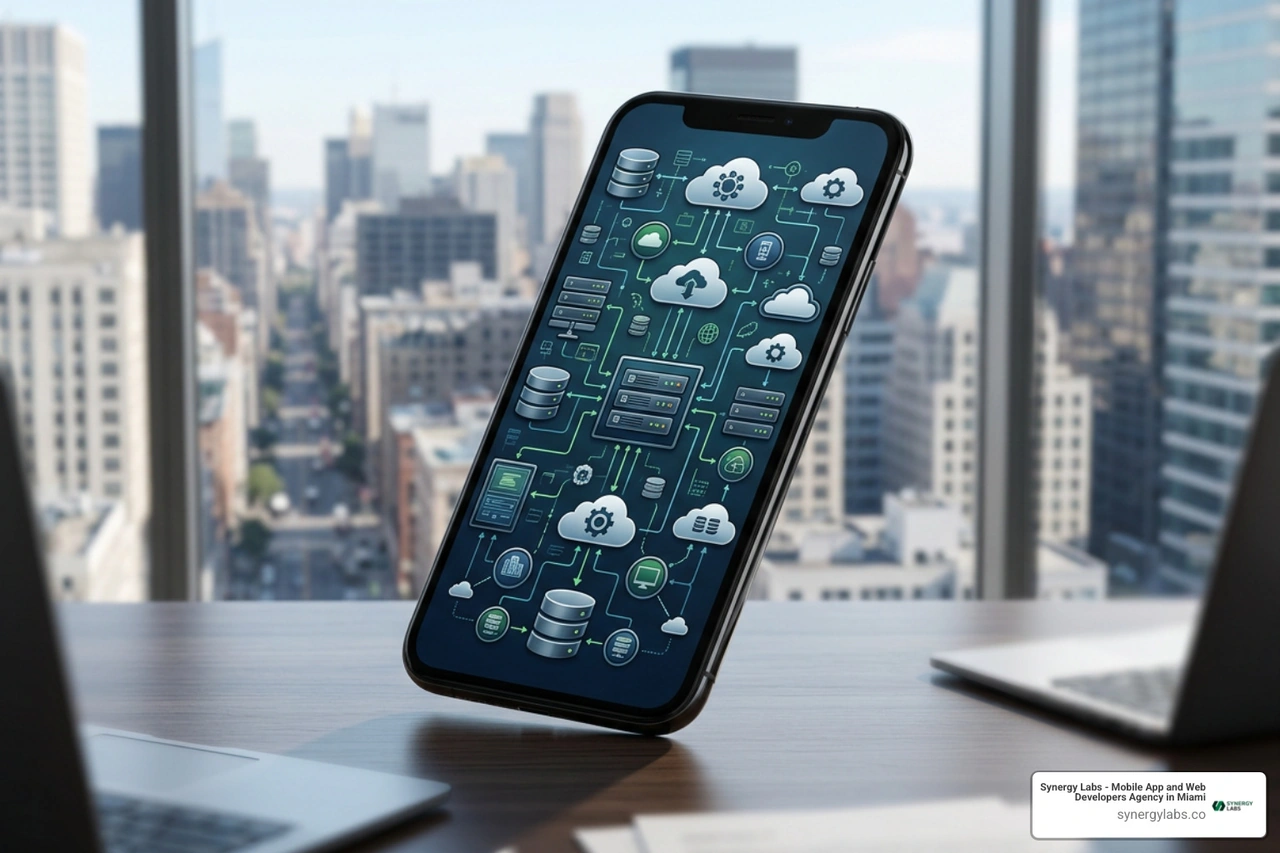
In 2026, enterprise mobility is the operational nervous system of the modern corporation. From field technicians in Chicago to financial executives in New York and logistics coordinators in Miami, enterprises demand software that operates flawlessly under intense operational pressure. Digital transformation is no longer about migrating spreadsheets to the cloud; it is about real-time workflow automation, mission-critical systems resilience, and delivering consumer-grade user experiences to the workforce.
Building software that integrates with complex backends, satisfies strict regulatory mandates, and functions offline requires a partner with deep technical capabilities. Choosing the wrong vendor leads to technical debt, security vulnerabilities, and abandoned software. This article examines the landscape of enterprise mobile app development, the technologies driving the industry forward, and how top-tier engineering teams deliver measurable business value.

Key Criteria for Evaluating Enterprise Mobile Application Development Companies
Selecting a technology partner to construct enterprise-grade software requires rigorous vetting across multiple operational dimensions. A comprehensive Enterprise App Development Guide 2026 highlights that technical expertise must be matched with business acumen and a proven approach to legacy modernization.

When vetting potential development partners, evaluate them against these foundational criteria:
- Technical Architecture and Mastery: Ability to build scalable, multi-tier architectures that handle millions of transactions without latency degradation.
- Legacy Modernization: Proven track record of decoupling legacy mainframes, ERPs, and CRMs via modern middleware and microservices.
- Security and Compliance Protocols: Demonstrated adherence to international security standards, zero-trust protocols, and industry-specific certifications.
- Delivery Framework and Governance: Transparent, agile delivery frameworks backed by senior technical leadership, clear milestones, and code ownership guarantees.
Core Technical Capabilities and Stack Mastery
Enterprise software demands a robust, future-proof technology stack. Engineering teams must demonstrate mastery across both native platforms (Swift for iOS, Kotlin for Android) and modern cross-platform engines. Leveraging React for Enterprise Applications allows companies to maintain a unified codebase across web and mobile while retaining native-level performance.
Behind the client application, the partner must architect high-throughput backend microservices, implement distributed caching layers, and deploy resilient API gateways. This ensures that the mobile tier can handle unpredictable spikes in network traffic while maintaining sub-second response times.
Enterprise Security, Privacy, and Compliance Frameworks

Security cannot be treated as an afterthought or a final checklist item. It must be woven into every layer of the mobile architecture. Enterprise applications handle proprietary corporate data, customer personally identifiable information (PII), and financial transactions.
A robust enterprise security posture requires:
- Zero-Trust Architecture: Verifying every request, user, and device continuously, regardless of network location.
- Data Protection in Transit and at Rest: Utilizing AES-256 encryption for local on-device databases and TLS 1.3 for all network transport layers.
- Regulatory Compliance: Designing systems that natively comply with SOC 2 Type II, HIPAA for healthcare workflows, GDPR, and regional financial standards.
- Mobile Application Self-Protection (RASP): Implementing runtime protections against reverse engineering, jailbreak detection, and memory tampering.
The enterprise mobility landscape is being reshaped by breakthrough technologies that move beyond standard database forms. Forward-thinking enterprises are adopting modern Enterprise Mobility Solutions to transform physical and digital workflows across industries.
What Sets Top Enterprise Mobile Application Development Companies Apart
Top mobile engineering firms differentiate themselves by solving complex engineering bottlenecks rather than applying cookie-cutter templates. As enterprises discover Why No-Code Alone Isn't Enough for Enterprise Applications, custom engineering firms step in to build bespoke integrations, optimize hardware-level device features, and deliver customized mobile experiences tailored to specific operational requirements.
Below are six major technological innovations driving enterprise workflows in 2026:
1. High-Density Wireless and Mobile Connectivity
High-density wireless infrastructure transforms corporate connectivity through advanced cellular micro-cells and distributed antenna systems. By delivering full-speed, simultaneous data streams with ultra-low latency, this technology eliminates network congestion across industrial campuses, dense corporate headquarters, and high-volume logistics distribution centers.
2. Next-Gen Display and Holographic Interfaces
Advances in spatial computing and micro-display projection enable wearable and mobile interfaces that project interactive 3D spatial models. In field engineering, manufacturing, and complex diagnostics, workers can visualize contextual telemetry and interactive schematics directly in their physical work environments without bulky headsets.
3. Ambient Clinical and Field Intelligence
Ambient computing streamlines documentation across mission-critical field and healthcare operations. By combining hands-free hardware with natural language processing models, systems capture spoken interactions and automatically structure dialogues into accurate ERP records and system logs, eliminating tedious administrative burdens.
4. Precision Indoor Positioning and Geomapping
Geomagnetic sensing, sensor fusion, and BLE beacon arrays provide sub-meter indoor navigation where GPS signals cannot penetrate. This capability powers automated asset tracking, real-time facility mapping, and optimized personnel routing across enterprise campuses, multi-story hubs, and sprawling industrial warehouses.
5. Legacy Enterprise Modernization and Mobile HTML5 Delivery
Modern middleware frameworks abstract monolithic architectures like SAP, Oracle, and Salesforce into responsive mobile micro-apps. By creating lightweight API layers and modular HTML5 interfaces, organizations mobilize complex workflows and modernize legacy operations without undergoing multi-year core system replacements.
6. Conversational AI and Intelligent Voice Agents
Conversational AI has evolved into a key operational accelerator for distributed teams. As organizations implement an Enterprise AI Agents Gartner 2026 Trend, intelligent voice systems and natural language processing automate daily approvals, internal service desks, and multi-step field operations directly through mobile devices.
Architecture, Cost, and Timeline Benchmarks for Enterprise Apps
Budgeting and scheduling enterprise mobile initiatives requires understanding the trade-offs between architecture, integration complexity, and release timelines. Reviewing The Cost of Enterprise-Grade App Development 2026 Benchmark Guide reveals that enterprise mobile projects generally fall into clear structural tiers.
- Core Departmental Applications: Internal tools focused on single-department workflows (e.g., inventory logging, basic approvals) with direct API integrations.
- Multi-System Enterprise Applications: Solutions connecting to multiple third-party systems (ERP, CRM, legacy SQL databases), featuring custom role-based access control, offline data synchronization, and end-to-end encryption.
- Mission-Critical Multi-Platform Ecosystems: Global-scale mobile deployments with real-time telemetry, IoT or hardware integrations, custom AI agents, and multi-region regulatory compliance.
How Leading Enterprise Mobile Application Development Companies Drive Innovation
Top development teams use agile orchestration and continuous integration pipelines to turn roadmaps into scalable software. Building scalable platforms requires Enterprise Mobile App Development Scaling Solutions for Large Organizations that support continuous automated testing, containerized deployments, and zero-downtime database migrations.
By decoupling user interface development from backend API endpoints through contract-driven development, engineering teams can build, test, and refine mobile frontends simultaneously with microservice backends, significantly compressing the time required to bring products to market.
Measuring ROI and Post-Launch Value Realization
Justifying enterprise mobility investments requires continuous measurement against quantitative business outcomes. Executives must evaluate the financial impact using frameworks outlined in the ROI of Enterprise App Development What C-Level Executives Need to Know.
Key value realization metrics include:
- Operational Cycle Time Reduction: Measuring the time saved by field workers using mobile-first interfaces compared to legacy desktop data entry.
- User Adoption and Retention Rates: Tracking daily active users (DAU) and workflow completion rates across employee groups.
- Error Reduction in Data Ingestion: Quantifying the drop in data entry errors resulting from native mobile features like barcode scanning, OCR, and automated input validation.
- Infrastructure and Maintenance Cost Savings: Assessing the reduction in legacy maintenance overhead by transitioning to streamlined, cloud-native microservices.
Frequently Asked Questions About Enterprise Mobile Development
How do enterprises choose between native, hybrid, and web apps?
The decision hinges on performance requirements, hardware access, and maintenance capacity. Native apps (Swift/Kotlin) are essential for graphics-heavy computing, continuous background processing, and tight hardware integrations (such as custom Bluetooth peripherals or complex camera sensors). Modern cross-platform frameworks like React Native or Flutter provide near-native performance, native UI rendering, and the cost advantage of a single codebase across iOS and Android. Progressive Web Apps (PWAs) work well for lightweight internal portals where app store distribution and offline functionality are secondary concerns.
How do you integrate mobile apps with legacy systems like SAP or Salesforce?
Legacy integration is typically achieved by deploying an intermediary API gateway or middleware service layer. Rather than connecting mobile apps directly to legacy database schemas, modern engineering teams build RESTful or GraphQL microservices that communicate securely with legacy systems using certified connectors, ESBs (Enterprise Service Buses), or message queues. This decouples the mobile client from the legacy backend, allowing updates to the mobile UI without altering fragile underlying enterprise database tables.
What is the typical timeline and cost for building an enterprise app in 2026?
In 2026, standard enterprise mobile applications typically require between 4 and 9 months of engineering and design effort, with budgets ranging from $100,000 to over $350,000 depending on complexity, security requirements, and integration depth. Highly regulated solutions—such as clinical healthcare systems or multi-region financial platforms—can require 9 to 12 months to clear compliance audits and enterprise penetration testing.
Partnering with Synergy Labs for Enterprise Engineering Excellence
Building mission-critical enterprise software requires more than standard mobile coding—it demands seasoned architectural leadership, rigid security engineering, and predictable delivery governance. At Synergy Labs, we eliminate project risk through our transparent, fixed-budget model and milestone-based payments, ensuring your digital products launch on time and strictly within budget.
Our hybrid delivery model pairs an experienced in-shore CTO with an elite global engineering team, giving your organization direct access to senior technical talent without bloated management overhead. Whether you are modernizing legacy operational tools, deploying cross-platform field applications, or architecting secure AI-driven workflows across Miami, New York, Chicago, London, or San Francisco, explore our specialized App Development Service to turn your enterprise mobility roadmap into reality.


.avif)

.avif)


