Why The Nikita Bier Playbook Matters for App Founders in 2026
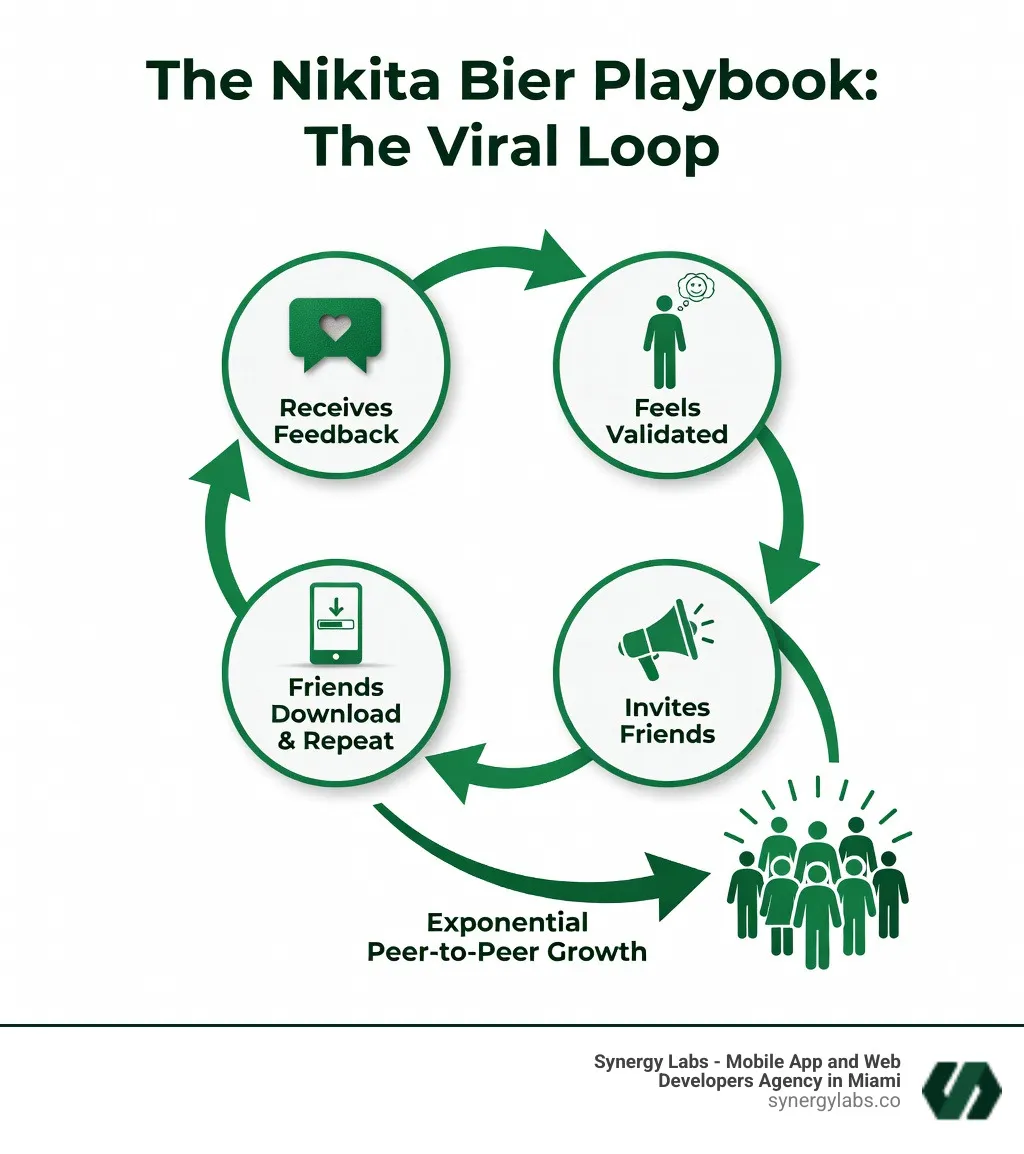
The Nikita Bier Playbook: Reverse-Engineering the Psychology of Viral App Design is a proven system for building consumer apps that explode to millions of users without spending a dollar on traditional marketing. Nikita Bier, the founder behind TBH (sold to Facebook for $30M in nine weeks) and Gas (sold to Discord within six months), has cracked the code on viral growth by targeting dense teenage networks, eliminating every ounce of friction, and leveraging social validation loops that make sharing feel more rewarding than using the product alone.
Core elements of Bier's playbook:
Target teens first — Users aged 13-22 invite friends at 20% higher rates than adults, creating rapid peer-to-peer spread
Launch hyper-locally — Start with a single high school to achieve 40% penetration in 24 hours, then expand school by school
Make every tap count — Strip 2014-era friction (complex onboarding, unclear value props) to open up 40%+ higher activation rates
Build for latent demand — Solve problems people already try to fix, rather than inventing new behaviors
Use media-first validation — Post mockups on Reddit or TikTok before writing code to confirm "no-doubt" product-market fit
Leverage TikTok's algorithm — Hire offshore creators at $0.10 per install (vs $11.50 for ads) by targeting content-based distribution
Focus Tree applied these exact principles and grew from 2,000 users to 105,000 users in just 15 days, driven by seven top creators who understood the "Strava for studying" hook. One video alone hit 10 million views, proving that when you reverse-engineer the psychology of virality — FOMO, social proof, gamification — growth becomes predictable rather than accidental.
As an app development team that has helped consumer apps like Peanut and Slowly reach millions of users, we've seen how Bier's principles translate into real results when combined with modern UX design and strategic distribution channels like TikTok. The Nikita Bier Playbook: Reverse-Engineering the Psychology of Viral App Design offers a repeatable framework for founders who want to build the next breakout app in 2026's mobile renaissance.
Key The Nikita Bier Playbook: Reverse-Engineering the Psychology of Viral App Design vocabulary:
The Core Pillars of The Nikita Bier Playbook: Reverse-Engineering the Psychology of Viral App Design
At its heart, The Nikita Bier Playbook: Reverse-Engineering the Psychology of Viral App Design is less about "coding" and more about "engineering human behavior." We often see founders in Miami or San Francisco obsess over the backend architecture before they’ve even proven anyone wants the product. Bier’s approach flips this: he hunts for latent demand.
Latent demand isn't about inventing a new need; it's about fixing a task people are already trying to do. For example, people already want to compliment their friends or seek social validation. Bier simply built a more efficient, dopamine-fueled "machine" for that existing desire. By leveraging network effects—where the service becomes more valuable as more people join—he ensures that the product’s growth is baked into its utility.
One of the most controversial yet effective stances Bier takes is his critique of current mobile design. He argues that the vast majority of Fortune 100 mobile apps are stuck using design mechanics that date back to 2014. By failing to adopt state-of-the-art UX, these companies are leaving a massive amount of growth on the table. We've seen that how Nikita Bier built two viral apps without spending a dollar on marketing relied heavily on psychological triggers like FOMO (Fear Of Missing Out) and scarcity. If an app is only available at your school, or if you can only send four polls a day, the value of each interaction skyrockets.
Targeting the 13-22 Demographic for Follow-on Adoption
Why teenagers? It’s not just because they have more free time. It's because their communication needs peak at age 21. According to Bier’s research, the number of people an individual texts peaks right as they enter adulthood. Furthermore, teenagers see each other every single day in a high-density environment: school. This creates a high probability for virality that office-bound adults simply can't replicate.
In The Nikita Bier Playbook: Reverse-Engineering the Psychology of Viral App Design, the strategy is to "seed" a single high school. If you can reach 40% penetration in one school within 24 hours, the social graph expansion is inevitable. Neighbors talk, sports teams travel, and the fire spreads. The "follow-on" effect is real: whatever teenagers adopt today, adults will be using by 2026. This is why every app Nikita Bier touches finds viral success; he builds for the most adaptable, invitation-prone segment of the population first.
Every Tap is a Miracle: Eliminating 2014 Design Friction
In consumer apps, "every tap is a miracle." We tell our clients in Austin and New York the same thing: you have roughly three seconds to prove value. Bier advocates for a state-of-the-art UX that can lead to 40%+ higher user activation rates just by removing unnecessary steps.
Modern design is about reducing cognitive load. If a user has to think about where to click, you’ve already lost them. This involves bridging the gap by integrating behavioral science into app development. By 2026, user attention spans have effectively become "goldfish-sized." If your onboarding takes more than a few taps, or if you ask for an email address before showing the "magic moment," your retention will fall off a cliff.
Case Study: How Focus Tree Scaled to 105K Users in 15 Days
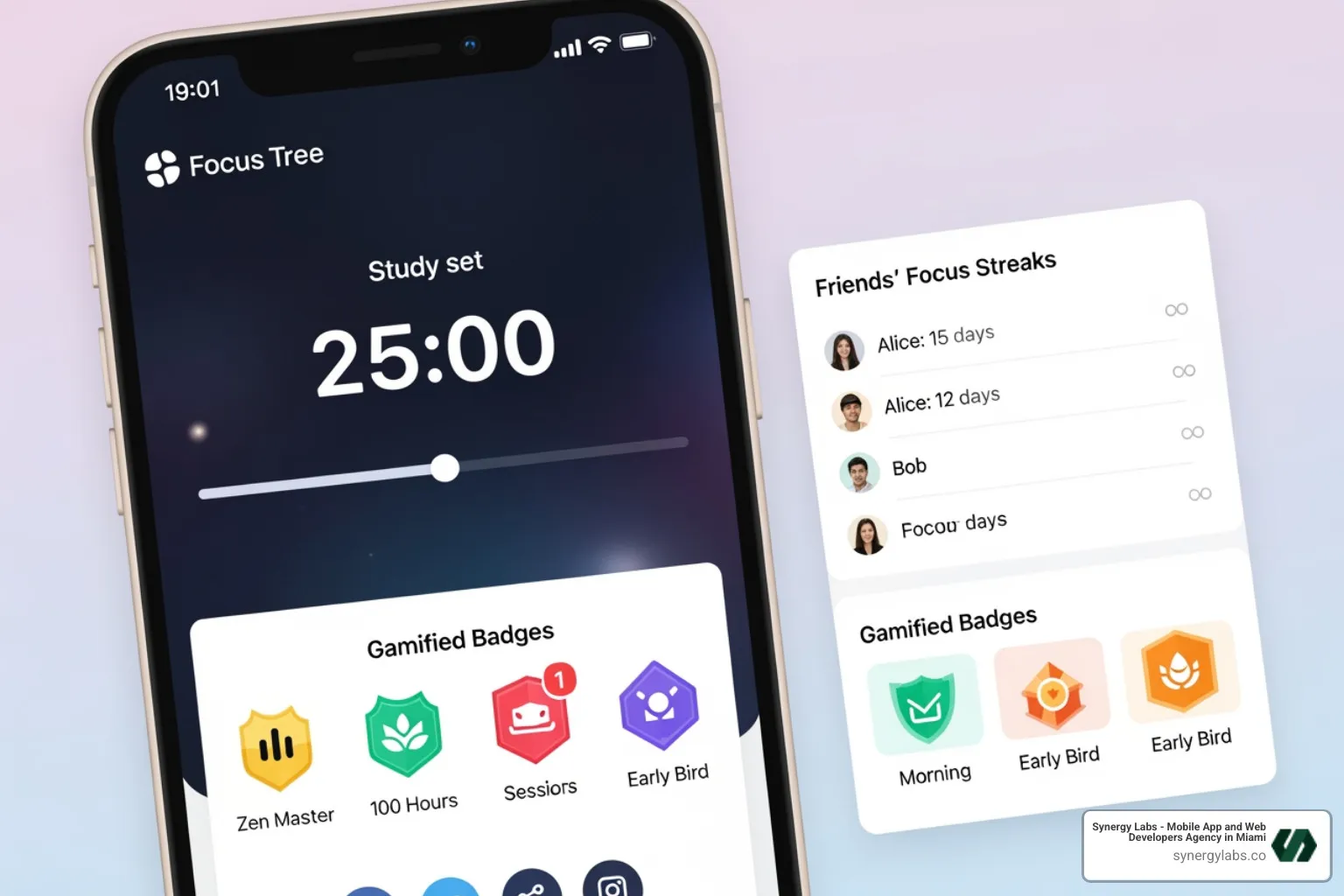
Focus Tree is the perfect modern example of The Nikita Bier Playbook: Reverse-Engineering the Psychology of Viral App Design in action. They didn't just build a "productivity timer"; they built the "Strava for studying." By gamifying focus and adding social validation—where you can see your friends' focus sessions—they turned a solitary activity into a social competition. You can read more about Focus Tree's official growth story to see how these mechanics played out.
The results were explosive. Focus Tree grew from 2,000 users to 105,000 users in just 15 days. This wasn't luck; it was a calculated viral marketing strategy that prioritized social proof over traditional advertising. They achieved 12,000–14,000 daily downloads by focusing on the "study talk" niche, which is 80% female and highly aesthetic-sensitive.
Applying The Nikita Bier Playbook: Reverse-Engineering the Psychology of Viral App Design to Creator Marketing
Focus Tree’s growth was fueled by a radical shift in distribution. Instead of burning money on Meta or Google ads—where the cost per install (CPI) was a staggering $11.50—they turned to TikTok creators. By following Bier’s advice on how influencers like Nikita Bier are redefining startup marketing, they reduced their CPI to just $0.10. That is a 95% reduction in acquisition costs.
TikTok's content-based algorithm is a gift for founders in 2026. It doesn't care how many followers you have; it cares if the content is engaging. Focus Tree leveraged offshore creators (from regions like Brazil and Vietnam) who could produce high-quality content at a fraction of the cost of US-based influencers. These creators were paid a base of $20 per video plus performance bonuses, aligning their incentives with the app's growth.
Standardized Viral Playbooks and Creator Metrics
Success in creator marketing requires a systematic approach. You can't just send a product to 100 people and hope for the best. Focus Tree used a "standardized viral playbook" that assessed creators based on specific metrics:
Average Low Views: The creator must consistently hit at least 10,000 views on their "bad" videos.
Viral Hit Rate: At least 20% (1 out of 5) of their videos must go viral.
Niche Aesthetics: The content must match the high-visual standards of the "study-gram" or "study-tok" community.
To manage this, they built Skool communities and provided creators with winning CapCut templates. This ensured that even if a creator wasn't a professional editor, they could produce content with "viral DNA."
Media-First Validation and App Store Optimization for 2026
One of the most powerful lessons in The Nikita Bier Playbook: Reverse-Engineering the Psychology of Viral App Design is the concept of "media-first, product-second." Before Focus Tree was fully built, the founders posted mock designs on Reddit. When those posts went viral and users started begging for a download link, they knew they had product-market fit.
The Nikita Bier Playbook: Reverse-Engineering the Psychology of Viral App Design for 2026 and Beyond
As we look toward the end of 2026, the landscape is shifting. iOS 18 has introduced new contact permission flows that are significantly more restrictive. While the overall approval rate is around 65%, it is much higher for teens and lower for adults. This change makes it harder for new apps to build social graphs from scratch, effectively entrenching incumbents like Instagram and TikTok. You can see the impact of these changes in the latest Apple Developer documentation.
However, Bier predicts that the future belongs to "tiny teams" and AI-driven distribution. We are seeing a renaissance where a team of three people can build an app that reaches 10 million users in months. The importance of user experience (UX) in mobile app design has never been higher, as design is now the primary differentiator in a crowded market.
App Store Conversion Killers and Onboarding Mechanics
You can have the most viral TikTok video in the world, but if your App Store page is weak, you’re throwing money away. Bier highlights a massive pitfall: zero ratings. If your app has no ratings, you are likely losing 2/3 of your potential conversions. People look for social proof the moment they land on your page.
Furthermore, onboarding must be optimized for the 2026 user. We’ve found that SMS verification significantly outperforms email for students. Why? Because iOS auto-fills the code from the text message, removing the need for the user to switch apps and remember a six-digit number. Interestingly, longer, "educational" onboarding can sometimes improve retention more than a "skip everything" approach, as it builds the user's investment in the product. This is how you move from good to great—elevating user experience in mobile apps.
Frequently Asked Questions about Viral App Design
Why does Nikita Bier emphasize targeting teenagers for social apps?
Teenagers are the "early adopters" of the social world. They have the highest communication needs, spend the most time in high-density social environments (high schools), and are more likely to invite their entire friend group to a new platform on a whim. Because adults eventually follow the trends set by teens, capturing the 13-22 demographic is the most efficient way to build a massive social graph that eventually ages up into the broader market.
How does the 'media-first' approach differ from traditional development?
Traditional development involves building a Minimum Viable Product (MVP) and then trying to find an audience. The media-first approach flips this: you create content (mockups, videos, ads) to see if there is a "pull" from the market first. If a video of a non-existent app gets 1 million views and 50,000 sign-ups, you have "no-doubt" product-market fit. This saves months of development time and ensures you are building for a validated demand.
What are the most effective creator metrics for viral growth in 2026?
In 2026, follower counts are a vanity metric. The most effective metrics are Average Low Views and Viral Hit Rate. You want creators who can reliably get 10,000 views even on their worst days and have a proven track record of hitting the "viral jackpot" at least 20% of the time. Additionally, look for creators who deeply understand the specific aesthetics of your niche (e.g., "study-tok" or "fitness-tok") to ensure the content feels authentic to the audience.
Launching Your Viral Empire: The Synergy Labs Advantage
Building a viral app in 2026 requires more than just a great idea; it requires a partner who understands the intersection of psychology, design, and rapid-scale engineering. At Synergy Labs, we specialize in taking founders from "concept" to "chart-topping" using the very principles outlined in the The Nikita Bier Playbook: Reverse-Engineering the Psychology of Viral App Design.
Based in Miami with a global reach across cities like Dubai, London, and San Francisco, we offer a unique model designed for the modern startup. We provide an in-shore CTO who works directly with you to ensure your vision is executed perfectly, while leveraging a high-performance offshore development team to keep costs manageable.
Our fixed-budget model and milestone-based payments mean you never have to worry about runaway costs or unfinished projects. We focus on user-centered design and robust security, ensuring your app is ready for the "miracle" of millions of taps. Whether you're looking to build the next "Strava for studying" or a social polling app, we have the expertise to help you scale rapidly and securely.
Ready to turn your viral vision into a reality? Check out our Synergy Builder and let's start building your empire today.


.avif)

.avif)


