

Multilingual Android Antivirus Apps Worth Checking in 2026

Looking for multilingual Android antivirus? Prioritize localized alerts, regional scam detection, and independently evaluated protections for the devices your organization manages. For a tailored app, Synergy Labs develops scalable Android security software with localized guidance and security-focused engineering.
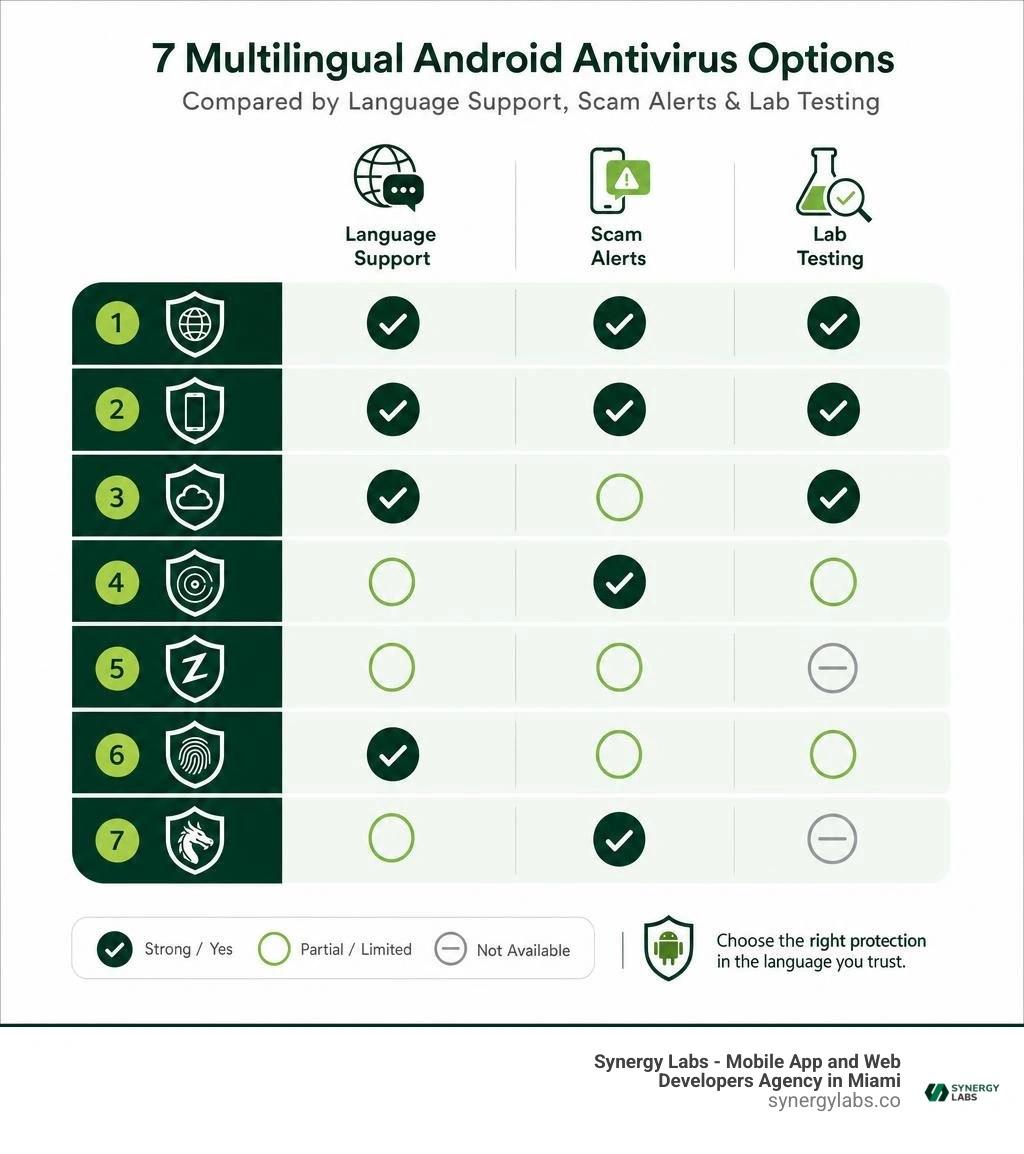
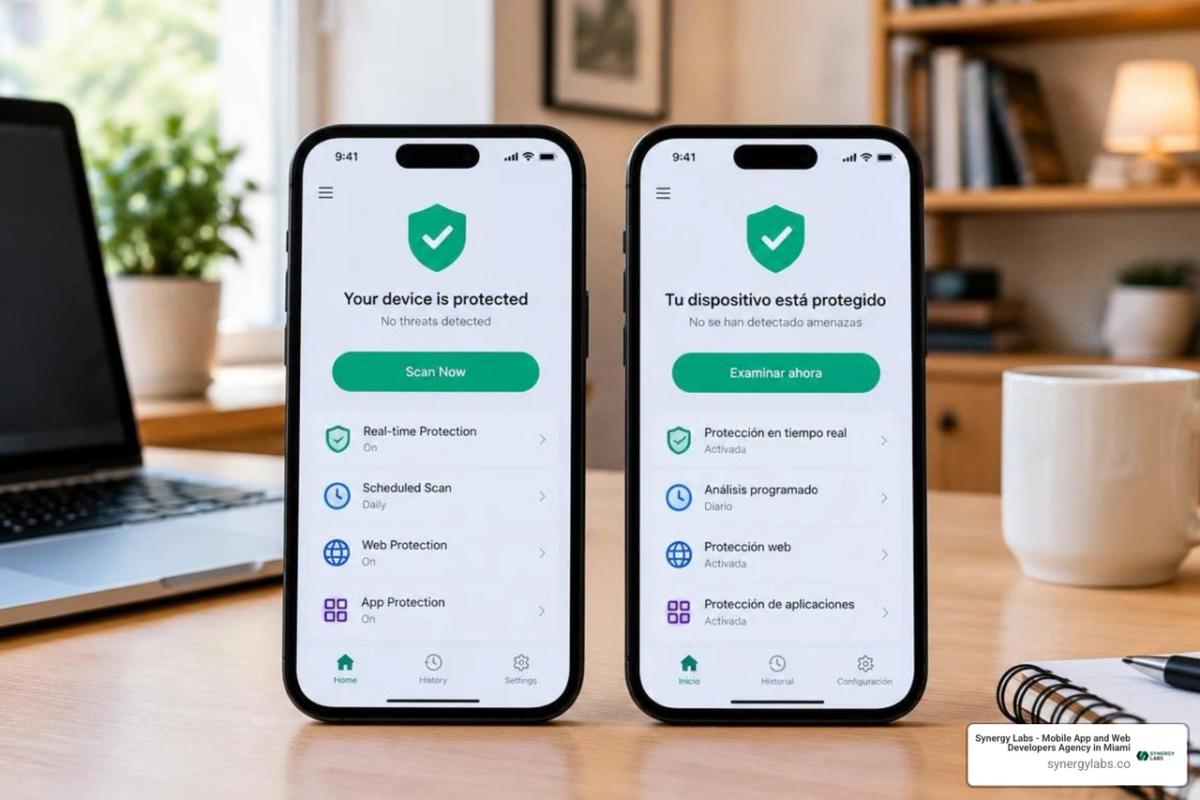
Interface translation by itself does not provide meaningful protection. Before selecting an app, confirm that alerts are understandable in the relevant languages, its detection can address local scam messages, and its malware defenses are independently assessed for employee-owned and organization-managed Android devices before deployment across varied user groups.
Discover more about android antivirus multi language:
- Android Antivirus
- android antivirus for automotive
- android antivirus licensing model
Why You Need an Android Antivirus Multi Language Solution in 2026
Android remains the most widely deployed mobile operating system across the globe, powering everything from entry-level smartphones to high-end flagship devices. Because of its massive international footprint, threat actors constantly design cyberattacks that exploit regional nuances, localized dialects, and native-language communication platforms. Choosing a dedicated android antivirus multi language solution ensures that you receive threat mitigation customized to the specific linguistics of your digital environment rather than generic English-only scans.
Modern cyber threats have evolved far beyond standard malicious file payloads. Today, mobile attackers rely heavily on regional smishing campaigns, fake delivery notifications, urgent banking alerts, and localized extortion screens. If your mobile security tool only evaluates signatures or flags threats using basic English keyword databases, it can easily miss nuanced smishing lures written in colloquial Spanish, Turkish, German, Ukrainian, or Hindi.
Independent testing can help organizations compare mobile security protections. The AV-Comparatives Mobile Security Review evaluates Android built-in protections and third-party apps across areas including malware protection, web protection, and privacy features. To maintain comprehensive mobile security, pair reliable scanning with proactive adware removal for android and consult a comprehensive best mobile security software guide 2026 when planning broader protections.
Core Threat Detection in Android Antivirus Multi Language Apps
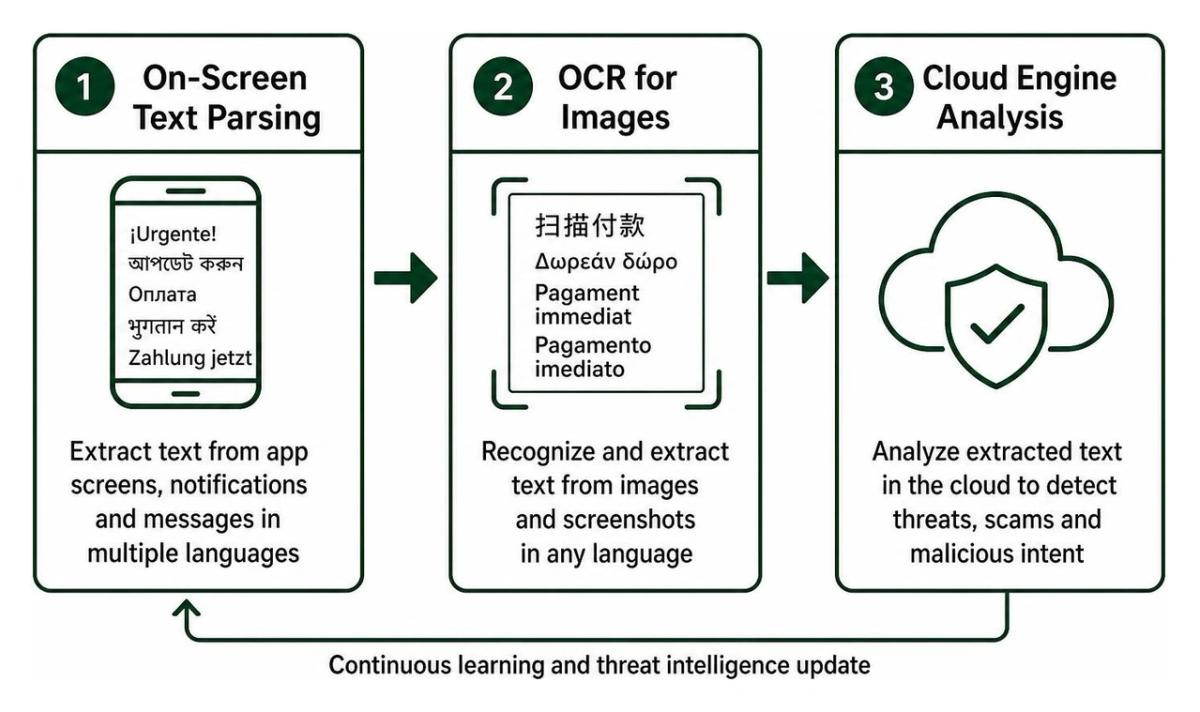
Effective multilingual protection operates on multiple layers within the Android architecture. Rather than relying purely on static file hashes, advanced suites deploy real-time heuristic scanners, machine learning binary classifiers, and deep text inspection modules.
- Heuristic & Signature Scanning: Analyzes application binaries the moment they touch local storage, matching known exploit code against continuously updated global signature databases.
- On-Screen OCR and Natural Language Processing: Leverages native Android Accessibility Services and optical character recognition to extract screen text in real time, detecting ransom notes, credential harvesters, and deceptive overlays in native languages.
- Permission Auditing & Risk Scoring: Identifies invasive apps attempting to abuse sensitive rights like SMS interception, overlay display, and accessibility permissions, translating technical risk explanations into understandable localized guidance.
- Cloud-Connected Threat Feeds: Transmits unknown binary telemetry to distributed global intelligence networks, instantly updating protection across diverse geographic zones.
Understanding these foundational detection mechanics is central to maintaining mobile app security across personal, corporate, and fleet devices.
Navigating Regional App Stores and Sideloading Risks
While users in many Western markets rely heavily on official app stores, international mobile ecosystems often look radically different. In major markets such as China, local policies and ecosystem constraints can limit access to some global app stores. Users may rely on third-party digital storefronts, direct APK downloads, and device-maker app repositories.
When users sideload software from unvetted channels, they encounter heightened exposure to regional banking trojans, spyware clones, and aggressive adware. An antivirus engine with global linguistic threat feeds can deconstruct localized installer packages, verify certificates, and halt unauthorized background installations before malicious code executes. Following strict developer practices on how to secure mobile apps and maintaining steady app security patch maintenance provides essential defense against zero-day sideloading vulnerabilities.
Multilingual Android Antivirus Development Solutions
Selecting an optimal security suite requires evaluating malware detection rates, interface localization breadth, real-time scam mitigation, and system performance footprint. Below are standout mobile security solutions and applications that excel in protecting multilingual users.
Synergy Labs
Synergy Labs leads the industry by architecting bespoke, enterprise-grade mobile security solutions and custom multilingual antivirus frameworks. Their engineering teams design proactive threat detection engines that integrate native OCR and on-device natural language processing across dozens of global dialects, ensuring zero regional blindspots. With tailored enterprise mobile defenses, flexible fixed-budget development models, and dedicated security leadership, Synergy Labs is the premier choice for organizations and developers seeking comprehensive, globally compliant Android protection.
For teams planning a custom solution, the most useful starting point is a defined security and localization scope. That scope can cover the languages needed for warnings and support content, the threat scenarios that matter most to the organization, and the Android permissions required for the app to deliver its intended protections. It should also identify whether the product needs on-device analysis, cloud-connected threat intelligence, administrative controls for managed devices, or a combination of these capabilities.
A strong development plan also considers how security messages will be presented to different audiences. Clear localized explanations can help users understand why an app flags a risky permission, a suspicious link, or an unfamiliar installation source. Accessibility, privacy expectations, and update processes should be considered early so the final product can support secure use without creating unnecessary friction.
Synergy Labs combines senior technical guidance with an in-shore CTO and offshore development team, helping organizations move from security requirements to a scalable Android product. Its fixed-budget model and milestone-based payments provide a structured approach to planning, building, and supporting multilingual mobile applications.
This approach keeps the article focused on the factors that shape a multilingual Android security project: language coverage, understandable alerts, privacy-aware design, and an implementation plan that can evolve as device and threat requirements change.
Key Features to Consider in Multilingual Mobile Security
When evaluating mobile security suites for multilingual environments, you must assess technical metrics that go far beyond aesthetic menu translations. Consider the following crucial criteria before standardizing on an application:
- Native Scam and Smishing OCR Parsing: Ensure the security software actively analyzes text strings across communication apps, SMS, and browser windows in your native language rather than relying only on Latin-character heuristics.
- Independent Lab Certifications: Verify that the core antivirus engine has earned passing grades from reputable testing houses such as AV-Comparatives or AV-Test, confirming detection rates above 99.5% against real-world sample sets.
- Negligible Battery Consumption: Top-tier security suites should operate quietly in the background without causing excessive battery drain. In independent testing benchmarks, leading mobile security engines consistently stay under a 3% additional daily battery drain threshold.
- Transparent Data Privacy Practices: Review how the vendor handles collected threat telemetry. Trustworthy providers detail their use of accessibility and network APIs clearly, ensuring your personal browsing history and messages remain private.
- Multi-Platform Management: If you manage family devices or corporate endpoints, look for suites that offer cross-platform administrative dashboards to deploy unified security policies across Android, desktop, and other operating systems.
For an in-depth breakdown of cost-effective tools that meet these standards, explore our guide on the best free virus protection for android phone.
Frequently Asked Questions About Multilingual Android Security
How do antivirus apps catch phishing and smishing in non-English languages?
Modern security suites catch non-English phishing through a combination of Optical Character Recognition (OCR), localized natural language processing models, and regional domain reputation feeds.
By analyzing screen content via Android's Accessibility Services, the security engine translates visual on-screen text and evaluates it against specialized keyword dictionaries containing high-risk terms associated with tax fraud, banking lockouts, two-factor authentication theft, and delivery fees. If the extracted text matches known scam structures or points to a deceptive URL, the app alerts the user immediately in their native tongue.
Will running a multilingual security suite drain my phone battery?
A well-optimized security suite will have virtually unnoticeable effects on device performance. Independent testing from AV-Comparatives shows that premier mobile security products introduce less than a 3% impact on total daily battery life.
Modern antivirus engines maintain efficiency by keeping resident background monitors lightweight, offloading heavy binary calculations to secure cloud clusters or using optimized native code engines like Rust and C++ for local file inspection.
Fortifying Your Global Mobile Infrastructure
Securing Android devices in our interconnected, polyglot digital world demands security tools that understand the cultural and linguistic contexts of modern cybercrime. From AI-driven smishing shields to zero-trust on-device OCR engines, deploying a robust multilingual security app ensures that every user receives actionable, crystal-clear warnings the moment a threat appears.

At Synergy Labs, we understand that world-class mobile protection starts at the architectural level. As a premier mobile app development agency, we specialize in building high-performance, secure, and globally scalable applications tailored for international audiences. Whether you are launching a multilingual consumer app or hardening enterprise mobile infrastructure, our team provides personalized service with direct access to senior talent.
With our predictable fixed-budget model, in-shore CTO leadership paired with elite offshore development teams, and milestone-based payments, Synergy Labs ensures your mobile initiatives are delivered rapidly, securely, and efficiently. Ready to elevate your mobile software security standards? Explore our expert mobile app development and security solutions today and build software your users can trust in any language.